
Standing Cable Diagonal Chop
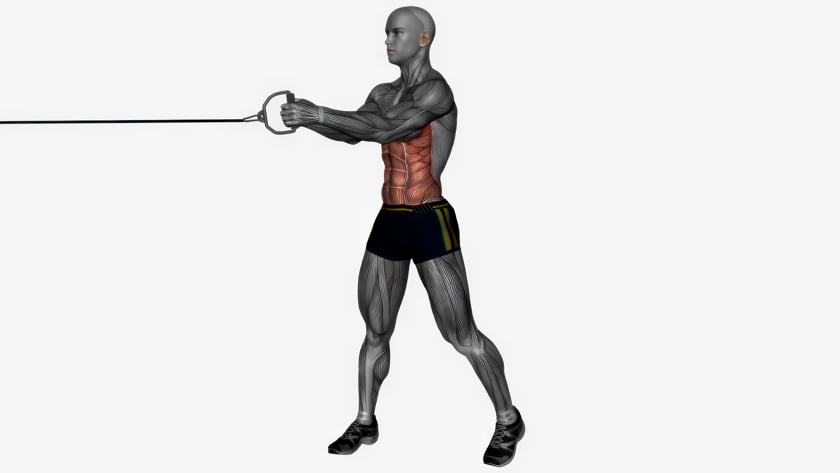
The Cable Diagonal Chop is a dynamic rotational core exercise that develops strength, power and stability throughout the entire torso. By pulling the cable diagonally across the body while resisting unwanted movement, this exercise challenges the abdominals, obliques and deep core stabilizers while teaching the body to efficiently transfer force between the upper and lower body.
The Cable Diagonal Chop trains the core the way it functions during everyday activities and sports—by controlling rotation rather than simply bending forward.
How to Perform
Begin by attaching a single handle to a low cable pulley. Stand sideways to the machine with your feet approximately shoulder-width apart. Grasp the handle with both hands, fully extend your arms and position the cable outside your front hip.
Brace your abdominal muscles, maintain a neutral spine and keep your chest lifted throughout the movement.
Initiate the exercise by rotating your torso while pulling the cable diagonally upward across your body until your hands finish just above the opposite shoulder. Allow your hips to rotate naturally, but avoid excessive movement or shifting your weight.
Pause briefly at the top of the movement while squeezing your obliques and maintaining full-body control.
Slowly reverse the motion, resisting the pull of the cable as you return to the starting position. Complete all repetitions before switching sides.
Tips
Keep your core engaged before every repetition to protect your lower back.
Rotate through your torso and hips together rather than pulling primarily with your arms.
Move with a slow, controlled tempo and resist the cable during both the lifting and return phases.
Maintain soft knees throughout the exercise to improve balance and stability.
Select a resistance that allows perfect technique without sacrificing range of motion.
Benefits
The Cable Diagonal Chop improves rotational core strength that carries over to daily activities and athletic movements such as golf, tennis, baseball, pickleball and skiing.
Because the resistance remains constant throughout the movement, the exercise develops both strength and muscular endurance across the entire range of motion.
The exercise enhances coordination between the upper and lower body, helping improve functional movement patterns and overall athletic performance.
Strengthening the deep stabilizing muscles of the core may contribute to improved posture, spinal stability and lower back health when combined with proper exercise technique.
Common Mistakes
Using too much weight often causes the arms to dominate the movement while reducing core activation.
Rounding the back or allowing the shoulders to collapse places unnecessary stress on the spine.
Twisting only the arms instead of rotating through the torso limits the effectiveness of the exercise.
Allowing the cable to pull your body back during the lowering phase reduces eccentric control and decreases training benefit.
Moving too quickly uses momentum rather than controlled muscular effort.
FAQ
Safety Note
Maintain a neutral spine throughout the entire exercise and avoid excessive twisting through the lower back.
Keep your movements smooth and controlled, especially during the return phase where the cable is pulling against you.
If you experience sharp pain, dizziness or discomfort beyond normal muscular fatigue, stop the exercise immediately and reassess your technique or resistance.
If you currently suffer from shoulder, spinal or lower back injuries you should consult your physician before performing rotational cable exercises or any other exercises.