
Standing Cable Oblique Twist
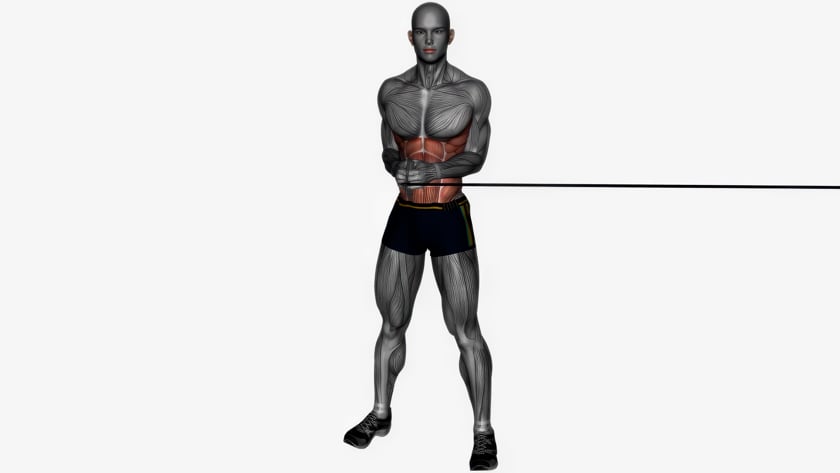
The Standing Cable Oblique Twist strengthens the muscles responsible for trunk rotation while teaching the body to resist unwanted movement. Unlike floor-based abdominal exercises, this standing variation closely mimics the rotational demands of everyday activities and many sports.
Using the constant resistance of a cable machine challenges the core throughout the entire range of motion while encouraging proper posture, balance and body control.
How to Perform
Stand sideways to a cable machine with the pulley positioned approximately at chest height. Grasp the cable handle with both hands and step away until light tension is present.
Position your feet about shoulder-width apart with your knees slightly bent. Brace your abdominal muscles, maintain a tall posture and keep your shoulders relaxed.
Begin with your hands positioned near the side of your torso closest to the cable. Rotate your upper body away from the machine by turning through your torso while keeping your arms comfortably extended in front of your chest. Allow your hips to rotate naturally without over-turning.
Pause briefly at the end of the movement, then slowly return to the starting position under control. Complete all repetitions before switching sides.
Tips
Keep your chest lifted and maintain a neutral spine throughout the movement.
Rotate from your torso rather than simply moving your arms.
Maintain steady tension on the cable during both the twisting and return phases.
Exhale as you rotate away from the machine and inhale as you return.
Use a controlled tempo rather than relying on momentum.
Benefits
The Standing Cable Oblique Twist develops rotational strength that transfers well to daily activities and athletic movements such as golf, tennis, pickleball, baseball and throwing sports.
The cable provides continuous resistance throughout the movement, increasing muscular engagement and improving control.
Regular performance helps strengthen the muscles that stabilize the spine, contributing to improved posture, balance and core endurance.
Because it is performed in a standing position, the exercise also reinforces coordination between the upper body, lower body and core.
Requires no equipment and is suitable for most fitness levels.
Common Mistakes
Using excessive weight that causes the movement to become fast or uncontrolled.
Pulling primarily with the arms instead of rotating through the torso.
Allowing the lower back to excessively twist or arch during the exercise.
Failing to brace the abdominal muscles before initiating the movement.
Standing too close to the cable machine, reducing resistance throughout the exercise.
FAQ
Safety Note
Begin with a light resistance until proper technique has been mastered.
Maintain a neutral spine and avoid aggressive twisting through the lower back.
Individuals with existing spinal injuries, significant low back pain or recent abdominal surgery should consult a qualified healthcare provider before performing rotational exercises.
Discontinue the exercise if you experience sharp pain, dizziness or discomfort beyond normal muscular fatigue.