
90 Degree Heel Touch
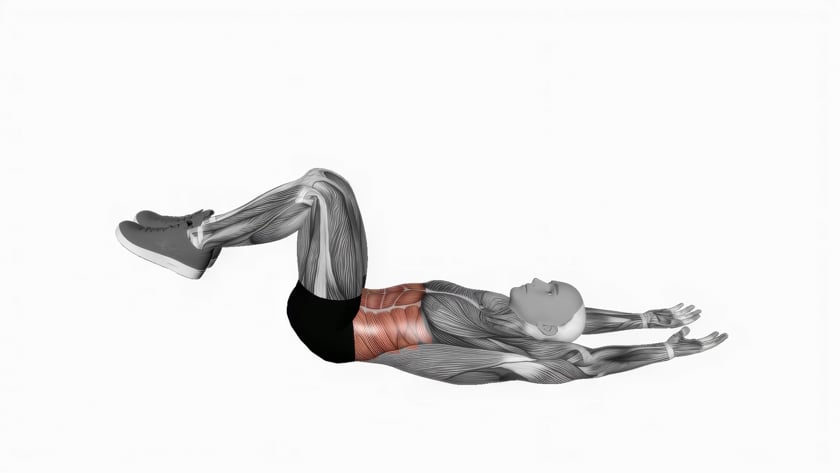
The 90 Degree Heel Touch emphasizes the rectus abdominis while encouraging continuous core engagement throughout the movement.
Performed with the hips and knees bent to approximately 90 degrees, the exercise shortens the lever arm compared to a traditional crunch, making it an excellent option for exercisers who want to strengthen the abdominal muscles with controlled movement.
How to Perform
Lie on your back with your knees bent approximately 90 degrees and your hips flexed so your lower legs remain elevated and parallel to the floor. Extend your arms toward your knees with your head and neck in a neutral position.
Brace your abdominal muscles before beginning the movement. Exhale as you lift your shoulder blades slightly off the floor while reaching both hands toward your heels. Focus on curling through the upper torso rather than pulling with your neck.
Pause briefly at the top of the movement while maintaining abdominal tension. Keep your lower back in a comfortable, controlled position without swinging your legs
Inhale as you slowly lower your shoulders back to the starting position. Maintain control throughout each repetition and repeat for the desired number of repetitions.
Tips
Think about lifting your rib cage toward your pelvis instead of simply reaching with your hands. This helps maximize abdominal engagement.
Keep your chin relaxed with a small space between your chin and chest to avoid unnecessary neck tension.
Move slowly during both the lifting and lowering phases. Controlled repetitions are more effective than rushing through the exercise.
Continue breathing normally throughout the set rather than holding your breath. Proper breathing improves core stability and exercise control.
Benefits
The 90 Degree Heel Touch effectively strengthens the rectus abdominis while encouraging consistent abdominal activation throughout each repetition.
The bent-leg position reduces the leverage placed on the lower back, making the movement comfortable for many beginners learning proper abdominal mechanics.
Because the exercise requires no equipment, it can easily be incorporated into home workouts, gym programs or group fitness classes.
Requires no exercise equipment and very little space. Developing stronger abdominal muscles can contribute to improved trunk stability during daily activities and other resistance training exercises.
Common Mistakes
Pulling on the neck or leading the movement with the head instead of lifting through the upper torso reduces abdominal involvement and may cause neck discomfort.
Using momentum to bounce through the repetitions decreases muscle activation and reduces the effectiveness of the exercise.
Allowing the knees to drift excessively toward or away from the body changes the intended position and may reduce core engagement
Holding your breath throughout the set can increase unnecessary tension and reduce movement quality. Practice smooth, controlled breathing with every repetition.
FAQ
Safety Note
If you experience neck discomfort, reduce the height of the crunch and focus on lifting only the shoulder blades from the floor.
Individuals with recent spinal injuries, significant low back pain or abdominal surgery should consult a qualified healthcare professional before performing this exercise.
Stop immediately if the movement causes sharp pain or discomfort beyond normal muscular fatigue.