
Basic Floor Crunch
The Basic Floor Crunch is a beginner-friendly bodyweight exercise that strengthens the abdominal muscles by bringing the rib cage toward the pelvis. Unlike a full sit-up, the movement is intentionally small and controlled, with only the head, shoulders and upper back lifting from the floor.
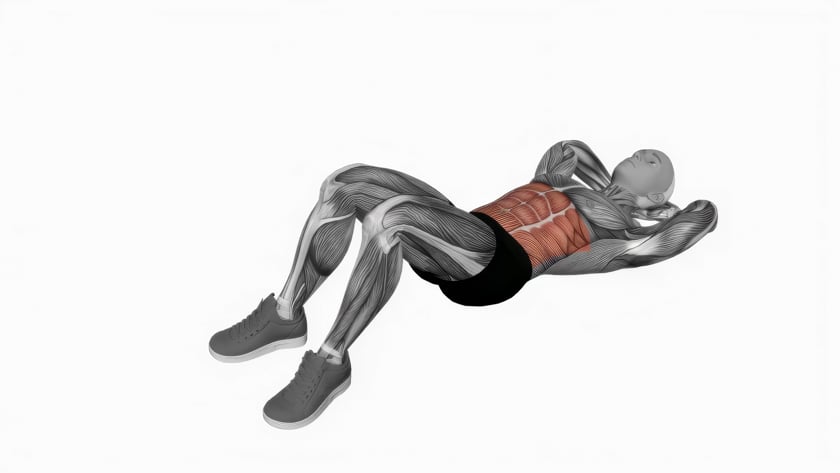
How to Perform
Lie on your back with your knees bent, feet flat on the floor and heels a comfortable distance from your hips. Place your fingertips lightly behind your head without pulling on your neck.
Gently brace your abdominal muscles and exhale as you curl your head, shoulders and upper back away from the floor.
Continue lifting until your shoulder blades begin to clear the floor. Pause briefly while keeping your abdominal muscles engaged.
Inhale as you slowly lower your upper back and shoulders to the starting position. Maintain control and repeat.
Tips
Think about bringing your ribs toward your hips rather than trying to sit all the way up.
Keep your chin slightly tucked and your neck relaxed throughout the movement.
Keep your feet planted and avoid pushing forcefully through your legs to lift your upper body.
Perform each repetition slowly. A small, controlled movement is more important than lifting higher.
Benefits
Strengthens the rectus abdominis and supporting core muscles.
Helps improve control of trunk flexion.
Develops awareness of proper abdominal bracing and breathing
Requires no exercise equipment and very little space.
Helps prepare for more challenging core exercises.
Common Mistakes
Pulling on the head: Rest your fingertips lightly behind your head and allow your abdominal muscles to perform the work.
Using momentum: Avoid swinging the arms, bouncing or rushing through the repetitions
Lifting too high: Stop after the shoulder blades begin to leave the floor rather than turning the crunch into a full sit-up.
Holding your breath: Exhale while lifting and inhale as you return to the floor.
Leading with the head: Keep your head aligned with your upper body and initiate the movement through the abdominal muscles.
FAQ
Safety Note
Perform the exercise within a comfortable, pain-free range of motion. Stop if you experience neck, back or hip pain.
Anyone with an existing injury, recent surgery or a medical condition affecting exercise should consult our qualified health professionals before beginning this or any other exercise.