
Upper Back Stretch
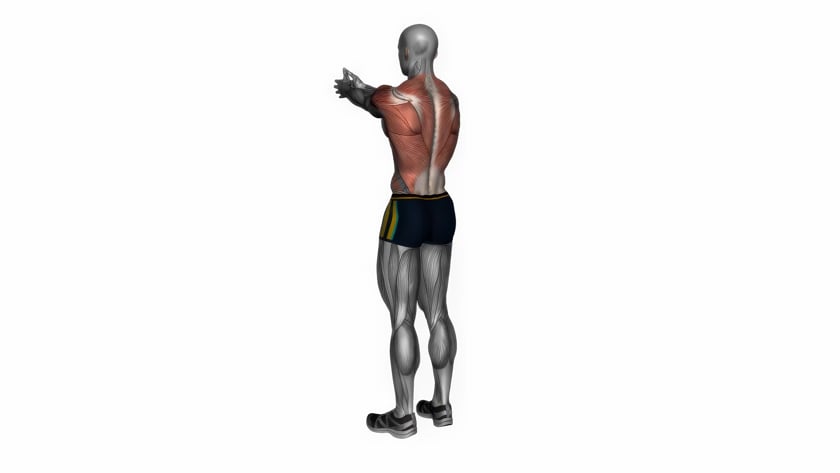
The Upper Back Stretch is a basic static flexibility exercise used to stretch the muscles across the upper and middle back, particularly the area around and between the shoulder blades.
It requires no equipment and can be easily incorporated into a general upper-body flexibility or cool-down routine.
The video animation demonstrates a standing, arms-forward version of the Upper Back Stretch. The exerciser stands upright, brings the arms forward at approximately chest-to-shoulder height and clasps the hands together.
The arms are then gently extended forward while the upper back rounds slightly and the shoulder blades move apart. The animation highlights a broad area across the upper and middle back, including the trapezius, rhomboid region and latissimus dorsi.
How to Perform
Stand upright with your feet approximately hip- to shoulder-width apart.
Maintain a comfortable bend in the knees and a stable, balanced stance.
Bring both arms forward to approximately chest or shoulder height.
Clasp your hands together in front of your body.
Gently extend the arms forward as though you are trying to reach the hands away from your chest.
Allow the shoulder blades to spread apart as the upper back rounds slightly.
Keep the shoulders relaxed and avoid shrugging them excessively toward the ears.
Gently draw the abdominal muscles inward to help maintain control of the torso and lower back.
Continue reaching forward until you feel gentle to moderate tension across the upper back and between the shoulder blades.
Hold the position without bouncing while breathing normally, then slowly relax the arms and return to the starting position.
Tips
Think about gently pushing the hands forward while allowing the shoulder blades to move apart.
Keep the shoulders down and relaxed rather than shrugging toward the ears.
Allow only a gentle rounding through the upper back. Do not force the entire spine into an exaggerated rounded position.
Keep your hips relatively stationary rather than leaning the whole body backward as the arms reach forward.
Keep the head and neck relaxed. Avoid aggressively dropping the chin toward the chest.
Move only far enough to feel gentle to moderate tension across the upper back.
Maintain slow, comfortable breathing throughout the stretch.
Avoid bouncing or repeatedly forcing the arms farther forward. Static stretching should be performed slowly and under control.
Benefits
The Upper Back Stretch helps maintain or improve flexibility through the muscles and surrounding tissues of the upper and middle back.
Reaching the arms forward moves the shoulder blades apart, which can create a stretch through tissues around the rhomboids and middle trapezius.
The exercise can also provide gentle mobility through the shoulder-blade and upper-back region, areas involved in many everyday pushing, pulling and reaching movements.
Because the stretch is performed standing with both feet on the floor, it provides a simple position that is appropriate for many beginning exercisers.
The exercise requires no equipment and very little space, making it practical for personal-training studios, home exercise and general flexibility routines.
Consistent static stretching can improve range of motion over time.
Common Mistakes
Shrugging the shoulders toward the ears can create unnecessary neck and upper-trapezius tension. Keep the shoulders relaxed.
Rounding the entire spine excessively is unnecessary. Focus on gently spreading the shoulder blades and rounding primarily through the upper back.
Leaning the entire body backward as the hands reach forward can reduce control of the stretch. Maintain a stable standing position.
Dropping the head aggressively toward the chest can create unnecessary neck tension. Keep the neck relaxed and comfortable.
Forcefully locking the elbows is unnecessary. Keep the arms extended but comfortable.
Pulling excessively through the hands or wrists does not improve the stretch. The primary movement should come from reaching the arms forward and spreading the shoulder blades.
Holding the breath can increase unnecessary tension. Maintain normal breathing throughout the stretch.
Bouncing in and out of the stretched position is unnecessary.
FAQ
Safety Note
Perform the Upper Back Stretch from a stable standing position and move slowly into and out of the stretch.
Reach the arms forward only far enough to create gentle to moderate tension across the upper back. Do not force the spine, shoulders or neck into an uncomfortable position.
Keep the shoulders and neck relaxed and avoid excessive rounding of the lower back.
Stop the stretch if you experience sharp pain, numbness, tingling, dizziness or unusual discomfort in the back, neck, shoulders or arms.
If you have a recent or existing injury involving the upper back, spine, neck or shoulders, consult your physician or another qualified healthcare professional before performing this or any other stretch.