
Kneeling Lat Stretch
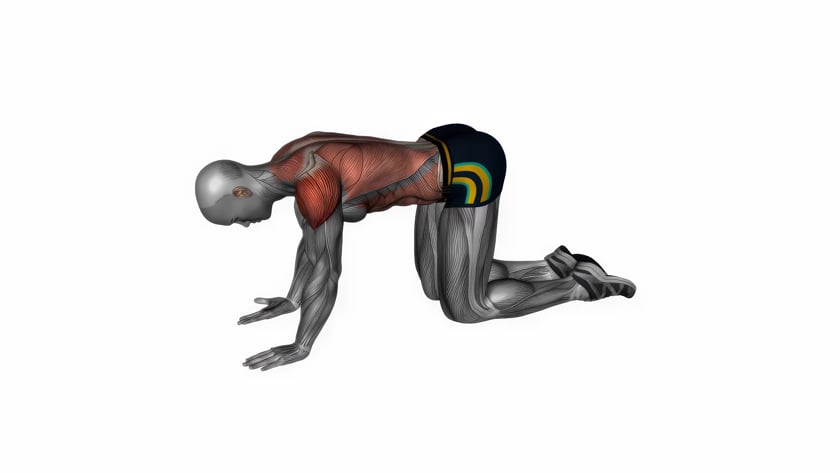
The Kneeling Lat Stretch is a basic static flexibility exercise used primarily to stretch the latissimus dorsi, the large muscles that extend along the sides of the back.
The position can also create a comfortable stretch through the shoulders and upper back.
The video animation demonstrates a floor-based kneeling variation of the Kneeling Lat Stretch. The exerciser begins on the hands and knees, extends the arms forward along the floor and gradually shifts the hips backward while keeping the arms extended.
This lengthens the sides of the torso and the latissimus dorsi. Unlike some kneeling lat stretches that use a bench, the version shown requires no equipment other than an optional exercise mat.
How to Perform
Begin on your hands and knees on an exercise mat or other comfortable surface.
Position your knees approximately hip-width apart.
Place your hands on the floor in front of you and begin walking them forward.
Keep your arms extended while maintaining a comfortable position through the elbows and shoulders.
Gently engage the abdominal muscles to help control the spine and pelvis.
Slowly shift your hips backward while allowing the hands to remain extended in front of you.
Continue moving the hips backward until you feel gentle to moderate tension along the sides of the back and underneath or around the shoulders.
Keep the arms long and avoid aggressively pressing the chest toward the floor.
Keep the head and neck relaxed and generally aligned with the spine rather than forcing the head downward or upward.
Hold the position while breathing normally, then slowly shift forward and return to the starting position.
We recommend a 30–45 second hold for its bench-supported variation. For a fundamental beginner stretch, the hold can be shortened according to comfort and individual flexibility.
Tips
Think about reaching the hands forward while gently moving the hips backward. These opposing directions help lengthen the latissimus dorsi.
Keep the arms extended but avoid forcefully locking the elbows.
Maintain gentle abdominal engagement so the movement comes primarily from the shoulders and hips rather than excessive arching through the lower back.
Keep the neck relaxed and generally aligned with the spine.
Move the hips backward only as far as is comfortable. It is not necessary for the hips to reach the heels.
Use padding beneath the knees if kneeling directly on the floor is uncomfortable.
Move slowly into and out of the stretch and avoid bouncing.
Breathe normally throughout the stretch and use only enough range to create comfortable tension.
Benefits
The Kneeling Lat Stretch helps maintain or improve flexibility of the latissimus dorsi and surrounding tissues of the upper back and shoulder region.
The latissimus dorsi are large muscles of the back that attach to the upper arm and contribute to several movements of the shoulder.
Improving flexibility through the lats can support comfortable overhead arm movement and general shoulder mobility.
The floor-based position shown in the animation provides a stable base and eliminates the balance requirements associated with standing stretches.
Because this variation requires no specialized equipment, it can easily be performed at home, in a personal-training studio or as part of a general flexibility routine.
Flexibility is an important component of fitness. Developing appropriate flexibility allows joints to move more freely through their normal range of motion.
Consistent static stretching can improve range of motion over time.
Common Mistakes
Arching the lower back excessively can shift the movement away from the intended lat stretch. Maintain gentle abdominal engagement and a comfortable spinal position.
Trying to force the chest toward the floor can place unnecessary stress on the shoulders. Allow the stretch to develop gradually as the hips move backward.
Bending the elbows substantially can reduce the lengthening effect through the lats. Keep the arms comfortably extended.
Shrugging the shoulders excessively toward the ears can create unnecessary neck tension.
Allowing the head to hang heavily toward the floor can place the neck in an uncomfortable position. Keep the head relaxed and generally aligned with the spine.
Forcing the hips all the way to the heels is unnecessary. Individual hip, knee and shoulder mobility will determine the appropriate range.
Holding the breath can increase unnecessary tension. Maintain slow, comfortable breathing.
Bouncing or repeatedly forcing the body deeper into the position is unnecessary.
FAQ
Safety Note
Perform the Kneeling Lat Stretch on a stable, comfortable surface and use an exercise mat or additional padding beneath the knees when needed.
Move slowly into the stretch and stop when you feel gentle to moderate tension through the sides of the back and shoulders.
Do not force the chest toward the floor or aggressively push the hips backward.
Keep the head and neck relaxed and maintain comfortable spinal alignment throughout the stretch.
Reduce the range or discontinue the exercise if the kneeling position causes knee discomfort.
Stop immediately if you experience sharp pain, numbness, tingling or unusual discomfort in the shoulder, arm, back, neck or knees.
If you have a recent or existing injury involving the shoulder, back, neck or knees, consult your physician or another qualified healthcare professional before performing this or any other stretch.