
Overhead Triceps Stretch
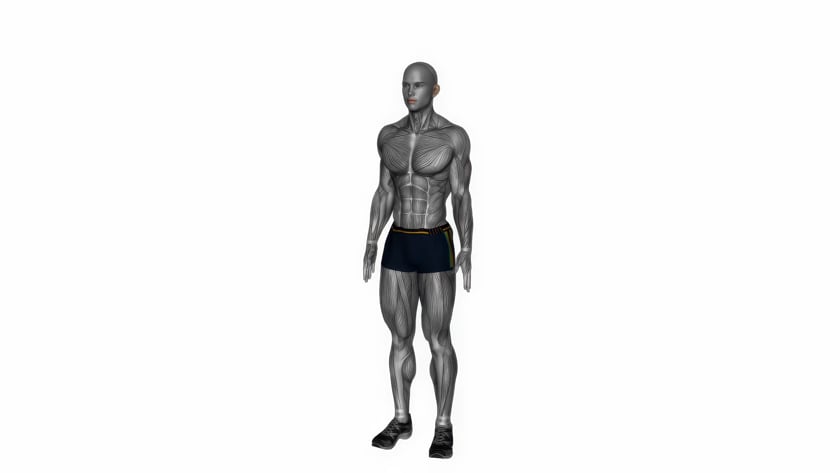
The Overhead Triceps Stretch is a basic static flexibility exercise used primarily to stretch the triceps along the back of the upper arm.
It also places the shoulder in an overhead position and can contribute to general upper-body flexibility.
The video animation demonstrates the traditional standing single-arm Overhead Triceps Stretch.
The exerciser raises one arm overhead, bends the elbow so the hand moves behind the head and upper back, then uses the opposite hand to gently guide the raised arm at or just above the elbow.
The animation highlights the triceps region of the raised arm.
The exerciser should stand with the feet approximately hip-width apart, reach one arm toward the ceiling, bend the elbow so the hand drops behind the back and use the opposite hand to apply light pressure just above the elbow.
How to Perform
Stand upright with your feet approximately hip-width apart and maintain a comfortable, balanced posture.
Keep your chest lifted and gently engage your abdominal muscles to help maintain a stable torso.
Raise one arm overhead while keeping the shoulder relaxed and away from the ear.
Bend the raised elbow and allow the hand to move behind your head toward the upper back.
Bring the opposite hand overhead and place it on the upper arm just above the bent elbow.
Gently guide the bent elbow inward and slightly downward until you feel comfortable tension along the back of the upper arm.
Keep your head upright and avoid pushing it forward with the raised arm.
Maintain a comfortable spinal position and avoid excessively arching the lower back.
Hold the stretch while breathing normally.
Slowly release the arm and repeat on the opposite side.
We recommend holding the Overhead Triceps Stretch for 15–30 seconds for 2–4 repetitions.
Tips
Keep the elbow of the stretching arm pointing generally upward rather than allowing it to flare excessively to the side.
Apply gentle pressure to the upper arm just above the elbow rather than forcefully pulling on the elbow joint.
Keep the shoulder relaxed. Do not shrug the raised shoulder toward the ear.
Maintain an upright head position rather than pushing the head forward to make room for the arm.
Keep the rib cage and lower back controlled. Avoid arching backward to create additional range.
Move only far enough to feel gentle to moderate tension through the back of the upper arm.
Breathe normally throughout the stretch.
Benefits
The Overhead Triceps Stretch helps maintain or improve flexibility through the triceps muscles along the back of the upper arm.
The long head of the triceps crosses both the shoulder and elbow joints. Positioning the arm overhead while bending the elbow places this portion of the triceps in a lengthened position.
The exercise also moves the shoulder into an overhead position, making comfortable shoulder mobility an important part of performing the stretch correctly.
The stretch requires no equipment and very little space, making it practical for home exercise, personal-training studios and general flexibility routines.
Flexibility is an important component of health-related fitness. Consistent flexibility training can improve joint range of motion.
Common Mistakes
Arching the lower back excessively to get the arm farther behind the head can shift the movement away from the intended stretch. Keep the torso upright and controlled.
Pulling aggressively on the elbow can create unnecessary stress at the shoulder or elbow. Use only light pressure.
Shrugging the raised shoulder toward the ear can create unnecessary neck and shoulder tension.
Allowing the head to move forward can compromise posture. Keep the head upright and neck relaxed.
Forcing the hand farther down the back is unnecessary. Flexibility varies from person to person and the goal is comfortable tension rather than maximum range.
Holding the breath can increase unnecessary tension. Maintain slow, comfortable breathing.
Bouncing or repeatedly forcing the elbow deeper into the stretch is unnecessary.
FAQ
Safety Note
Perform the Overhead Triceps Stretch slowly and under control. Move only far enough to create gentle to moderate tension along the back of the upper arm.
Do not aggressively pull the elbow or force the hand farther down the back.
Keep the shoulder relaxed and reduce the range of motion if you experience pinching or discomfort within the shoulder joint.
Maintain an upright posture and avoid excessive arching through the lower back or pushing the head forward.
People with limited overhead shoulder mobility should work within a comfortable range rather than forcing the arm into the position.
Stop the stretch if you experience sharp pain, numbness, tingling or unusual discomfort in the shoulder, arm, elbow or neck.
If you have a recent or existing injury involving the shoulder, elbow, upper arm or neck, consult your physician or another qualified healthcare professional before performing this or any other stretch.