
Standing Chest Stretch
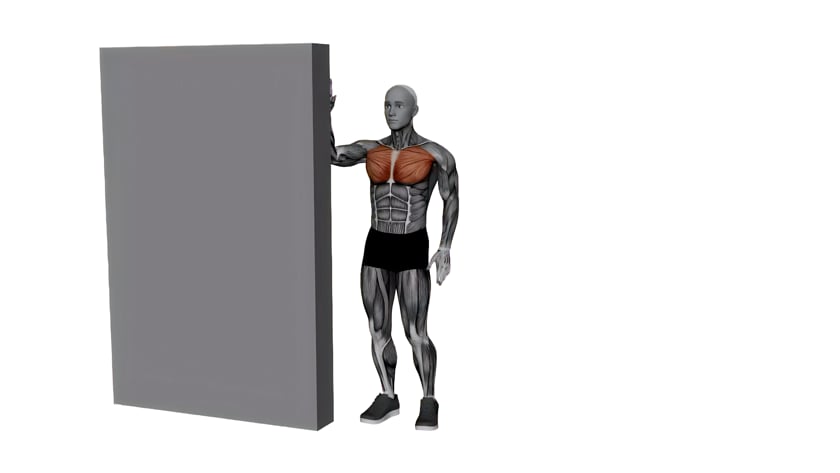
The Standing Chest Stretch is a basic static flexibility exercise used to stretch the pectoral muscles across the front of the chest and the front of the shoulder.
It requires only a wall, doorway or other stable vertical surface and is easy to incorporate into a beginner flexibility or cool-down routine.
The video animation demonstrates a single-arm wall-supported version of the Standing Chest Stretch. The exerciser stands beside the edge of a wall, places one arm against the wall at approximately shoulder height with the elbow bent and gently turns the torso away from the supported arm.
The opposite arm remains relaxed at the side. This rotation creates the stretch across the chest and anterior shoulder of the supported side.
How to Perform
Stand beside the edge of a wall, doorway or other stable vertical surface.
Position the arm closest to the wall at approximately shoulder height.
Bend the elbow to approximately 90 degrees and place the forearm and hand comfortably against the wall.
Position your feet in a comfortable stance that allows you to remain balanced.
Stand tall and gently engage the abdominal muscles to help maintain a stable torso and pelvis.
Keep the shoulder of the supported arm down and relaxed rather than shrugging it toward the ear.
Slowly rotate your chest and torso away from the supported arm until you feel a comfortable stretch across the chest and front of the shoulder.
Maintain an upright posture and avoid excessively arching the lower back.
Hold the position without bouncing while breathing normally.
Slowly rotate back toward the wall, release the arm and repeat on the opposite side.
Tips
Keep the shoulder relaxed and away from the ear throughout the stretch.
Position the arm at approximately shoulder height.
Rotate the torso gradually rather than trying to force the arm farther behind the body.
Keep the chest lifted while maintaining a comfortable, neutral position through the lower back.
Do not push aggressively into the wall. The wall provides support and positioning rather than resistance.
Move only far enough to feel gentle to moderate tension across the chest and front of the shoulder.
Keep breathing normally and allow the chest and shoulder muscles to relax into the stretch.
Avoid bouncing. Move only to the point of tightness or slight discomfort, never pain.
Benefits
The Standing Chest Stretch helps maintain or improve flexibility of the pectoral muscles and surrounding tissues at the front of the shoulder.
Chest flexibility contributes to comfortable movement of the shoulder and upper body, particularly during movements that require the arms to move away from or behind the torso.
We recommend wall and doorway stretches as basic exercises for opening the chest and improving flexibility through this region.
Use a wall or stable anchor and controlled rotation of the body away from the supported arm.
The unilateral position allows each side of the chest to be stretched independently, which can make differences in flexibility between sides easier to recognize.
The exercise requires very little space and no specialized exercise equipment, making it practical for personal-training studios, home exercise and post-workout flexibility routines.
Consistent static stretching can improve range of motion over time.
Common Mistakes
Shrugging the supported shoulder toward the ear can create unnecessary tension. Keep the shoulder relaxed and down.
Rotating too aggressively away from the wall can place excessive stress on the shoulder. Move gradually until you feel a comfortable chest stretch.
Allowing the elbow or arm to move into an uncomfortable position can increase shoulder stress. Adjust the arm height if necessary.
Arching the lower back to create more apparent movement does not improve the chest stretch. Maintain abdominal control and comfortable spinal alignment.
Twisting only through the lower back instead of allowing controlled rotation of the upper body can reduce the effectiveness of the stretch.
Pressing forcefully into the wall is unnecessary. The stretch should come primarily from gently turning the body away from the supported arm.
Bouncing or repeatedly forcing the torso farther into the stretch can make the movement difficult to control.
FAQ
Safety Note
Perform the Standing Chest Stretch using a stable wall, doorway or other secure vertical surface.
Move slowly into the stretch and stop when you feel gentle to moderate tension through the chest and front of the shoulder.
Do not force the arm behind the body or aggressively rotate away from the wall.
Keep the shoulder relaxed and reduce the range of motion if you feel pinching or discomfort within the shoulder joint.
Maintain a stable stance and comfortable spinal position throughout the exercise.
Stop the stretch if you experience sharp pain, numbness, tingling or unusual discomfort in the chest, shoulder, arm or neck.
If you have a recent or existing injury involving the chest, shoulder, elbow or neck, consult your physician or another qualified healthcare professional before performing this or any other stretch.