
Lying Glute Stretch
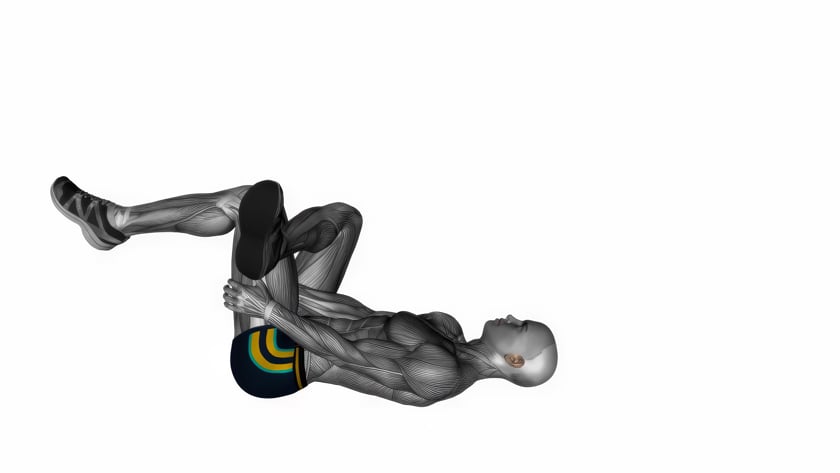
The Lying Glute Stretch is a basic static flexibility exercise used to stretch the gluteal muscles and surrounding muscles of the hip.
Because it is performed lying on the floor, the exercise provides a stable position that allows beginning exercisers to concentrate on the stretch without having to maintain standing balance.
The video animation demonstrates a supine Figure-4 variation of the Lying Glute Stretch.
The exerciser lies on the back with both knees bent, crosses one ankle over the opposite thigh and then draws the supporting leg toward the torso. The crossed-leg position creates the characteristic “figure-4” shape and places the primary stretch through the buttock and outer-hip region of the crossed leg.
How to Perform
Lie on your back on an exercise mat or other comfortable surface.
Bend both knees and place your feet flat on the floor.
Lift one foot and place the ankle across the opposite thigh, just above the knee, creating a figure-4 position with the legs.
Allow the knee of the crossed leg to move comfortably outward.
Keep your head, shoulders and back relaxed against the floor.
Reach both hands behind the thigh of the supporting leg.
Gently draw the supporting thigh toward your torso until you feel a comfortable stretch through the buttock and outer hip of the crossed leg. We recommend holding behind the supporting thigh and pulling the leg toward the chest without changing spinal alignment.
Keep the pelvis relatively level and avoid twisting through the lower back.
Hold the position while breathing slowly and normally.
Release the stretch gradually, return both feet to the floor and repeat on the opposite side.
We recommend static stretches of approximately 10–30 seconds for 2–4 repetitions per muscle group.
Tips
Keep the ankle resting above the opposite knee rather than placing pressure directly on the kneecap.
Allow the crossed knee to move outward naturally. Do not force it toward the floor.
Pull the supporting leg toward your body only far enough to create gentle to moderate tension through the glute and outer hip.
If you already feel an adequate stretch with the supporting foot on the floor, you do not have to pull the leg toward your chest.
Keep your head and shoulders relaxed rather than lifting the upper body toward the legs.
Maintain a comfortable spinal position and avoid twisting or lifting one side of the pelvis excessively from the floor.
Do not bounce or repeatedly force the legs closer to the torso. We recommend mild tension rather than pain and slow, controlled breathing during beginner stretching.
Benefits
The Lying Glute Stretch helps maintain or improve flexibility through the gluteal and outer-hip region.
The gluteal muscles contribute to hip extension, rotation and stabilization and are involved in many common activities including walking, climbing stairs, standing from a chair and performing lower-body exercises.
This is a fundamental stretch for beginning exercisers.
The lying position provides a stable base and removes the balance requirement associated with standing Figure-4 variations, making this version particularly practical for many beginning exercisers.
The stretch requires no specialized equipment beyond an optional exercise mat and can easily be included in a cool-down or dedicated flexibility session.
Regular static stretching can improve joint range of motion over time.
Common Mistakes
Placing the crossed ankle directly on the opposite kneecap can create unnecessary pressure. Position the ankle slightly above the knee on the thigh.
Pulling the supporting leg aggressively toward the chest can turn a comfortable stretch into pain. Increase the stretch gradually.
Forcing the crossed knee downward with the hand is unnecessary and can place excessive stress on the hip or knee.
Allowing the pelvis to rotate significantly off the floor can change the intended position. Keep the hips relatively level.
Lifting the head and shoulders unnecessarily can create tension through the neck and upper back. Keep the upper body relaxed.
Holding the breath can increase unnecessary tension. Maintain slow, comfortable breathing.
Bouncing the legs toward the torso is unnecessary. Maintain a controlled static position.
FAQ
Safety Note
Perform the Lying Glute Stretch on a stable, comfortable surface and use an exercise mat if needed.
Move gradually into the stretch and stop when you feel gentle to moderate tension through the glute and outer hip. Do not force the knee downward or pull the legs aggressively toward the torso.
Keep the movement controlled and avoid bouncing.
If crossing the ankle over the opposite thigh causes knee discomfort, reduce the range or discontinue the stretch.
Stop immediately if you experience sharp pain, numbness, tingling or unusual discomfort in the hip, knee or lower back.
If you have a recent or existing injury involving the hip, knee or lower back, consult your physician or another qualified healthcare professional before performing this or any other stretch.