
Kneeling Hip Flexor Stretch
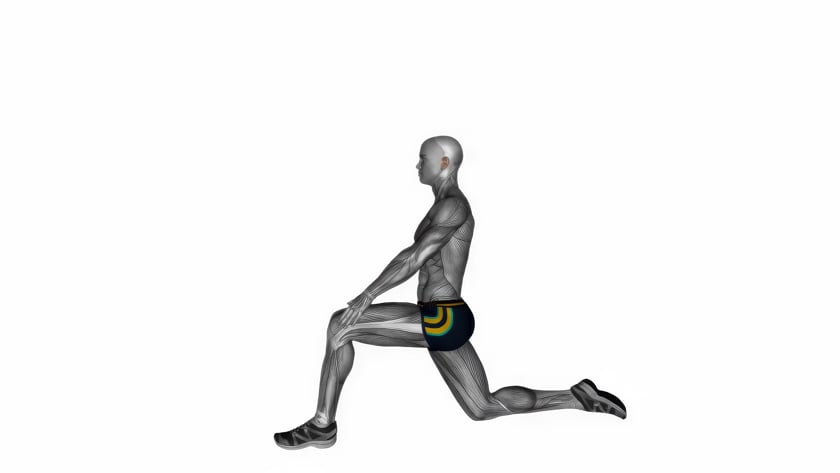
The Kneeling Hip Flexor Stretch is a basic static flexibility exercise used to stretch the muscles at the front of the hip, especially the hip flexors of the rear leg.
It is a common beginner stretch because it uses a stable half-kneeling position and requires no specialized equipment.
The uploaded video demonstrates a traditional half-kneeling hip flexor stretch. The exerciser places one knee on the floor with the opposite foot forward, keeps the torso upright and places the hands on the front thigh for support.
From this position, the hips move slightly forward while the pelvis remains controlled to create a stretch through the front of the hip on the kneeling side.
How to Perform
Begin in a half-kneeling position with one knee on a padded floor or exercise mat.
Place the opposite foot in front of you so the front knee is bent approximately 90 degrees and the foot remains flat on the floor.
Keep the rear knee positioned generally beneath or slightly behind the hip.
Place your hands lightly on the front thigh for support.
Sit tall through the torso and gently engage the abdominal muscles to help stabilize the pelvis and lower back.
Keep the pelvis level and avoid allowing the lower back to arch excessively.
Slowly shift the hips forward until you feel a gentle stretch through the front of the hip and upper thigh of the kneeling leg.
Keep the front foot flat and maintain a stable, controlled position.
Hold the stretch without bouncing while breathing normally.
Slowly return to the starting position, switch legs and repeat on the opposite side.
We recommend holding stretches for approximately 10–30 seconds and repeating them 2–4 times per muscle group.
Tips
Keep the torso tall rather than leaning far forward over the front thigh.
Gently tighten the abdominal muscles to help control the pelvis and reduce excessive arching through the lower back.
Think about moving the hips forward as one unit rather than simply bending farther through the front knee.
Keep the front knee aligned with the foot and avoid allowing it to collapse inward.
Do not force the hips forward. Move only far enough to feel gentle to moderate tension through the front of the rear hip.
Placing a folded mat or pad beneath the kneeling knee can improve comfort.
For some exercisers, gently contracting the gluteal muscles on the kneeling side can help maintain pelvic position and increase the sensation of the stretch.
Breathe normally and keep the stretch controlled rather than bouncing.
Benefits
The Kneeling Hip Flexor Stretch helps maintain or improve flexibility of the muscles at the front of the hip.
The hip flexors are involved in bringing the thigh toward the torso and are active during common activities such as walking, climbing stairs and many lower-body exercises.
Improving flexibility in this area can support comfortable hip extension and general lower-body mobility.
The kneeling hip flexor stretch is a useful exercise for addressing tightness or stiffness through the hip-flexor region.
The half-kneeling position provides a relatively stable base, making this exercise practical for beginners who may find some standing stretches more difficult to control.
The exercise requires no specialized equipment and can be performed in a personal-training studio, home exercise setting or post-workout flexibility routine.
Common Mistakes
Arching the lower back excessively is one of the most common mistakes. Keep the abdominal muscles gently engaged and maintain a controlled pelvis.
Leaning the entire torso forward instead of moving the hips can reduce the effectiveness of the stretch. Stay tall while gradually shifting the hips forward.
Allowing the pelvis to tip excessively forward can reduce the intended hip-flexor stretch.
Moving the front knee too far forward can create unnecessary pressure at the knee and make the position less stable.
Allowing the front knee to collapse inward can reduce lower-body alignment.
Placing the rear knee directly on a hard surface can be uncomfortable. Use padding when needed.
Trying to force a deeper stretch can create discomfort at the hip, knee or lower back. Increase the range gradually.
Bouncing in and out of the stretch is unnecessary. Maintain a steady static position.
FAQ
Safety Note
Perform the Kneeling Hip Flexor Stretch on a stable, nonslip surface and use appropriate padding beneath the rear knee.
Move slowly into the stretch and stop when you feel gentle to moderate tension through the front of the hip. Do not force the pelvis farther forward than is comfortable.
Maintain a controlled torso and pelvis throughout the stretch. Avoid excessive arching of the lower back or twisting through the hips.
Keep the front knee aligned with the foot and maintain a stable base throughout the exercise.
Stop the stretch if you experience sharp pain, numbness, tingling or unusual discomfort in the hip, knee or lower back.
If you have a recent or existing injury involving the hip, knee or lower back, consult your physician or another qualified healthcare professional before performing this or any other stretch.