
Standing Calf Stretch
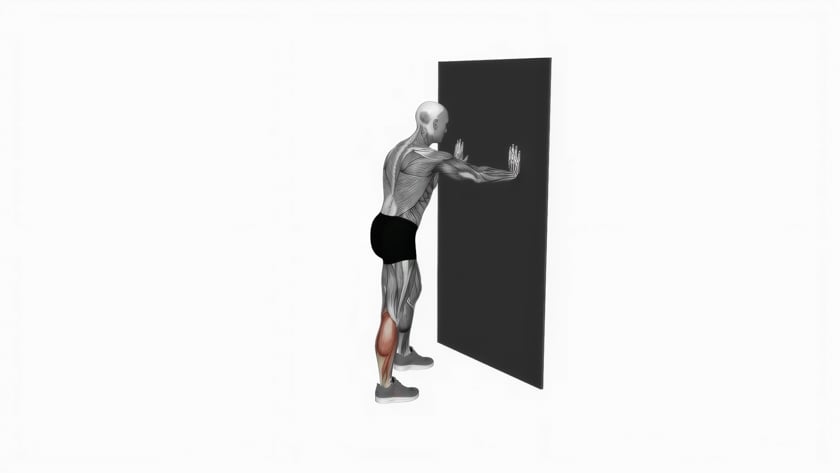
The Standing Calf Stretch is a basic static flexibility exercise used to stretch the muscles along the back of the lower leg, particularly the gastrocnemius.
It is commonly performed with the hands supported against a wall, making it a simple and stable stretching option for beginners.
The video animation demonstrates the traditional wall-supported, straight-knee version of the Standing Calf Stretch.
The exerciser faces a wall with both hands supported against it, places one leg behind the other, keeps the rear knee straight and presses the rear heel toward the floor while gently shifting the body forward. This is a beginning, no-equipment exercise and instructs the exerciser to maintain a straight rear leg, forward-pointing toes and heel contact with the floor.
The straight-knee position places particular emphasis on the gastrocnemius, the large superficial calf muscle.
How to Perform
Stand facing a wall approximately an arm's length away.
Place both hands against the wall at approximately chest or shoulder height for support.
Step one foot backward into a comfortable staggered stance while keeping both feet pointed generally forward.
Keep the rear foot flat on the floor with the heel firmly down.
Keep the rear knee straight without forcefully locking the joint.
Slowly bend the front knee and shift your body forward toward the wall while maintaining an upright, controlled posture.
Continue moving forward until you feel a gentle stretch through the calf of the rear leg.
Hold the position without bouncing while breathing normally.
Slowly release the stretch, switch leg positions and repeat on the opposite side.
For general flexibility work, we recommend static stretches held for approximately 10–30 seconds and repeated 2–4 times.
Tips
Keep the toes of the rear foot pointing generally forward rather than allowing the foot to turn significantly outward.
Keep the rear heel in contact with the floor throughout the stretch. If the heel begins to lift, reduce how far you are leaning forward.
Maintain a straight rear knee to emphasize the gastrocnemius. Bending the rear knee changes the emphasis toward the soleus.
Move gradually into the stretch until you feel comfortable tension through the calf. Do not force the ankle beyond its comfortable range of motion.
Keep your torso controlled rather than bending excessively at the waist.
Use the wall for balance and support rather than pushing forcefully against it.
Breathe normally and relax into the position. Avoid holding your breath.
Keep the stretch static rather than bouncing in and out of the position.
Benefits
The Standing Calf Stretch helps maintain and improve flexibility of the muscles at the back of the lower leg.
Stretching the calf can help improve ankle dorsiflexion—the ability of the ankle to allow the lower leg to move forward over the foot while the heel remains down.
Adequate calf and ankle flexibility contributes to common activities such as walking, climbing stairs and performing lower-body exercises that require the ankle to move through an appropriate range.
The wall-supported position provides additional stability, making this variation particularly useful for beginners who may not yet be comfortable performing unsupported flexibility exercises.
The exercise requires no specialized fitness equipment and can easily be incorporated into a general flexibility or cool-down routine.
Consistent static stretching can improve joint range of motion over time.
Common Mistakes
Allowing the rear heel to rise from the floor reduces the intended calf stretch. Keep the heel firmly down and decrease the forward lean if necessary.
Turning the rear foot excessively outward changes lower-leg alignment. Keep the toes directed generally forward.
Bending the rear knee substantially changes the emphasis of the stretch. For the version demonstrated in the video, keep the rear leg straight to emphasize the gastrocnemius.
Leaning too aggressively toward the wall can create excessive tension rather than a comfortable stretch. Move forward gradually.
Bouncing repeatedly into the stretch is unnecessary. Maintain a steady static position.
Arching or rounding excessively through the back can interfere with good body alignment.
Forcing the heel downward despite pain or significant ankle restriction can place unnecessary stress on the ankle and lower leg. Work only within a comfortable range.
FAQ
Safety Note
Perform the Standing Calf Stretch on a stable, nonslip surface and use the wall for balance as needed.
Move slowly into the stretch and stop when you feel gentle to moderate tension through the calf. Stretching should not cause sharp or increasing pain.
Do not bounce, force the heel downward or attempt to achieve a greater range of motion than your ankle comfortably allows.
Keep the rear foot and knee aligned and reduce the stretch if you cannot maintain heel contact with the floor.
Individuals with significant balance limitations should maintain secure hand support throughout the exercise.
If you have a recent or existing injury involving the calf, Achilles tendon, ankle, knee or foot, consult your physician or another qualified healthcare professional before performing this or any other stretch.