
Shadow Boxing
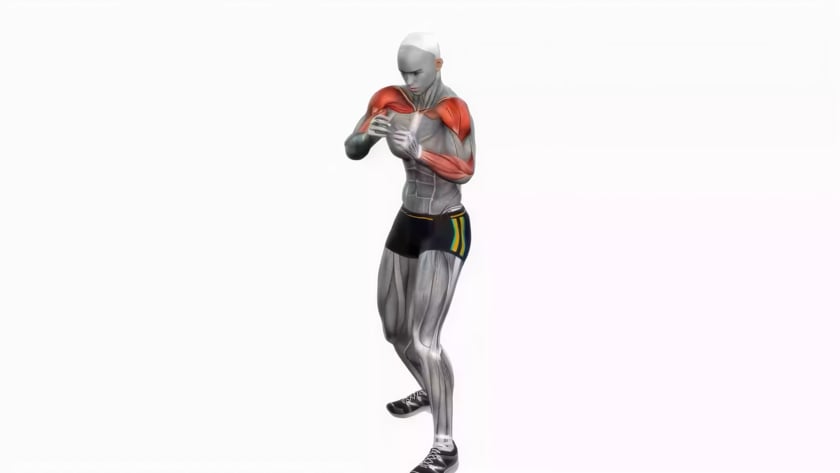
Shadow Boxing is an equipment-free cardiovascular exercise that uses boxing-style punches, footwork and continuous body movement without striking a bag or opponent.
The exerciser punches into open space while shifting body weight and maintaining an athletic stance. Performed continuously, Shadow Boxing can increase heart rate and breathing while also challenging coordination, agility and muscular endurance.
The uploaded video demonstrates a basic fitness-oriented form of Shadow Boxing rather than formal competitive boxing technique.
The exerciser maintains a staggered stance with the knees slightly bent and hands positioned near the face, then performs alternating punches while shifting the body and moving lightly on the feet.
For purposes of this exercise library, the goal is cardiovascular conditioning and coordinated full-body movement—not developing punching power or combat skills.
How to Perform
Stand with your feet approximately shoulder-width apart, then move one foot slightly forward to create a comfortable staggered stance.
Keep your knees slightly bent and distribute your weight comfortably between both feet.
Gently engage your abdominal muscles and maintain an upright torso.
Bring both hands toward the face in a relaxed guard position with the elbows relatively close to the body.
Extend the lead arm forward in a controlled straight punch, then return the hand promptly to the starting guard position.
Follow with a controlled punch from the opposite arm. Allow the torso and hips to rotate naturally with the movement rather than relying exclusively on the arm.
Continue alternating punches while maintaining light, controlled movement through the feet and legs.
Keep the punches smooth and controlled. The elbows should approach extension without being forcefully snapped or locked straight.
Maintain steady breathing as you punch. Exhale naturally during the punching movement rather than holding your breath.
Continue the movement at a comfortable rhythmic pace appropriate for your conditioning level.
Tips
Begin slowly while learning to coordinate the hands, torso and feet. Speed can be added after the basic movement feels comfortable.
Keep your fists relaxed rather than tightly clenching them throughout the exercise.
Return each hand toward the face after punching instead of allowing the arms to remain extended.
Keep the knees slightly bent and stay light on your feet.
Allow some natural rotation through the hips and torso as you punch. Boxing is a coordinated whole-body movement rather than simply moving the arms.
Avoid throwing punches as hard as possible when there is no target. The objective is controlled cardiovascular movement, not maximum punching power.
For beginners, start with simple alternating straight punches before introducing more complicated punch combinations or faster footwork.
Use perceived exertion or the talk test to monitor cardiovascular intensity.
Benefits
Shadow Boxing provides cardiovascular exercise without requiring a treadmill, bicycle, rowing machine or other specialized equipment, making it particularly practical for personal-training studios and small exercise spaces.
Continuous punching and foot movement can elevate heart rate and challenge the cardiorespiratory system.
The punching movements involve the shoulders, chest and arms, while the abdominal and other core muscles help stabilize and rotate the torso. The hips and legs contribute to stance, weight transfer and foot movement.
Shadow Boxing also challenges coordination because the exerciser must combine punches with body positioning, weight transfer and foot movement.
The exercise can be easily adjusted for different conditioning levels by changing punching speed, footwork, exercise duration and rest periods.
Because Shadow Boxing requires little space and no specialized equipment, it can also be incorporated into circuit training.
Common Mistakes
Punching as hard as possible into open space can encourage uncontrolled movement and unnecessary stress at the elbow and shoulder. Use controlled punches rather than trying to generate maximum force.
Forcefully locking the elbow at the end of each punch can place unnecessary stress on the joint. Stop the punch under muscular control.
Using only the arms while keeping the rest of the body completely rigid reduces the coordinated nature of the exercise. Allow controlled movement through the torso, hips and legs.
Dropping the hands completely after every punch can interfere with rhythm and boxing posture. Bring each hand back toward the guard position.
Shrugging the shoulders toward the ears can create unnecessary upper-body tension. Keep the shoulders relaxed.
Standing with the knees locked can reduce balance and make weight transfer more difficult. Maintain a slight bend in the knees.
Moving too quickly before developing coordination can cause technique to deteriorate. Beginners should establish a comfortable punching rhythm before increasing speed.
Holding the breath is another common mistake. Maintain steady breathing throughout the exercise.
FAQ
Safety Note
Perform Shadow Boxing on a stable, nonslip surface with enough open space to move your arms and feet safely.
Begin with controlled punches and a comfortable pace until you become familiar with the movement.
Do not forcefully lock the elbows or throw maximum-effort punches into open space. Keep the movement controlled throughout the entire punching range.
Maintain a balanced stance and avoid footwork that is faster or more complicated than your current coordination allows.
Gradually increase exercise duration and intensity as conditioning improves. For beginners, shorter bouts and appropriate recovery periods can be used before progressing to longer or more demanding sessions. ACE's entry-level body-weight cardiovascular programming similarly emphasizes shorter introductory workouts with progression according to ability.
Stop exercising if you experience pain, dizziness, unusual shortness of breath, chest discomfort or other concerning symptoms.
Individuals with cardiovascular, respiratory, balance, shoulder, elbow, wrist or other orthopedic conditions should follow the exercise recommendations provided by their physician or another qualified healthcare professional.