
Standing Toe Touch
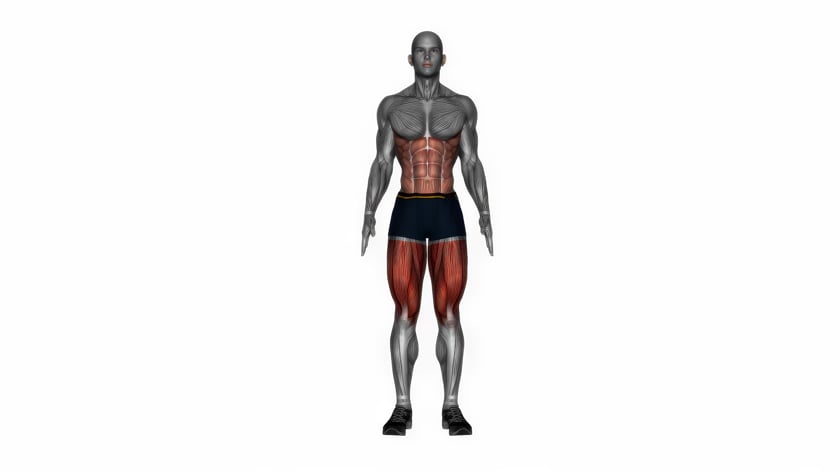
The Standing Toe Touch is a dynamic body-weight exercise that combines alternating straight-leg raises with a cross-body hand reach.
Performed continuously, it challenges coordination, balance, core control and lower-body mobility while providing a simple equipment-free movement that can be incorporated into cardiovascular circuits or dynamic warm-ups.
The uploaded video requires an important clarification because the exercise is not the traditional standing toe-touch stretch in which the torso bends forward toward the feet.
Instead, the exerciser remains upright while alternately raising one leg forward and reaching the opposite hand toward the elevated foot.
The movement resembles a rhythmic alternating straight-leg kick with a cross-body toe reach. For this exercise, Standing Toe Touch refers specifically to the dynamic movement demonstrated in the video.
How to Perform
Stand upright with your feet approximately hip-width apart and your arms relaxed by your sides.
Keep your head facing forward, shoulders relaxed and abdominal muscles gently engaged.
Shift your weight onto one leg while maintaining an upright torso.
Raise the opposite leg forward in a controlled straight-leg motion. The knee can remain straight or slightly bent depending on your flexibility.
At the same time, reach the opposite hand toward the raised foot, as demonstrated in the video.
Lower the leg and return the arm toward the starting position.
Repeat the movement on the opposite side, raising the other leg and reaching toward it with the opposite hand.
Continue alternating sides in a smooth, rhythmic pattern.
Maintain an upright posture throughout the exercise. The goal is to bring the foot toward the hand rather than excessively bending the torso forward in an attempt to touch the toes.
Begin slowly and gradually develop a comfortable rhythm as your balance and coordination improve.
Tips
Keep your abdominal muscles gently engaged to help stabilize your torso as each leg lifts.
Focus on lifting the leg toward the hand rather than bending your upper body downward toward the foot.
The hand and foot do not have to make contact. Reach only as far as your flexibility and balance comfortably allow.
Maintain control of the supporting leg and avoid locking the knee.
Begin with a relatively low leg raise. The height can gradually increase as hamstring mobility, balance and coordination improve.
Move rhythmically but avoid forcefully swinging or kicking the leg. Dynamic movements should remain controlled rather than ballistic.
If balance is challenging, perform the exercise more slowly and reduce the height of the leg raise.
These movements emphasize active range of motion rather than holding a static stretch.
Benefits
The Standing Toe Touch provides a simple full-body movement requiring no equipment, making it practical for personal-training studios, group exercise sessions and circuit workouts.
The alternating leg raise dynamically involves the hip flexors while the quadriceps help maintain knee extension. The hamstrings experience an active lengthening challenge as the leg travels forward.
The abdominal and other core muscles help stabilize the torso while the body repeatedly balances on one leg and coordinates the opposite arm and leg.
The cross-body reaching pattern also challenges coordination because the opposite arm and leg must move together.
The exercise incorporates dynamic mobility through the hips and hamstrings.
When performed continuously, the Standing Toe Touch can also be incorporated into a cardiovascular circuit.
Common Mistakes
Bending excessively forward from the torso in an attempt to touch the foot changes the exercise. The video demonstrates bringing the raised foot toward the opposite hand while maintaining a predominantly upright position.
Forcefully kicking the leg upward can cause the movement to become uncontrolled. Use an active but comfortable range of motion.
Rounding the back to reach farther toward the foot is unnecessary. We emphasize controlled movement and cautions against excessive rounding of the lower back during toe-reaching movements.
Trying to raise the leg higher than current hamstring mobility allows can interfere with balance and posture.
Moving too quickly before developing coordination can cause loss of balance. Establish the alternating pattern at a slow pace first.
Allowing the supporting knee or hip to collapse inward can reduce stability. Maintain control over the weight-bearing leg.
Holding the breath is unnecessary. Maintain steady, natural breathing as you alternate sides.
FAQ
Safety Note
Perform the Standing Toe Touch on a stable, nonslip surface with enough space around you to raise each leg safely.
Begin with a low leg raise and slow tempo until you are comfortable balancing on one leg and coordinating the opposite arm and leg.
Do not force the leg higher in an attempt to touch the toes. Work within a comfortable range of motion and gradually increase the height as flexibility and control improve.
Reduce the range of motion or pace if you begin losing balance or excessively bending your torso forward.
Individuals with significant balance limitations may need to perform a simpler marching variation or use stable support until adequate control is developed.
Stop exercising if you experience pain, dizziness, unusual shortness of breath, chest discomfort or other concerning symptoms.
Individuals with cardiovascular, respiratory, balance, hip, knee, lower-back or other orthopedic conditions should follow the exercise recommendations provided by their physician or another qualified healthcare professional.