
Indoor Rowing Machine
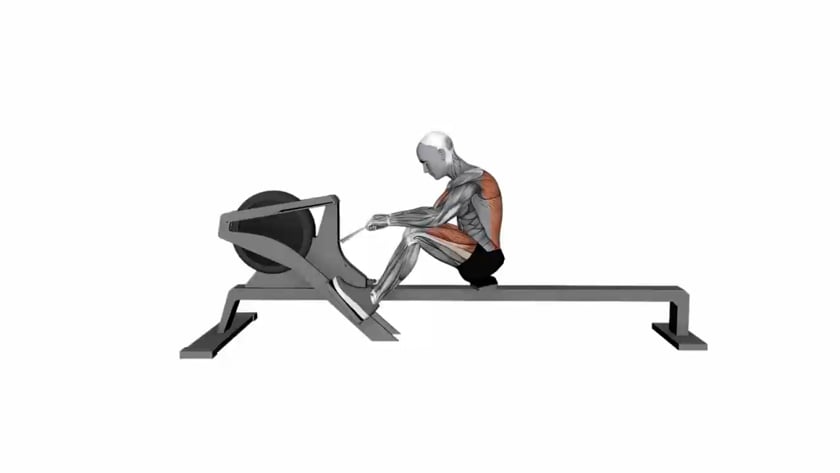
The Indoor Rowing Machine, often called a rowing ergometer or indoor rower, is a cardiovascular exercise machine that simulates the movement of rowing a boat.
Unlike many cardio machines that primarily emphasize the lower body, rowing combines repeated leg drive, hip movement and upper-body pulling to create a coordinated full-body exercise.
The video animation demonstrates a traditional sliding-seat indoor rower. The exerciser begins with the knees bent and arms extended, drives the seat backward by extending the legs, then finishes the stroke by bringing the torso slightly back and pulling the handle toward the lower chest or upper abdominal area.
The recovery reverses this sequence as the arms extend, the torso moves forward and the knees bend to slide the seat toward the front of the machine.
This sequence is important because rowing is not simply an upper-body pulling exercise.
How to Perform
Sit securely on the rowing machine seat and place both feet firmly against the footplates. Adjust the foot straps so the feet remain secure throughout the stroke.
Hold the handle with both hands using a comfortable overhand grip. Keep the wrists relatively straight and the shoulders relaxed.
Begin in the catch position with the knees bent, arms extended and torso inclined slightly forward from the hips. Maintain a controlled spine position and gently engage the abdominal muscles.
Begin the drive by pressing through the feet and extending the legs. Think of pushing the machine away with the legs rather than immediately pulling the handle with the arms.
As the legs approach extension, allow the torso to move from its slightly forward position to a small backward lean.
Complete the drive by bending the elbows and pulling the handle toward the lower chest or upper abdominal area.
At the finish, the legs are extended, elbows are bent, shoulders remain relaxed and the torso is slightly behind vertical. Avoid dramatically leaning backward.
Begin the recovery by extending the arms first. Then hinge the torso forward from the hips. Once the handle has moved past the knees, bend the knees and allow the seat to slide forward toward the catch position.
Continue repeating the sequence smoothly: legs, torso, arms during the drive; arms, torso, legs during the recovery.
Tips
Learn the stroke sequence at a slow pace before attempting to row faster. Good coordination is more important than a high stroke rate for a beginner.
Keep your feet securely positioned against the footplates throughout the stroke.
Initiate the drive primarily with the legs rather than immediately pulling with the arms.
Maintain a controlled torso position and avoid rounding excessively through the back.
Keep the shoulders relaxed instead of shrugging them toward the ears as you pull.
Pull the handle smoothly toward the lower chest or upper abdominal area rather than jerking it toward the body.
At the finish, use only a slight backward torso lean.
For cardiovascular exercise, establish a sustainable rhythm rather than trying to generate maximum power with every stroke.
Benefits
The Indoor Rowing Machine provides cardiovascular exercise while involving both the upper and lower body.
The leg drive involves the quadriceps, hamstrings, gluteal muscles and calves, while the pulling portion recruits muscles of the upper back, shoulders and arms.
Rowing can help develop cardiorespiratory endurance because the repeated full-body movement raises heart rate and breathing.
The machine provides a low-impact cardiovascular option because the exercise does not involve the repeated ground contact associated with jogging or running.
Exercise intensity can also be readily adjusted through rowing pace, stroke rate, resistance settings and workout duration, allowing the activity to accommodate different conditioning levels.
Common Mistakes
Pulling with the arms before initiating the leg drive is one of the most common rowing mistakes. The legs should begin the drive, followed by the torso and then the arms.
Trying to move the legs, torso and arms simultaneously can make the stroke less coordinated and efficient. Learn the proper sequence at a slower pace before increasing speed.
Rounding or hunching excessively through the back can compromise rowing posture.
Leaning excessively backward at the finish wastes movement and can place unnecessary stress on the lower back. Only a modest backward torso angle is necessary.
Allowing the knees to move excessively outward during the stroke can interfere with efficient lower-body alignment.
Bending the knees too early during the recovery can cause the handle to interfere with the knees. Extend the arms and begin moving the torso forward before allowing the knees to bend.
Rowing at a very high stroke rate before mastering the movement often leads to poor sequencing. Beginners should prioritize smooth, repeatable strokes over speed.
FAQ
Safety Note
Adjust the foot straps and become familiar with the machine controls before beginning your workout.
Start with a low-to-moderate resistance and a slow stroke rate while learning the rowing sequence.
Maintain controlled spinal posture and avoid forcefully rounding the back or leaning excessively backward during the stroke.
Increase resistance, stroke rate and exercise duration gradually as technique and conditioning improve.
Individuals with existing lower-back problems should use particular caution. ACE notes that rowing may aggravate lower-back problems for some individuals, making appropriate technique and exercise selection especially important.
Stop exercising if you experience pain, dizziness, unusual shortness of breath, chest discomfort or other concerning symptoms. ACSM professional guidance emphasizes monitoring adverse signs and symptoms and modifying exercise accordingly.
Individuals with cardiovascular, respiratory, orthopedic or other medical conditions should follow the exercise recommendations provided by their physician or another qualified healthcare professional.