
Elliptical Trainer
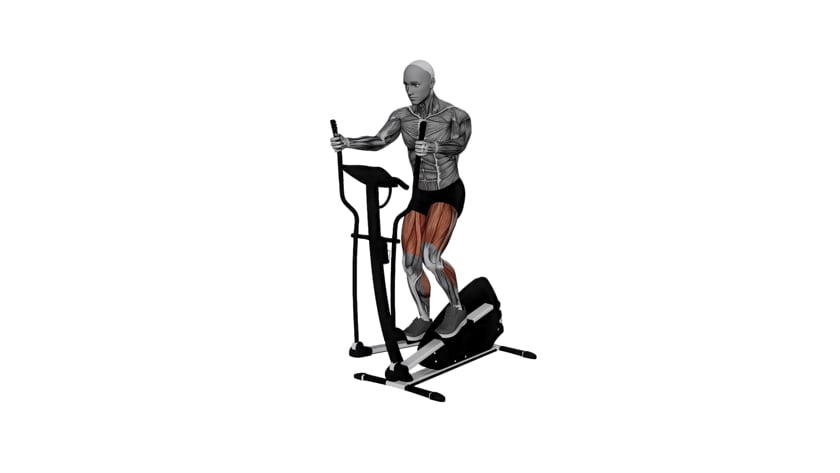
The Elliptical Trainer is a stationary cardiovascular exercise machine that allows the feet to travel through a smooth, continuous elliptical pattern while remaining supported by the pedals.
Many elliptical trainers also include moving handles that allow the arms to participate in the exercise, creating a coordinated upper- and lower-body movement.
The video animation demonstrates the exercise on an elliptical trainer using both the foot pedals and moving handles. The exerciser maintains an upright position while the arms and legs work in an alternating, rhythmic pattern.
The primary purpose of the exercise is cardiorespiratory conditioning rather than isolated muscular strengthening.
The elliptical is particularly useful for beginning exercisers because exercise intensity can be adjusted through resistance, pace and workout duration without introducing the repetitive impact associated with jogging or running.
How to Perform
Step onto the elliptical carefully and place both feet securely near the center of the pedals.
Hold the stationary or moving handles for balance as you establish your position.
Stand upright with your head facing forward, shoulders relaxed and abdominal muscles gently engaged.
Begin moving the pedals slowly until you establish a comfortable and controlled rhythm.
If using the moving handles, allow your arms to push and pull naturally in coordination with the movement of your legs.
Keep your feet in contact with the pedals throughout the exercise.
Maintain an upright torso rather than leaning heavily forward or supporting excessive body weight through the handles.
Once you are comfortable with the movement, gradually adjust your pace or machine resistance until you reach the desired cardiovascular intensity.
Continue with smooth, continuous movements while maintaining regular breathing.
At the end of the workout, gradually reduce your pace and resistance. Continue moving easily for a brief cool-down before allowing the pedals to stop completely.
Tips
Begin slowly until you become comfortable with the elliptical motion and the coordination between your arms and legs.
Keep your entire foot supported by the pedal rather than deliberately lifting the heel or shifting excessively onto the toes.
Maintain an upright posture and avoid leaning heavily on the handles.
Keep your shoulders relaxed when using the moving handles. The arms should contribute naturally rather than aggressively pulling or pushing the handles.
Use a smooth, controlled rhythm. Avoid trying to move the pedals as rapidly as possible simply to increase exercise intensity.
Increase resistance or pace gradually as your cardiovascular fitness improves.
For a beginner, concentrate first on becoming comfortable with the machine and maintaining continuous movement before substantially increasing intensity or duration.
Use the talk test or perceived exertion to help monitor exercise intensity.
Benefits
The Elliptical Trainer provides continuous aerobic exercise that can help improve cardiorespiratory endurance.
Because the feet remain supported by the pedals, elliptical exercise provides a low-impact cardiovascular option without the repeated ground impact associated with jogging or running.
Elliptical training involves large muscles of the lower body while machines equipped with moving handles also allow the upper body to contribute to the exercise.
The machine provides several ways to modify cardiovascular workload. Pace, resistance and exercise duration can be adjusted to accommodate different fitness levels and progressively increase the challenge.
The elliptical is also practical for fitness studios because it provides cardiovascular exercise within a relatively small, controlled indoor environment.
The elliptical is an appropriate piece of cardio equipment for steady aerobic activity.
Common Mistakes
Starting at a pace or resistance that is too difficult can cause a beginner to fatigue quickly and interfere with good movement control.
Leaning heavily on the handles reduces the need to maintain an upright, self-supported posture.
Looking continuously downward at the pedals or console can encourage poor upper-body posture. Keep your head comfortably upright and look primarily forward.
Using excessive resistance can turn a smooth cardiovascular movement into a slow, labored effort.
Moving the pedals excessively fast with very little control can make it difficult to maintain a consistent exercise intensity and stable posture.
Allowing the knees to repeatedly collapse inward can interfere with lower-body alignment. Keep the knees generally tracking in the same direction as the feet.
Stopping suddenly after sustained exercise should be avoided. We recommend gradually reducing cardiovascular workload during a cool-down to allow the cardiovascular and musculoskeletal systems to transition from exercise.
FAQ
Safety Note
Become familiar with the elliptical controls before beginning and make sure both feet are securely positioned on the pedals.
Use the handles when stepping onto or off the machine and wait until the pedals have stopped moving before dismounting.
Begin with low resistance and a comfortable pace until you are familiar with the machine's movement.
Maintain an upright, controlled posture and avoid placing excessive body weight through the handles.
Increase exercise intensity and duration gradually. NSCA guidance notes that deconditioned clients may benefit from shorter or intermittent bouts of cardiovascular exercise while fitness develops.
Stop exercising if you experience pain, dizziness, unusual shortness of breath, loss of balance or other concerning symptoms.
Individuals with cardiovascular, respiratory, orthopedic or other medical conditions should follow the exercise recommendations provided by their physician or another qualified healthcare professional.