
Upright Stationary Bike
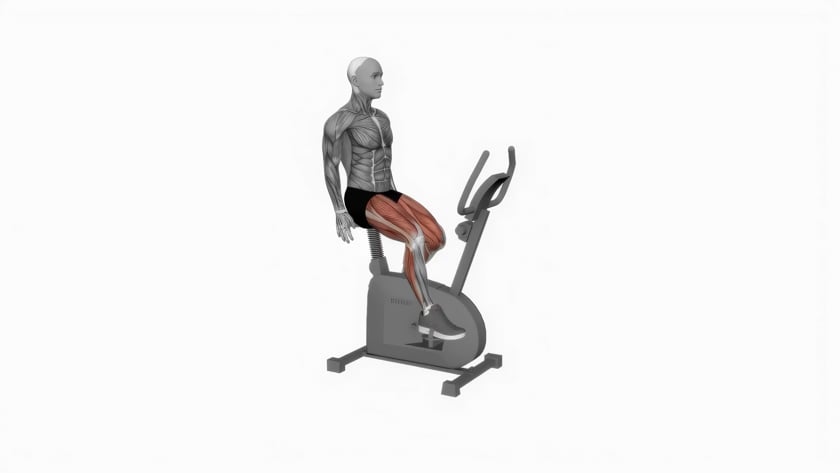
The Upright Stationary Bike is a fundamental cardiovascular exercise performed on a stationary bicycle with the rider positioned in a relatively upright cycling posture.
It provides continuous lower-body movement while allowing exercise intensity to be adjusted through pedaling speed, resistance and workout duration.
Stationary cycling is particularly useful for beginning cardiovascular programming because it is low impact and does not require the balance, traffic awareness or environmental considerations associated with outdoor cycling.
The video animation demonstrates continuous seated pedaling on an upright stationary bike. The primary objective of the exercise is cardiovascular conditioning rather than isolated strengthening of the legs. The quadriceps, hamstrings and gluteal muscles contribute to the pedaling motion, while the trunk helps maintain a stable riding position.
Proper bike setup is important before beginning. The seat should be adjusted so the rider can pedal comfortably without excessive bending of the knees or rocking the hips from side to side.
How to Perform
Adjust the seat height before beginning so that you can comfortably reach the pedals throughout the entire pedal stroke.
Sit centered on the saddle with both feet securely positioned on the pedals.
Place your hands lightly on the handlebars and maintain a comfortable, upright riding posture.
Begin pedaling slowly with minimal resistance to become comfortable with the bicycle and establish a smooth rhythm.
Keep your knees tracking generally in line with your feet as you pedal rather than allowing them to repeatedly collapse inward or flare excessively outward.
Maintain a smooth, continuous pedal stroke rather than pushing forcefully through only part of the rotation.
Keep your shoulders relaxed and avoid placing excessive body weight through your hands and handlebars.
Once you are comfortable, gradually increase resistance or pedaling speed until you reach the desired cardiovascular intensity.
Maintain steady breathing throughout the exercise.
At the end of the workout, gradually decrease the resistance and pedaling speed and continue cycling easily for a brief cool-down before stopping.
Tips
Take time to properly adjust the seat before beginning. Correct setup helps create a more comfortable pedaling position and promotes appropriate lower-body alignment.
Start with light resistance and a comfortable cadence. Beginners should become accustomed to the bicycle before substantially increasing workload.
Keep your upper body relatively relaxed. Avoid gripping the handlebars tightly or supporting excessive body weight through the arms.
Maintain a controlled, consistent pedaling rhythm rather than alternating between very fast and very slow pedal strokes.
Keep your hips centered on the seat. Excessive rocking from side to side may indicate that the seat position needs adjustment or that the workload is inappropriate.
Increase resistance gradually. Adding too much resistance can cause the rider to struggle through each pedal stroke and may unnecessarily alter technique.
Use perceived exertion or the talk test to help regulate cardiovascular intensity.
Benefits
The Upright Stationary Bike provides an effective form of aerobic exercise while minimizing impact because the feet remain supported by the pedals throughout the activity.
The bicycle allows exercise intensity to be easily adjusted by changing resistance, pedaling speed or exercise duration, making it suitable for progressive cardiovascular programming.
Stationary cycling uses large muscles of the lower body, including the quadriceps, hamstrings and gluteal muscles.
Because the equipment remains stationary, the exerciser does not need to manage road surfaces, traffic or weather conditions, making it a practical cardiovascular option for fitness studios.
Stationary cycling can accommodate both easy continuous exercise and more challenging workouts as conditioning improves. Resistance and cadence can be progressively adjusted to create different levels of cardiovascular demand.
Common Mistakes
Setting the seat too low can create excessive knee flexion during the pedal stroke and make cycling uncomfortable.
Setting the seat too high can cause the hips to rock from side to side as the rider reaches for the pedals.
Using too much resistance can make the pedal stroke slow and labored and may cause unnecessary changes in posture.
Using extremely little resistance while pedaling excessively fast can make it difficult to maintain a smooth, controlled cadence.
Leaning heavily on the handlebars can place unnecessary weight through the hands and arms and interfere with a comfortable upright riding posture.
Rounding the shoulders or excessively flexing the spine can create an uncomfortable riding position. Maintain a natural posture with the shoulders relaxed.
Allowing the knees to repeatedly collapse inward during pedaling can interfere with efficient lower-body alignment.
Starting a workout at a high workload without warming up or stopping immediately after harder cycling should be avoided. We recommend progressive warm-up and cool-down periods surrounding cardiovascular exercise.
FAQ
Safety Note
Make sure the stationary bike is stable and properly adjusted before beginning exercise. Position the seat so you can pedal comfortably while maintaining control throughout the entire pedal stroke.
Begin with light resistance and a comfortable pedaling pace. Increase resistance, speed and duration progressively as cardiovascular conditioning improves.
Maintain control when getting onto and off the bicycle, particularly after a longer or more demanding workout.
Stop exercising if you experience pain, dizziness, unusual shortness of breath, chest discomfort or other concerning symptoms.
Individuals with cardiovascular, respiratory, orthopedic or other medical conditions should follow the exercise recommendations provided by their physician or another qualified healthcare professional.