
Knee-to-Hand
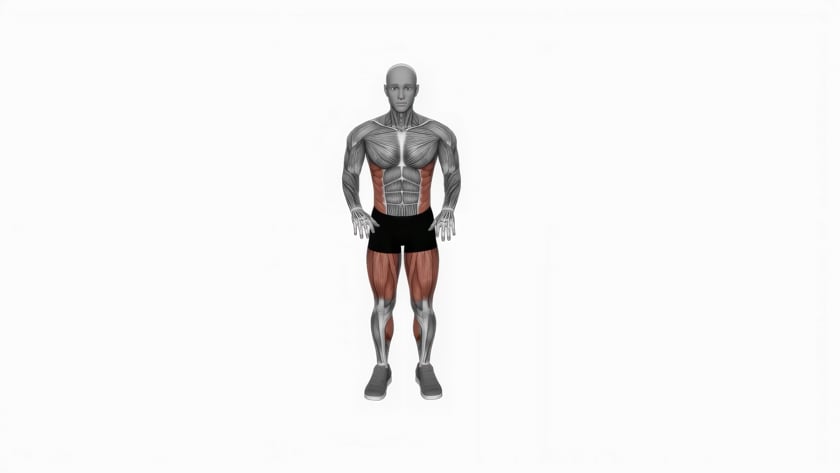
The Knee-to-Hand is a simple, low-impact cardiovascular exercise performed from a standing position.
The movement combines alternating knee lifts with an opposite-hand reach toward the raised knee, creating a rhythmic marching pattern that involves the legs, arms and core while gradually increasing heart rate and breathing.
The video animation demonstrates an alternating cross-body version. The exerciser stands upright, lifts one knee and brings the opposite hand toward the raised knee, then returns to the starting position and repeats on the other side.
The movement is continuous and controlled, with one foot remaining in contact with the floor during each transition.
The Knee-to-Hand movement closely resembles the marching high-knee patterns used in beginner cardiovascular programming.
How to Perform
Stand upright with your feet approximately hip-width apart and your arms relaxed in front of your body.
Gently brace your abdominal muscles and maintain an upright posture.
Lift one knee toward the front of your body.
At the same time, bring the opposite hand toward the raised knee.
Return the foot and hand to the starting position under control.
Immediately lift the opposite knee and bring the other hand toward it.
Continue alternating sides in a smooth, rhythmic pattern.
Keep the movement controlled and use a comfortable knee height rather than trying to lift the knee as high as possible.
Continue for the desired time or number of repetitions while maintaining steady breathing and good balance.
Tips
Begin with a slow marching pace if you are deconditioned or unfamiliar with the movement.
Keep your torso upright rather than leaning excessively forward to reach the knee.
Lift the knee only as high as you can comfortably while maintaining balance.
Think about bringing the knee toward the hand rather than aggressively bending down toward the knee.
Keep your abdominal muscles gently engaged as you alternate sides.
Use a natural arm movement and avoid forcefully twisting through the torso.
Increase intensity gradually by increasing the pace, knee height or exercise duration.
If balance is limited, reduce the range of motion or perform the exercise near a stable support.
Use the talk test or perceived exertion to monitor intensity.
Benefits
The Knee-to-Hand provides a simple cardiovascular exercise that can be performed in a small space without specialized equipment.
The continuous alternating movement can increase heart rate and breathing while remaining low impact because the exercise does not require jumping.
The exercise involves the hip flexors and quadriceps as the knees lift, while the abdominal and trunk muscles contribute to posture and cross-body control.
The alternating hand-to-knee pattern also introduces a basic coordination challenge without requiring complex footwork.
High knee is an entry-level cardiorespiratory exercise and we recommend shorter work intervals and longer recovery periods for less-fit exercisers.
Common Mistakes
Moving too quickly before establishing balance can make the exercise difficult to control.
Leaning the torso excessively forward to touch the knee reduces upright posture and may turn the movement into more of a trunk-flexion exercise.
Pulling the knee excessively high can interfere with balance and is unnecessary for cardiovascular benefit.
Allowing the supporting knee to collapse inward can reduce lower-body stability.
Holding the breath can make the exercise feel more difficult than necessary. Maintain steady, regular breathing.
Twisting aggressively through the spine to reach the opposite knee is unnecessary. The cross-body movement should remain comfortable and controlled.
Beginning with an overly fast cadence can cause a deconditioned exerciser to fatigue quickly.
FAQ
Safety Note
Perform the Knee-to-Hand exercise on a stable, nonslip surface with enough space to move comfortably.
Begin with a slow pace and modest knee height until you are confident in your balance and coordination.
Keep at least one foot in contact with the floor and avoid turning the movement into a jumping exercise unless a more advanced progression is specifically intended.
Reduce the range of motion or use a stable support if balance is limited.
Stop the exercise if you experience pain, dizziness, unusual shortness of breath or loss of balance.
Individuals with cardiovascular, respiratory, orthopedic or other medical conditions should follow the exercise recommendations provided by their physician or another qualified healthcare professional.