
Brisk Walk
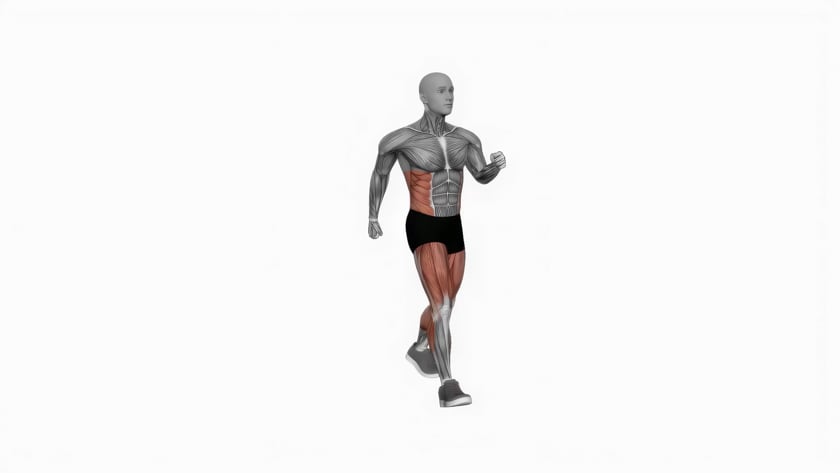
The Brisk Walk is one of the simplest and most accessible forms of cardiovascular exercise.
It involves walking continuously at a purposeful pace that raises the heart rate and breathing rate above normal while still allowing the exerciser to maintain control and good walking posture.
The video animation demonstrates brisk walking on level ground with a natural alternating arm swing. Although the anatomical illustration highlights several muscles involved in walking, the primary purpose of this exercise in the cardio library is to develop cardiorespiratory fitness rather than isolate a particular muscle group.
A brisk walk is particularly appropriate for beginning and de-conditioned exercisers because the pace, duration and intensity can easily be adjusted to the individual's current fitness level. Walking is an accessible way to improve physical activity and cardiorespiratory fitness.
How to Perform
Begin standing upright with your head up, shoulders relaxed and eyes looking forward.
Start walking at a comfortable pace to allow your body to warm up.
Gradually increase your walking speed until you reach a brisk but sustainable pace.
Allow your arms to swing naturally from the shoulders in opposition to your legs. As the right leg moves forward, the left arm should naturally move forward, and vice versa.
Maintain an upright posture with your abdominal muscles gently engaged. Avoid excessive leaning forward or backward.
Land each step comfortably and transition your weight forward through the foot as you continue walking.
Maintain a pace that noticeably increases your breathing and heart rate without causing you to become excessively breathless.
Continue for the planned duration, then gradually reduce your walking speed for several minutes before stopping.
Tips
Start slowly if you are new to exercise or returning after a period of inactivity. Duration and pace can gradually increase as cardiovascular endurance improves.
Use the talk test to help regulate intensity. At a moderate cardiovascular intensity, you should generally be able to carry on a conversation, although breathing will be noticeably elevated.
Keep your stride natural. Trying to dramatically lengthen each step is unnecessary and may make walking less comfortable.
Let your arms swing naturally rather than holding them rigidly against your body.
Wear comfortable, supportive footwear appropriate for walking.
For beginning exercisers, focus first on developing consistency and duration before substantially increasing walking speed.
Benefits
Brisk walking improves cardiorespiratory endurance by requiring the heart, lungs and circulatory system to support continuous activity.
It provides a low-impact form of cardiovascular exercise that is generally easier on the joints than jogging or running.
Walking involves large muscle groups of the lower body, including the quadriceps, hamstrings, gluteal muscles and lower-leg musculature.
Brisk walking requires little specialized equipment and can be performed indoors or outdoors, making it a practical cardiovascular exercise for a wide range of fitness levels.
It also provides an easily measurable starting point from which a trainer can progressively increase exercise duration, pace or other variables as the client's conditioning improves.
Common Mistakes
Starting at too fast a pace can cause a beginner to fatigue quickly and make it difficult to complete the intended exercise duration.
Taking unnaturally long strides can interfere with a comfortable walking pattern. Use a natural stride and increase overall pace rather than deliberately reaching farther forward with each step.
Leaning excessively forward from the waist can compromise walking posture. Stay tall and allow the body to move naturally.
Keeping the arms rigid or exaggerating the arm swing can make the movement inefficient. Keep the shoulders relaxed and use a comfortable alternating arm swing.
Ignoring breathing is another common mistake. Breathing should remain regular and controlled.
Stopping abruptly after a sustained brisk walk should also be avoided. Gradually slowing the pace allows heart rate and breathing to return toward resting levels.
FAQ
Safety Note
Exercise should be performed using a pace and duration appropriate for your current fitness level. Beginners and deconditioned exercisers should begin conservatively and increase exercise duration and intensity gradually.
Use a safe, level walking surface that is free from obstacles, and wear footwear appropriate for walking. Reduce your pace or stop exercising if you experience pain, dizziness, unusual shortness of breath or other concerning symptoms.
Individuals with cardiovascular, respiratory, orthopedic or other medical conditions should follow the exercise recommendations provided by their physician or another qualified healthcare professional.