
Cable Rear Delt Fly
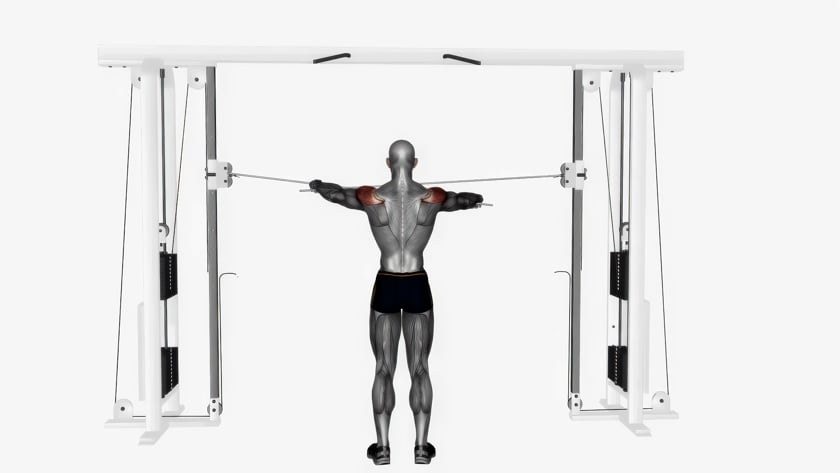
The Cable Rear Delt Fly is a basic shoulder exercise that primarily targets the posterior, or rear, portion of the deltoids while also involving the muscles of the upper back that control the shoulder blades.
The primary movement is horizontal abduction of the shoulders — moving the arms outward and backward from a position in front of the body.
The video animation demonstrates a standing two-arm crossover version using a dual-cable machine. The pulleys are positioned at approximately shoulder height. The exerciser reaches across the body to grasp the opposite cable, creating a crossed-cable starting position, then opens both arms outward until they form approximately a straight line across the shoulders. The arms then return slowly to the crossed position in front of the body.
This is essentially the reverse of a cable chest fly. Face the cable machine and bring the arms straight back while concentrating on squeezing the shoulder blades together and avoid shrugging.
How to Perform
Stand centered between the two sides of a dual-cable machine with the pulleys positioned at approximately shoulder height.
Reach across your body and grasp the handle or cable attachment from the opposite side with each hand so that the cables cross in front of you.
Stand upright with your feet approximately hip- to shoulder-width apart, knees comfortably relaxed and abdominal muscles engaged.
Begin with your arms extended in front of you at approximately shoulder height. Maintain a slight, comfortable bend in your elbows.
Keep your chest lifted, spine neutral and shoulders comfortably down.
Pull both arms outward and backward in a wide arc, separating the hands while maintaining approximately the same elbow position.
Continue until your arms are approximately in line with your shoulders or until you reach a comfortable range of motion.
Gently draw your shoulder blades together as you reach the end of the movement.
Pause briefly, then slowly allow the arms to return toward the crossed starting position while maintaining control of the cables.
Repeat for the desired number of repetitions.
Tips
Use a relatively light resistance. The posterior deltoids are comparatively small muscles and heavy resistance can quickly encourage compensation from other muscle groups.
Keep your torso upright and still throughout the exercise. Avoid rocking forward and backward to move the resistance.
Maintain a slight bend in your elbows and keep that elbow angle relatively consistent throughout the repetition.
Think about opening your arms outward rather than pulling the cables with your hands.
Gently squeeze your shoulder blades together as the arms open.
Keep your shoulders down rather than allowing them to shrug toward your ears.
Keep your head aligned with your spine. Avoid pushing your chin or head forward as you pull the arms backward.
Control the return movement. Do not allow the weight stacks to pull your arms rapidly back toward the starting position.
Because the uploaded version uses crossed cables, make sure the cables move freely and do not interfere with one another during the exercise.
Benefits
The Cable Rear Delt Fly strengthens the posterior deltoids, helping provide balanced development of the shoulder musculature.
The exercise also engages muscles responsible for controlling and retracting the shoulder blades. We emphasize the importance of scapular musculature in providing a stable base for movement of the shoulder joint.
The exercise complements shoulder presses, front raises and other movements that place greater emphasis on the anterior portion of the shoulder.
Cable resistance provides continuous resistance as the arms move through the exercise, giving trainers a useful alternative to the Dumbbell Reverse Fly.
The standing position also requires the abdominal and postural muscles to help stabilize the torso while the shoulders perform the movement.
The Cable Rear Delt Fly introduces a basic horizontal pulling pattern that can help beginning exercisers become more aware of controlling the shoulders and shoulder blades.
Common Mistakes
Using too much resistance can cause the exerciser to swing the torso, bend the elbows excessively or use momentum instead of the rear shoulders.
Shrugging the shoulders toward the ears increases upper-trapezius involvement and changes the intended movement.
Moving the head forward as the arms move backward is another common compensation. Keep the head and neck aligned with the spine.
Bending the elbows substantially during the movement changes the exercise into more of a rowing motion. Maintain a slight and relatively constant elbow bend.
Pulling the arms excessively far behind the torso can place unnecessary stress on the shoulder. Stop when the arms are approximately in line with the shoulders or at the end of your comfortable range.
Allowing the shoulders to round excessively forward when returning to the starting position reduces control of the movement.
Allowing the weight stacks to pull the arms rapidly forward eliminates much of the controlled lowering portion of the exercise.
FAQ
Safety Note
Use a manageable resistance and perform each repetition slowly and under control.
Maintain an upright posture, neutral spine and stable torso throughout the exercise.
Do not force the arms excessively behind the body. Work within a comfortable shoulder range of motion.
Keep the shoulders down and avoid shrugging or pushing the head forward as you open the arms.
If you experience shoulder pain, reduce the resistance and reassess your position and range of motion. NASM advises that clients with existing shoulder pain should not exercise through pain and should establish appropriate movement patterns before adding load or other challenges.
Stop the exercise if you experience sharp, pinching or persistent pain in the shoulders, neck or upper back.
If you have an existing shoulder injury, significant shoulder mobility limitation or chronic shoulder pain, consult your physician or another qualified healthcare professional before performing this or any other exercise.