
Dumbbell Reverse Fly
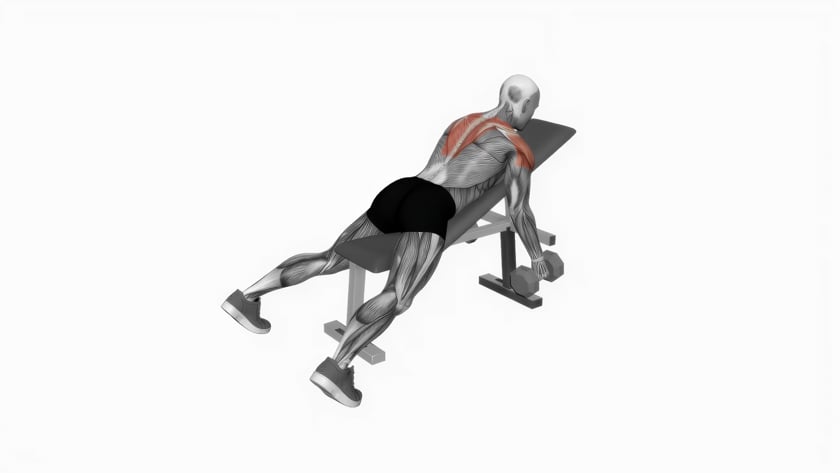
The Dumbbell Reverse Fly is a fundamental shoulder exercise that primarily targets the posterior, or rear, portion of the deltoid while also engaging muscles of the upper back that help control the shoulder blades.
It complements pressing and front-raise exercises by training the back of the shoulders rather than concentrating only on the anterior and lateral deltoids.
The video animation demonstrates the standing bent-over version of the exercise. The exerciser hinges forward at the hips with a dumbbell in each hand, maintains a stable torso and raises both arms outward to the sides until approximately shoulder level before lowering the weights under control.
How to Perform
Stand with your feet approximately hip- to shoulder-width apart and hold a dumbbell in each hand.
Bend your knees slightly and hinge forward from the hips while keeping your spine neutral and your torso stable.
Allow the dumbbells to hang beneath your shoulders with your palms facing inward and your elbows slightly bent.
Brace your abdominal muscles and keep your neck aligned with your spine.
Without changing the bend in your elbows significantly, raise both arms outward and slightly backward in a wide arc.
Continue lifting until your upper arms are approximately level with your shoulders or until you reach a comfortable range of motion.
Gently squeeze your shoulder blades together at the top of the movement without shrugging your shoulders toward your ears.
Slowly lower the dumbbells back toward the starting position under control.
Repeat for the desired number of repetitions.
Maintain a stable torso, slightly flexed elbows, raise the upper arms and dumbbells together and avoid excessive back arching during the movement.
Tips
Use relatively light dumbbells. The goal is controlled movement through the shoulders rather than lifting heavy resistance.
Maintain the hip-hinged position throughout the exercise instead of repeatedly standing upright and bending forward.
Keep your spine neutral and your abdominal muscles engaged to help support the torso.
Maintain a slight bend in your elbows and keep that elbow angle relatively consistent throughout the repetition.
Think about moving your upper arms outward and squeezing the shoulder blades gently together rather than simply lifting the dumbbells with your hands.
Keep your shoulders down and avoid shrugging as the arms rise.
Raise the dumbbells only as high as you can while maintaining good posture and comfortable shoulder movement.
Lower the weights slowly rather than allowing them to drop toward the floor.
Benefits
The Dumbbell Reverse Fly strengthens the posterior deltoids, helping balance the anterior and lateral shoulder work performed during presses and raises.
The exercise also involves the rhomboids and other muscles that help retract and stabilize the shoulder blades. We emphasize squeezing the shoulder blades together as the arms move outward.
Training the posterior shoulder can contribute to more balanced shoulder development and support the musculature involved in controlling the upper back and shoulder blades.
The exercise requires only a pair of dumbbells and can be performed with relatively light resistance, making it practical for beginner resistance-training programs.
Because the torso must remain stable while the arms move, the abdominal and spinal stabilizing muscles also contribute to maintaining proper body position.
Common Mistakes
Using dumbbells that are too heavy often causes the exerciser to swing the weights, shrug the shoulders or use momentum.
Rounding the lower or upper back during the bent-over position reduces stability and may place unnecessary stress on the spine.
Standing up during each repetition changes the exercise and uses momentum instead of maintaining a controlled shoulder movement.
Bending and straightening the elbows excessively turns the movement into more of a rowing exercise. Maintain a slight and relatively fixed elbow bend.
Shrugging the shoulders toward the ears increases unnecessary upper-trapezius involvement.
Raising the dumbbells too far behind the body can shift emphasis away from the intended posterior-shoulder movement.
Lowering the dumbbells too quickly reduces control during the eccentric portion of the exercise.
FAQ
Safety Note
Use a manageable resistance and maintain a neutral spine throughout the exercise.
Keep the movement controlled and avoid using momentum or excessive shoulder range to lift the dumbbells.
If maintaining the bent-over position causes lower-back discomfort or loss of posture, reduce the resistance or use a supported reverse-fly variation such as an incline bench. ACE's incline version provides torso support while preserving the same basic rear-shoulder movement.
Stop the exercise if you experience sharp, pinching or persistent pain in the shoulders, neck or back.
If you have an existing shoulder injury, significant shoulder mobility limitation or chronic shoulder pain, consult your physician or another qualified healthcare professional before performing this or any other exercise.