
Machine Iso-Lateral Shoulder Press
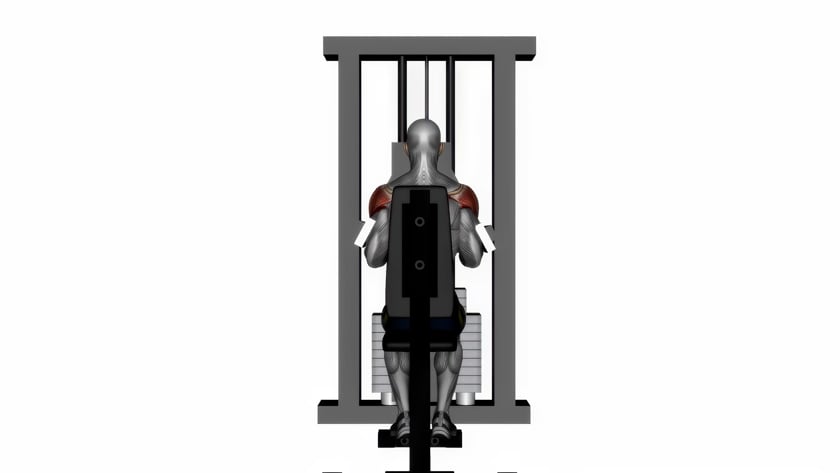
The Machine Iso-Lateral Shoulder Press is a fundamental upper-body strength exercise that primarily targets the deltoid muscles of the shoulders while also engaging the triceps and other muscles that help stabilize the shoulder.
It uses a seated overhead pressing movement similar to a dumbbell shoulder press but provides the stability and guided movement of a resistance-training machine.
The video animation demonstrates the exercise on an iso-lateral shoulder press machine, where the right and left handles operate independently rather than being connected as a single pressing unit.
Both arms are pressed at the same time in the demonstration. This independent movement allows each side of the body to contribute to the press while the machine provides a controlled movement path.
For a beginning exerciser, the machine provides an especially useful introduction to overhead pressing because it reduces the stabilization demands associated with free weights.
Machines provide increased stability and ease of use and are particularly useful for beginning exerciser.
How to Perform
Adjust the seat so the handles are approximately level with, or slightly above, your shoulders when you are seated.
Sit firmly against the backrest with your feet flat on the floor or securely positioned on the machine's foot supports.
Grasp the handles securely with both hands. Keep your wrists relatively straight and aligned with your forearms.
Position your elbows slightly forward of directly out to the sides. Brace your abdominal muscles and maintain a natural, neutral position through your spine.
Press both handles upward in a smooth, controlled motion. Allow each arm to follow the machine's independent movement path.
Continue pressing until your arms are extended overhead without forcefully locking the elbows.
Pause briefly at the top while maintaining control of the handles.
Slowly bend your elbows and lower the handles back toward the starting position. Keep the movement controlled rather than allowing the resistance to pull your arms downward.
Repeat for the desired number of repetitions.
We recommend adjusting the handles to approximately shoulder height, maintaining neutral wrists, stabilizing the torso and pressing overhead until the elbows are extended but not forcefully locked.
Tips
Take time to adjust the seat before beginning. Proper seat height helps place the shoulders and elbows in a comfortable starting position.
Begin with relatively light resistance while learning how the machine moves.
Keep your back comfortably supported against the pad and your feet firmly positioned throughout the exercise.
Brace your abdominal muscles and avoid arching your lower back as you press overhead.
Keep your wrists aligned with your forearms rather than allowing them to bend excessively backward.
Allow your elbows to remain slightly forward rather than forcing them directly out to the sides. This places the upper arms in a more natural plane for overhead pressing.
Press both handles smoothly and evenly. Although the machine's arms operate independently, avoid deliberately twisting or leaning to assist one side.
Control the lowering portion of every repetition rather than allowing the weight to return rapidly to the starting position.
Benefits
The Machine Iso-Lateral Shoulder Press primarily strengthens the deltoids while also training the triceps and supporting musculature involved in overhead pressing.
The machine provides greater stability than free weights, allowing a beginning exerciser to concentrate on learning the basic vertical pressing movement.
The iso-lateral design allows the right and left sides to move independently rather than forcing both arms to move through a single connected mechanism.
Because the machine reduces some of the balance and stabilization demands of dumbbells or barbells, the exerciser can focus more directly on shoulder movement, posture and controlled force production.
The exercise develops strength in the fundamental overhead pressing pattern used during many everyday lifting and reaching activities.
Common Mistakes
Using too much resistance can cause the exerciser to arch the lower back, shrug the shoulders or alter the intended pressing movement.
Failing to adjust the seat correctly can place the handles too high or too low and create an awkward starting position.
Allowing the elbows to flare directly out to the sides can place the shoulders in a less favorable pressing position. A slightly forward arm position generally provides a more natural path for overhead movement.
Allowing the wrists to bend excessively backward reduces alignment between the hands and forearms.
Pressing one side substantially faster than the other can create an uneven movement pattern. The independent handles should generally move together during the bilateral version demonstrated in the video.
Forcefully locking the elbows at the top of the press is unnecessary.
Allowing the handles to drop quickly during the return phase reduces muscular control and can place unnecessary stress on the shoulders.
Lifting the back away from the support pad or excessively arching the lower back often indicates that the resistance is too heavy or that the exerciser is compensating for limited overhead mobility.
FAQ
Safety Note
Make sure the seat is properly adjusted before beginning so the handles and shoulders are comfortably aligned.
Use a manageable resistance that allows you to maintain stable posture and control both the pressing and lowering portions of every repetition.
Do not force the arms into an overhead position that causes discomfort. The shoulder becomes relatively less stable in an overhead position, making controlled movement particularly important.
Stop the exercise if you experience sharp or persistent pain in the shoulders, neck, elbows or back.
If you have an existing shoulder injury, significant shoulder mobility limitation or chronic shoulder pain, consult your physician or another qualified healthcare professional before performing this or any other exercise.