
Smith Machine Shoulder Press
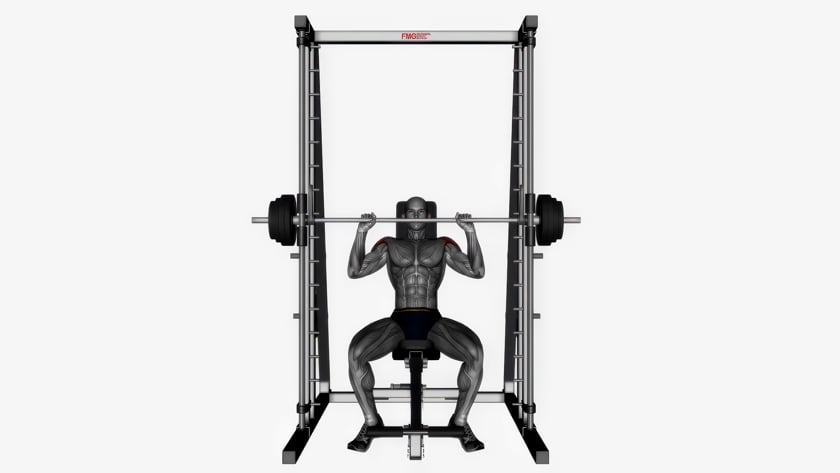
The Smith Machine Shoulder Press is a fundamental upper-body strength exercise that primarily targets the deltoid muscles of the shoulders while also engaging the triceps and other muscles that help stabilize the shoulder and upper body.
It uses the same basic vertical pressing pattern as a traditional overhead press, but the Smith machine guides the bar along a fixed path.
That guided movement reduces some of the stabilization demands associated with dumbbells or a free-weight barbell, which can make the exercise particularly useful for people who are learning the overhead pressing pattern.
Proper positioning remains important even though the machine guides the bar. The exerciser should maintain a stable torso, keep the wrists aligned with the forearms and use a comfortable shoulder position rather than forcing the elbows directly out to the sides.
How to Perform
Position a bench beneath the Smith machine so the bar can travel comfortably in front of the face and toward the upper chest or shoulder area.
Sit upright with your feet firmly on the floor. Keep your head and torso in a neutral position and brace your abdominal muscles to help stabilize your spine.
Grasp the bar slightly wider than shoulder width with a secure, even grip. Keep your wrists relatively straight and aligned with your forearms.
Rotate and release the bar from the Smith machine stops according to the design of the machine.
Begin with the bar around upper-chest or shoulder level, using a comfortable range of motion. Keep the elbows slightly forward rather than flared directly out to the sides.
Press the bar upward in a smooth, controlled motion until your arms are extended overhead without forcefully locking the elbows.
Pause briefly at the top while maintaining control of the bar.
Slowly lower the bar along its guided path until you return to the starting position.
Repeat for the desired number of repetitions, maintaining controlled movement throughout the set.
Maintain a neutral wrist position, bracing the abdominal muscles, avoiding excessive lower-back arching and controlling both the upward and downward phases of a machine shoulder press.
Tips
Begin with a light resistance until you are comfortable with both the pressing movement and the Smith machine's locking mechanism.
Position the bench carefully before beginning. Because the bar follows a fixed path, proper bench placement helps keep the bar moving comfortably relative to your shoulders, head and torso.
Keep your feet firmly planted and maintain a stable seated position throughout the exercise.
Keep the abdominal muscles engaged and avoid excessively arching the lower back as you press overhead.
Keep your wrists aligned with your forearms instead of allowing them to bend backward under the bar.
Allow the elbows to remain slightly forward of the torso rather than forcing them directly out to the sides. This places the shoulders in a more natural pressing position.
Press and lower the bar smoothly. Do not bounce the bar at the bottom or allow the weight to drop rapidly during the lowering phase.
Benefits
The Smith Machine Shoulder Press strengthens the deltoids while the triceps assist with extending the elbows during the pressing movement.
It introduces people to the fundamental vertical pressing pattern while providing a guided bar path. Vertical pressing is a fundamental upper-body strength movement. Machine pressing places fewer stabilization demands on the shoulder than free-weight alternatives.
The fixed path can allow beginners to concentrate on posture, pressing mechanics and controlled movement without having to stabilize two independent dumbbells.
The exercise can also be easily progressed by making relatively small increases in resistance as strength and technique improve.
Overhead pressing helps develop strength used for everyday activities that involve reaching, lifting or placing objects overhead.
Common Mistakes
Using too much weight can cause the exerciser to arch the lower back, alter shoulder position or rely on momentum rather than controlled muscular effort.
Positioning the bench too far forward or backward can create an awkward pressing path. The body should be positioned so the fixed path of the bar works comfortably with the exerciser's natural shoulder movement.
Flaring the elbows directly out to the sides can place the shoulders in a less favorable position.
Allowing the wrists to bend excessively backward reduces alignment between the hands and forearms.
Forcefully locking the elbows at the top of each repetition is unnecessary. Extend the arms while maintaining muscular control.
Lowering the bar too quickly reduces control and can place unnecessary stress on the shoulder joint.
Allowing the lower back to arch excessively during the press often indicates that the resistance is too heavy, the exerciser lacks sufficient overhead mobility or the exercise setup needs adjustment.
FAQ
Safety Note
Make sure you understand how to engage and disengage the Smith machine's safety hooks before beginning the exercise. Set the machine's safety stops appropriately when they are available.
Use a manageable resistance that allows you to maintain an upright torso, neutral wrist position and controlled movement throughout every repetition.
Do not force your shoulders into a range of motion that causes discomfort. The shoulder is highly mobile but relatively less stable than many other joints, making proper alignment particularly important during overhead exercise.
Stop the exercise if you experience sharp or persistent pain in the shoulders, neck, elbows or back.
If you have an existing shoulder injury, significant shoulder mobility limitation or chronic shoulder pain, consult your physician or another qualified healthcare professional before performing this or any other exercise.