
Seated Dumbbell Shoulder Press
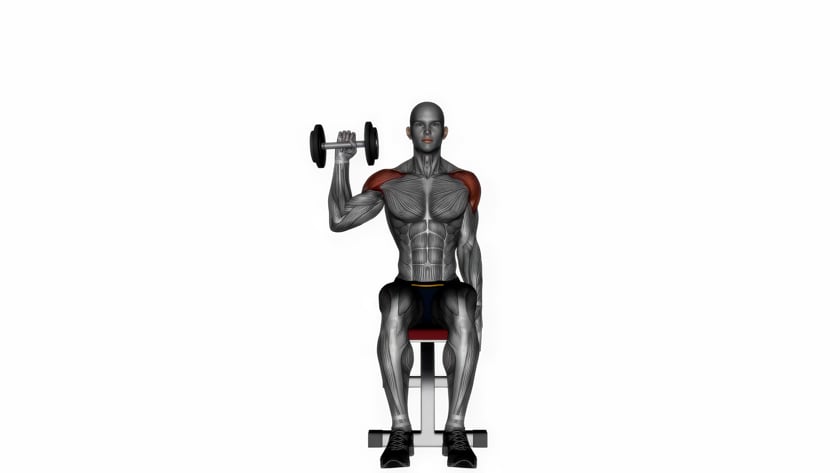
The Seated Dumbbell Shoulder Press is a fundamental upper-body strength exercise that primarily targets the deltoids while also involving the triceps and other muscles that help stabilize the shoulder.
Performing the exercise from a seated position provides additional support and reduces some of the balance demands associated with a standing shoulder press, making it especially useful for beginners learning the overhead pressing pattern.
The video animation demonstrates the single-arm version of the Seated Dumbbell Shoulder Press. The exerciser presses one dumbbell overhead while the opposite arm remains relaxed at the side.
This unilateral variation allows the exerciser to concentrate on one shoulder at a time and requires the abdominal and trunk muscles to help resist leaning or rotating toward either side.
The same basic movement can also be performed with a dumbbell in each hand, but the instructions below correspond to the one-arm technique demonstrated in the video.
How to Perform
Sit upright on a stable bench or seat with your feet firmly positioned on the floor.
Hold one dumbbell at approximately shoulder height. Bend the elbow and keep the wrist relatively straight and aligned with the forearm.
Keep your chest comfortably lifted, brace your abdominal muscles and maintain an upright torso.
Press the dumbbell upward in a smooth, controlled motion until the arm is extended overhead. Avoid leaning sideways or excessively arching your lower back as the weight moves upward.
Pause briefly at the top while maintaining control of the dumbbell.
Slowly bend the elbow and lower the dumbbell back toward shoulder level.
Complete the desired number of repetitions and then perform the exercise with the opposite arm.
Brgin shoulder presses with light dumbbells, maintaining shoulder stability and controlling both the pressing and lowering phases.
Tips
Begin with a relatively light dumbbell until you are comfortable controlling the weight through the entire movement.
Keep both feet firmly planted on the floor and maintain an upright seated position.
Brace your abdominal muscles to help prevent leaning or rotating as you press the dumbbell overhead.
Keep your wrist aligned with your forearm rather than allowing it to bend excessively backward.
Press the dumbbell upward rather than allowing the arm to drift substantially forward.
Lower the dumbbell slowly and under control instead of allowing gravity to pull the weight down.
Avoid using momentum or leaning away from the working arm to help complete the repetition.
Benefits
The Seated Dumbbell Shoulder Press strengthens the deltoids while the triceps assist with extending the elbow during the overhead press.
The seated position provides additional stability, making it easier for a beginner to concentrate on the pressing movement without having to manage as much lower-body balance. ACE specifically recommends the seated version as a way to make the dumbbell shoulder press easier and more stable.
Performing the exercise one arm at a time allows each shoulder to work independently and can make differences in strength or control between the two sides easier to recognize.
The unilateral version also requires the muscles of the torso to help maintain an upright position and resist unwanted side bending or rotation.
Overhead pressing develops a fundamental movement pattern used in many everyday activities that involve reaching or placing objects above shoulder height.
Common Mistakes
Using too much weight can cause the exerciser to lean sideways, arch the lower back or use momentum instead of maintaining controlled shoulder movement.
Leaning away from the working arm reduces trunk stability and changes the intended pressing pattern.
Allowing the wrist to bend excessively backward can make the dumbbell more difficult to control and place unnecessary stress on the wrist.
Pressing the dumbbell forward rather than upward changes the movement path and may increase stress on the shoulder.
Shrugging the shoulder toward the ear during the press can indicate excessive tension or resistance that is too heavy.
Lowering the dumbbell too quickly reduces control during the return phase.
FAQ
Safety Note
Use a resistance that allows you to maintain an upright torso and complete every repetition with controlled shoulder, elbow and wrist positioning.
Do not force the arm into an overhead position if your available shoulder mobility does not allow the movement to be performed comfortably. Individuals with current shoulder problems may need to avoid or modify overhead pressing exercises.
Stop the exercise if you experience sharp or persistent pain in the shoulder, neck, elbow or back.
If you have an existing shoulder injury, significant shoulder mobility limitation or chronic shoulder pain, consult your physician or another qualified healthcare professional before performing this or any other exercise.