
Machine Fly – Pec Deck
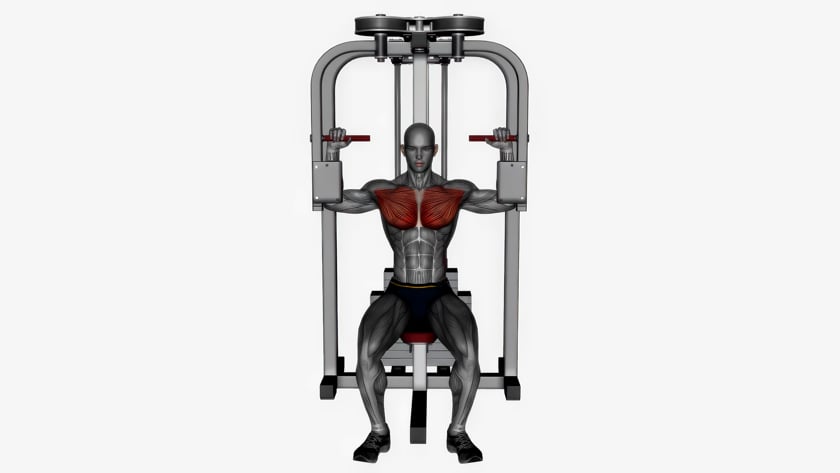
The Machine Fly – Pec Deck is a fundamental chest exercise that primarily targets the pectoralis major. Unlike pressing exercises, which involve substantial movement at both the shoulders and elbows, the pec deck emphasizes bringing the upper arms inward toward the center of the body through horizontal adduction.
As demonstrated in the uploaded video, the exercise is performed seated with the back supported against the machine pad and the upper arms positioned against the machine's pads. The elbows remain bent while the arms move inward until the pads come together in front of the chest, then return slowly to the starting position.
The machine's guided path reduces the amount of stabilization required compared with dumbbell fly variations, which can make the movement particularly useful for beginners learning how to isolate the chest. NSCA materials specifically identify the machine chest fly as a single-joint exercise for the pectoralis major.
How to Perform
Adjust the seat so your upper arms and elbows are positioned approximately level with your chest and shoulders when your arms are placed against the pads.
Sit with your back firmly supported against the backrest and place your feet securely on the floor.
Position your forearms or upper arms against the machine pads according to the design of the machine. Keep your shoulders relaxed and your chest comfortably lifted.
Brace your abdominal muscles and maintain a stable torso.
Bring the machine arms inward in a smooth, controlled motion by drawing your upper arms toward each other in front of your chest.
Pause briefly at the closed position without allowing your shoulders to roll excessively forward.
Slowly allow the machine arms to return outward until you reach a comfortable stretch across the chest.
Repeat for the desired number of repetitions while maintaining controlled movement throughout the exercise.
Tips
Take time to adjust the seat correctly before beginning. Your elbows and upper arms should be positioned near chest or shoulder height rather than noticeably above or below that level.
Begin with a light to moderate resistance that allows you to control the machine through the entire movement.
Keep your back supported against the pad and avoid leaning forward as you bring the arms together.
Think about bringing your upper arms toward one another rather than simply pushing the pads with your hands or forearms.
Keep your shoulders relaxed and avoid shrugging them toward your ears.
Return the machine arms slowly. Do not allow the weight stack to pull your arms rapidly backward.
Use a comfortable range of motion. There is no need to force your elbows excessively behind your torso to create a larger stretch.
Benefits
The Machine Fly – Pec Deck directly strengthens the pectoralis major and provides a simple way to train the chest through horizontal adduction.
Because the machine guides the movement, the exerciser can focus on the chest muscles without needing to stabilize two independent dumbbells.
The supported seated position and easily adjustable resistance make the exercise practical for beginners and for individuals who are still developing coordination with free-weight chest exercises.
The Machine Fly also complements fundamental pressing movements such as push-ups, dumbbell chest presses and barbell bench presses by adding a different chest movement pattern.
Current ACSM resistance-training guidance emphasizes that effective training does not need to be overly complicated and that consistent resistance exercise using appropriate movements and progressive loading is more important than unnecessary complexity.
Common Mistakes
Using too much resistance can cause the exerciser to lean forward, shrug the shoulders or use momentum instead of maintaining controlled chest movement.
Allowing the shoulders to roll excessively forward as the arms come together can reduce upper-body stability.
Setting the seat too high or too low can place the arms in an awkward position and change the intended movement.
Returning the arms too far behind the body can create unnecessary stress at the shoulders. Use only a comfortable range of motion.
Allowing the weight stack to pull the arms rapidly apart reduces control during the return phase.
Moving too quickly in either direction can reduce muscular control and make it harder to maintain proper positioning.
FAQ
Safety Note
Adjust the machine properly before beginning and select a resistance that allows complete control throughout the movement. Keep your back supported and avoid forcing the shoulders into an excessive stretched position.
Stop the exercise if you experience sharp or unusual pain in the shoulders, chest or arms.
If you have an existing spinal injury or chronic back pain, consult your physician or another qualified healthcare professional before performing this or any other exercise.