
Chest Press Machine
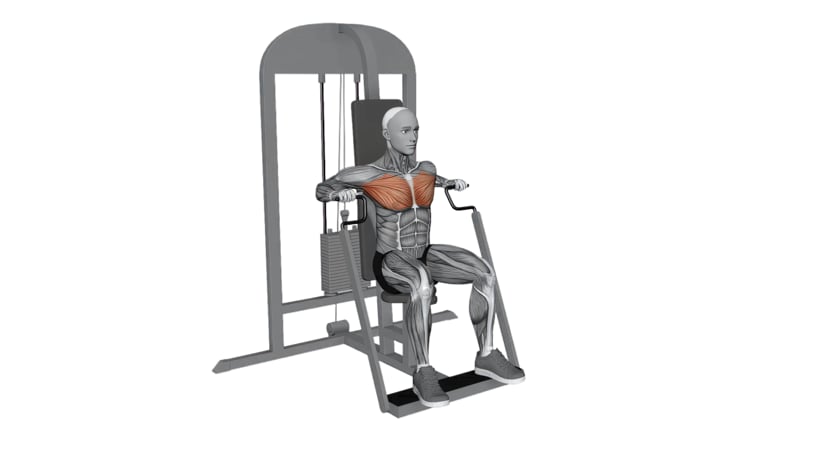
The Chest Press Machine is a fundamental upper-body resistance exercise that primarily works the chest while also involving the triceps and front of the shoulders. NASM describes the machine chest press as a fundamental machine-based pressing exercise and identifies the chest, anterior deltoids and triceps among the primary muscles involved.
As demonstrated in the uploaded video, the exercise is performed seated with the back supported against the machine and the feet placed securely on the floor or foot platform. The handles begin alongside the chest and are pressed forward until the arms are extended, then returned slowly to the starting position.
Because the machine guides the handles through a predetermined path, it reduces some of the stabilization demands required with dumbbells or a barbell. This can make the Chest Press Machine especially useful for beginning exercisers who are learning the basic horizontal pressing pattern. ACE similarly instructs users of the seated chest press to maintain firm back support, properly adjust the seat and control both the pressing and returning phases of the movement.
How to Perform
Adjust the seat so the handles are positioned approximately level with the middle of your chest. ACE specifically recommends adjusting a seated chest press so the handles are near mid-chest level.
Sit with your back firmly supported against the backrest and place your feet securely on the floor or the machine's foot supports.
Grasp the handles with a comfortable closed grip. Keep your wrists relatively straight and aligned with your forearms.
Brace your abdominal muscles and maintain contact between your back and the pad.
Press the handles forward by extending your elbows until your arms are comfortably extended. Avoid forcefully locking your elbows at the end of the movement.
Pause briefly, then slowly bend your elbows and allow the handles to return toward your chest.
Stop the return at a comfortable position that allows you to maintain control and stable shoulder alignment.
Continue for the desired number of repetitions using a smooth and controlled movement. ACSM resistance-training guidance recommends lifting and lowering resistance in a controlled manner while maintaining good form.
Tips
Take time to properly adjust the seat before beginning. The handles should align approximately with your mid-chest rather than being positioned excessively high or low.
Begin with a manageable resistance that allows you to complete every repetition without changing your body position.
Keep your back supported against the pad throughout the exercise. Avoid leaning forward or excessively arching your lower back to press the handles.
Keep your wrists relatively straight and your forearms aligned with the direction of the press.
Press and return the handles at a controlled pace. Do not allow the weight stack to pull the handles rapidly back toward you.
Keep your shoulders relaxed rather than allowing them to shrug toward your ears.
For beginning clients, emphasize technique before increasing resistance. NASM notes that inappropriate resistance and excessive fatigue can compromise pressing mechanics, particularly in less experienced exercisers.
Benefits
The Chest Press Machine strengthens the pectoralis major while also training the triceps and anterior deltoids.
The guided movement provides a straightforward way to learn the basic chest-press pattern without requiring the same degree of free-weight stabilization needed during dumbbell or barbell pressing.
The resistance is easily adjustable, allowing beginners to start conservatively and gradually increase the load as strength and confidence improve.
The seated and supported position can also make the exercise practical for exercisers who are still developing the coordination needed for more demanding free-weight chest exercises.
Machine-based training can be one useful form of resistance exercise within a broader program. ACSM's current resistance-training guidance emphasizes that effective strength training can be performed using a variety of resistance methods and should be individualized rather than unnecessarily complicated.
Common Mistakes
Using too much resistance can cause the exerciser to lean forward, arch the back or lose control of the handles.
Failing to adjust the seat properly may position the handles too high or too low relative to the chest and alter the intended pressing mechanics. ACE recommends positioning the handles approximately at mid-chest level.
Allowing the shoulders to shrug or roll excessively forward reduces upper-body stability.
Letting the wrists bend excessively backward can make the handles more difficult to control.
Forcefully locking the elbows at the end of the press is unnecessary. Extend the arms smoothly without aggressively snapping the joints straight.
Allowing the weight stack to pull the handles rapidly backward reduces control during the return phase.
Lifting the back away from the pad or excessively arching the lower back often indicates that the resistance is too heavy or that body position has been lost.
FAQ
Safety Note
Adjust the machine before beginning and select a resistance that allows you to maintain complete control throughout every repetition. Keep your back supported, wrists aligned and shoulders in a comfortable position.
Stop the exercise if you experience pain or unusual discomfort in the chest, shoulders, elbows or wrists.
If you have an existing spinal injury or chronic back pain, consult your physician or another qualified healthcare professional before performing this or any other exercise.