
Barbell Incline Bench Press
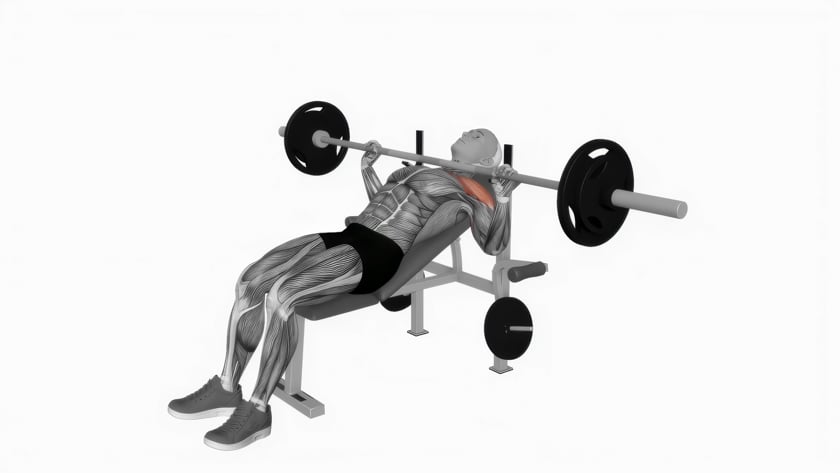
The Barbell Incline Bench Press is a fundamental upper-body strength exercise that primarily targets the chest, with additional involvement from the triceps and front of the shoulders. Compared with the flat Barbell Bench Press, positioning the bench at an incline places greater emphasis on the upper, or clavicular, portion of the pectoralis major. NASM identifies the pectoralis major, particularly the clavicular head, and triceps as primary muscles involved, with the anterior deltoid and other muscles assisting and stabilizing the movement.
As demonstrated in the video, the exercise is performed on an inclined bench with the feet firmly supported and the barbell positioned above the upper chest. The bar is lowered under control toward the upper chest and then pressed upward until the arms are extended.
For beginners, the Barbell Incline Bench Press provides a logical progression from basic horizontal pressing exercises while introducing a different pressing angle. As with other fundamental resistance exercises, the initial emphasis should be on learning proper technique and controlling a manageable resistance rather than lifting maximum weight. This approach is consistent with current ACSM guidance emphasizing simple, individualized and progressively challenging resistance training.
How to Perform
Lie back on an incline bench with your head, upper back and hips supported. Place your feet firmly on the floor to create a stable base.
Grasp the bar with a closed grip, with your hands slightly wider than shoulder-width apart. Keep your wrists relatively straight and aligned with your forearms.
Brace your abdominal muscles and gently draw your shoulder blades back against the bench. Maintain a stable torso and neutral spinal position throughout the exercise.
Unrack the bar with control and position it above the upper chest. Slowly bend your elbows and lower the bar toward the upper portion of your chest.
Keep the bar under control throughout the lowering phase. Your elbows should follow a comfortable path rather than flaring excessively outward.
Press the bar upward in a smooth, controlled motion by extending your elbows. Finish with the arms extended without forcefully locking the elbows.
Continue for the desired number of repetitions while maintaining consistent body position and control. NASM recommends a bench angle of approximately 45 degrees, a grip slightly wider than shoulder width and a controlled lowering and pressing motion.
Tips
Begin with a manageable resistance that allows you to maintain proper technique throughout every repetition.
Keep your feet firmly planted and maintain stable contact with the bench. Avoid lifting your hips or excessively arching your lower back to help move the weight.
Keep your wrists relatively straight and positioned over your forearms rather than allowing them to bend excessively backward.
Maintain control of the bar throughout the entire movement. Avoid rapidly dropping the bar toward your chest or using momentum to begin the pressing phase.
Keep the bench at a moderate incline. Setting the bench too upright increases the contribution of the anterior deltoids and makes the movement more similar to a shoulder press. NASM specifically identifies inclines above approximately 45 degrees as shifting more emphasis toward the shoulders.
Use a spotter when appropriate, particularly when learning the exercise or as resistance increases.
Benefits
The Barbell Incline Bench Press develops strength in the pectoralis major while placing greater emphasis on the upper portion of the chest than a traditional flat bench press. The triceps and anterior deltoids also contribute significantly to the pressing movement.
Because multiple joints and muscle groups work together, the exercise is an efficient compound movement for developing upper-body pressing strength.
The barbell provides a stable implement that allows both arms to work together and makes resistance easy to increase gradually as strength and technique improve.
Including both flat and incline pressing movements also exposes a beginning exerciser to two fundamental pressing angles without introducing unnecessary complexity. Current ACSM recommendations emphasize that resistance training does not need to be complicated to be effective and should be progressively matched to the individual's ability and goals.
Common Mistakes
Using too much weight can cause loss of control, excessive arching of the back or improper shoulder, elbow and wrist positioning.
Setting the bench too upright shifts more of the workload toward the shoulders rather than maintaining the intended upper-chest emphasis.
Flaring the elbows excessively outward can compromise comfortable shoulder mechanics. The elbows should follow a natural path as the bar is lowered and pressed.
Allowing the wrists to bend excessively backward reduces stability and may place unnecessary stress on the wrists.
Lowering the bar too quickly reduces control. The bar should be lowered deliberately rather than dropped toward the chest.
Bouncing the bar off the chest should be avoided. Reverse the direction of the bar through muscular control rather than momentum.
Excessively arching the lower back or lifting the hips from the bench often indicates that the resistance is too heavy or that proper body positioning has been lost. NASM identifies excessive back arching, poor elbow positioning and an uncontrolled descent among common incline bench-press errors.
FAQ
Safety Note
Use a secure closed grip with your thumbs wrapped around the bar and select a resistance that can be controlled throughout the entire range of motion.
A spotter or properly positioned safety supports should be used when appropriate, particularly for beginners and as resistance increases. Maintain stable shoulder, elbow and wrist positioning and stop the exercise if you experience pain in the shoulders, elbows, wrists, chest or back.
If you have an existing spinal injury or chronic back pain, consult your physician or another qualified healthcare professional before performing this or any other exercise.