
Barbell Bench Press
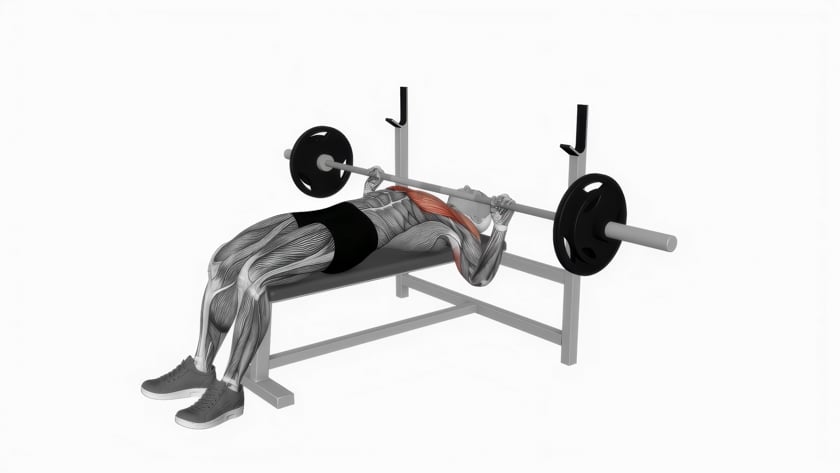
The Barbell Bench Press is a fundamental upper-body strength exercise that primarily works the chest while also involving the triceps and front of the shoulders. It is a compound exercise because movement occurs at both the shoulder and elbow joints, allowing several major upper-body muscle groups to work together. NASM identifies the pectoralis major as the primary muscle, with the triceps and anterior deltoids assisting the movement.
Performed on a flat bench, the exercise involves lowering a barbell toward the chest and then pressing it upward. The bench press is widely used to develop upper-body strength, muscular endurance and muscle development. For a beginning exerciser, the emphasis should be on learning proper positioning and controlling a manageable resistance rather than attempting to lift heavy weights. This approach also fits current ACSM resistance-training guidance emphasizing simple, individualized training that progresses appropriately over time.
How to Perform
Lie face-up on a flat bench with your head, upper back and hips supported. Position your feet firmly on the floor to create a stable base.
Grasp the bar with a closed grip, wrapping your thumbs around the bar. Position your hands approximately shoulder-width apart or slightly wider. Keep your wrists relatively straight and positioned over your forearms.
Brace your abdominal muscles and gently draw your shoulder blades back to help create a stable upper-body position.
Unrack the bar with control and position it above your chest. A spotter should assist when appropriate, particularly while learning the exercise or when using heavier resistance.
Slowly bend your elbows and lower the bar toward the mid-chest area. Maintain control of the bar and keep your shoulders stable throughout the descent.
Press the bar upward by extending your elbows and contracting the chest muscles. Return to the starting position without bouncing or jerking the bar.
Inhale while lowering the bar and exhale while pressing it upward. Continue for the desired number of repetitions while maintaining proper technique.
Tips
Begin with a light, manageable resistance until you are comfortable controlling the bar throughout the entire movement.
Keep your feet firmly planted and maintain stable contact between your head, upper back and hips and the bench.
Keep your wrists relatively straight and positioned underneath the bar. Avoid allowing the wrists to bend excessively backward.
Maintain a natural position through the lower back rather than deliberately creating an exaggerated arch. NASM specifically distinguishes the technique used by some competitive powerlifters from the positioning recommended for the general fitness participant.
Lower the bar smoothly and under control. The appropriate depth depends partly on individual mobility and the ability to maintain proper shoulder position without pain or pinching.
Use a spotter or appropriate safety equipment when necessary. This becomes increasingly important as resistance increases.
Benefits
The Barbell Bench Press strengthens the pectoralis major while also training the triceps and anterior deltoids. Additional muscles of the shoulder and torso contribute to stabilization throughout the exercise.
Because several joints and muscle groups work simultaneously, the bench press provides an efficient way to develop upper-body pushing strength.
The exercise also teaches a fundamental horizontal pressing pattern that carries over to many other chest exercises, including dumbbell presses and machine presses.
Resistance can be progressively increased as strength and technique improve, making the bench press useful across a wide range of fitness levels and training goals. ACSM's current resistance-training guidance supports progressive resistance exercise while emphasizing that programming should be matched to the individual's goals, abilities and preferences.
Common Mistakes
Using too much weight is a common mistake and can lead to loss of control, excessive body movement and poor shoulder or wrist positioning.
Allowing the wrists to bend excessively backward can make the bar more difficult to control. Keep the wrists positioned relatively straight and underneath the bar.
Lowering the bar too quickly reduces control. The lowering phase should be deliberate and controlled.
Excessively flaring or incorrectly positioning the elbows can affect shoulder mechanics. The elbows should follow a comfortable path while the forearms remain well aligned with the resistance.
Bouncing the bar off the chest should be avoided. The bar should change direction through muscular control rather than momentum.
Lifting the hips from the bench or creating an exaggerated lower-back arch may indicate that the resistance is too heavy or that proper positioning has been lost.