
Normal Push-Up
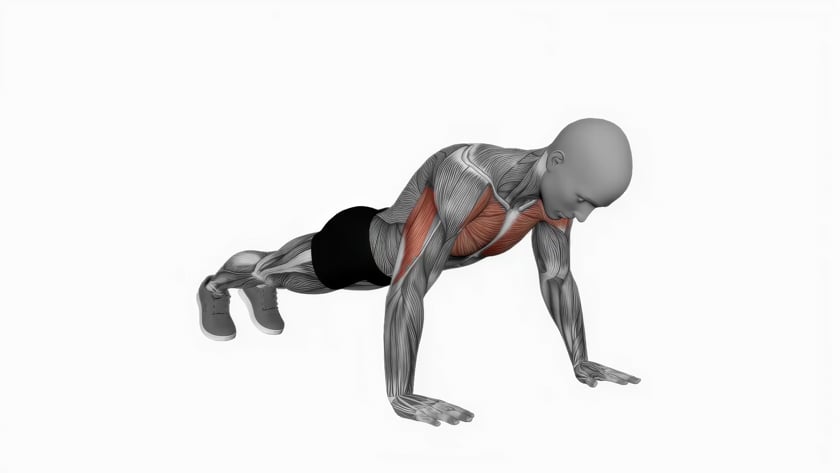
The Normal Push-Up is one of the most fundamental bodyweight exercises for developing upper-body strength. The exercise primarily works the chest while also engaging the triceps and front of the shoulders. Because the body must remain stable from the shoulders through the hips and legs, the abdominal and other core muscles also play an important role throughout the movement.
The push-up requires no equipment and can be performed almost anywhere, making it a practical foundational exercise for many fitness programs. The standard version shown here is performed from the toes with the body maintained in a straight, plank-like position. Beginners who are not yet able to maintain proper form can progress toward this version using an incline or another appropriate modified push-up.
How to Perform
Begin face down with your hands on the floor approximately shoulder-width apart or slightly wider. Extend your legs behind you and support your lower body on your toes.
Brace your abdominal muscles and maintain a straight line from your head through your shoulders, hips and heels. Keep your head aligned with your spine rather than allowing it to drop toward the floor.
Bend your elbows and slowly lower your chest toward the floor while maintaining control of your entire body. Your hips and shoulders should descend together rather than allowing the hips to sag or rise.
Lower yourself as far as you can while maintaining good alignment and a comfortable range of motion. Press through your hands and extend your elbows to return to the starting position.
Continue for the desired number of repetitions while maintaining controlled movement and consistent body alignment.
Tips
Keep your abdominal muscles engaged throughout the exercise. Think of maintaining a strong plank position from your head to your heels rather than treating the push-up as an arm exercise alone.
Keep your hands firmly planted on the floor and avoid allowing your shoulders to shrug toward your ears. Move your chest, hips and legs together as one unit.
Use a controlled range of motion. Lower only as far as you can without losing your neutral body position or experiencing discomfort.
If a standard floor push-up is too difficult to perform with good form, placing the hands on an elevated stable surface can reduce the amount of body weight being lifted and provide an appropriate progression toward the full exercise.
Benefits
The Normal Push-Up strengthens the pectoralis major while also training the triceps and anterior deltoids. It provides a convenient way to develop upper-body pushing strength using body weight rather than external resistance.
Because the torso must remain stable throughout the movement, the exercise also challenges the abdominal muscles and other muscles responsible for maintaining trunk and spinal stability.
Push-ups can be easily modified to accommodate different strength levels, making the movement useful as both a foundational exercise and a starting point for more advanced pressing exercises as strength and movement control improve.
Common Mistakes
Allowing the hips or lower back to sag is one of the most common push-up mistakes. This usually indicates that the body is no longer maintaining the strong plank position needed for proper execution.
Another common mistake is raising the hips as the body lowers or presses upward. The shoulders and hips should move together throughout the repetition.
Allowing the head to drop toward the floor can also disrupt proper alignment. Keep the head relatively neutral and aligned with the spine.
Performing repetitions too quickly can lead to shortened range of motion and loss of control. Controlled repetitions generally make it easier to maintain proper technique.
Avoid forcing a range of motion that causes shoulder, wrist or elbow discomfort.
FAQ
Safety Note
Maintain a controlled range of motion and stop the exercise if you experience pain in the shoulders, elbows, wrists or back. Individuals who cannot maintain proper body alignment should use an appropriate regression until sufficient strength and control have been developed.
If you have an existing spinal injury or chronic back pain, consult your physician or another qualified healthcare professional before performing this or any other exercise.