
Dumbbell Neutral Wrist Curl
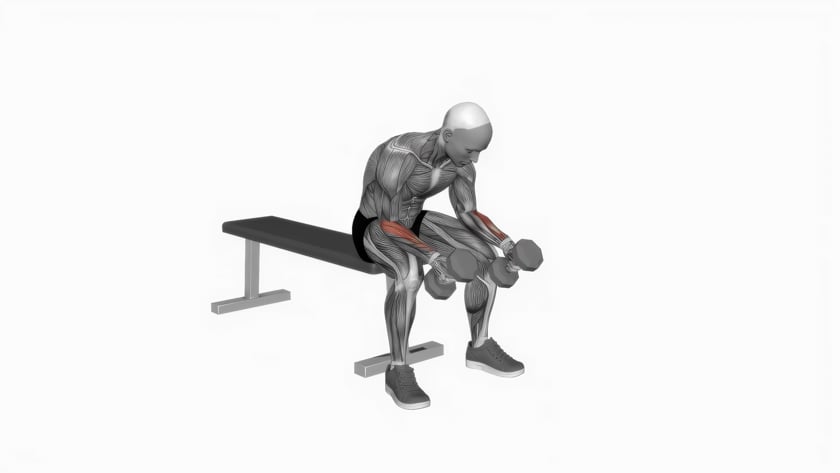
The Dumbbell Neutral Wrist Curl is a forearm-strengthening exercise performed with the hands in a neutral, thumbs-up position.
This hand position changes the emphasis from a traditional palms-up wrist curl and challenges the muscles responsible for controlling and stabilizing the wrist while maintaining a secure grip on the dumbbells.
As demonstrated in the video animation, the exercise is performed seated with a dumbbell in each hand. The forearms are supported on the thighs with the wrists extending just beyond the knees. The palms remain facing inward toward each other while the wrists move the dumbbells through a small, controlled range of motion.
This exercise provides a simple way to develop forearm and wrist strength while training the wrist from a different position than traditional wrist curls and wrist extensions.
How to Perform
Sit near the edge of a bench with your feet comfortably positioned on the floor. Hold a dumbbell in each hand using a neutral grip with your palms facing inward and your thumbs pointing upward.
Lean slightly forward and rest your forearms on your thighs. Position your wrists just beyond your knees so the dumbbells can move freely.
Keep your forearms supported and relatively stationary throughout the exercise.
From a comfortable starting position, slowly move the wrists through a small, controlled range while maintaining the palms-in position.
Raise the dumbbells by moving at the wrists rather than lifting your forearms or elbows.
Pause briefly at the top of the movement, then slowly return the dumbbells to the starting position.
Continue for the desired number of repetitions while maintaining the neutral hand position throughout the exercise.
Tips
Use relatively light dumbbells that allow you to control the movement without involving the elbows or shoulders.
Keep your palms facing inward and your thumbs pointing upward throughout the exercise. Avoid allowing the hands to rotate as you move the dumbbells.
Keep your forearms firmly supported on your thighs. The movement should occur primarily at the wrists.
Move slowly in both directions rather than bouncing the weights or using momentum.
Use a comfortable range of motion. Wrist movement is naturally limited, so a large range of motion is neither necessary nor desirable.
Maintain a secure but comfortable grip on the dumbbells throughout each repetition.
Benefits
The Dumbbell Neutral Wrist Curl strengthens the muscles of the forearms that help control and stabilize the wrist.
The neutral grip provides a different wrist and forearm position from traditional palms-up wrist curls and palms-down wrist extensions, making it a useful addition to a balanced forearm-strengthening program.
Because each hand controls an individual dumbbell, both forearms must work independently. This can help develop more balanced strength and control between the two sides.
Improved forearm and wrist strength can support grip strength and help with exercises that require holding dumbbells, barbells, cables and other resistance-training equipment.
Stronger forearms and improved wrist control can also support everyday activities that involve gripping, carrying and manipulating objects.
Common Mistakes
Using too much weight can cause the forearms, elbows or shoulders to move instead of keeping the exercise focused on the wrists.
Allowing the palms to rotate upward or downward changes the intended neutral-grip position. Keep the thumbs pointing upward throughout the exercise.
Lifting the forearms away from the thighs reduces wrist isolation and allows other muscles to assist the movement.
Moving too quickly or bouncing the dumbbells uses momentum instead of maintaining controlled muscular tension.
Trying to create an excessive range of motion can place unnecessary stress on the wrists. Keep the movement small, smooth and comfortable.
FAQ
Safety Note
Use a resistance that allows you to maintain complete control of the dumbbells throughout the exercise. Keep your forearms supported, maintain a secure neutral grip and avoid forcing the wrists beyond a comfortable range of motion.
Stop the exercise if you experience sharp pain, unusual wrist discomfort, numbness or tingling in the hands or forearms.
If you have an existing wrist, hand, elbow or forearm injury or another condition that may affect your ability to perform this exercise safely, consult your physician or another qualified healthcare professional before performing this or any other exercise.