
Tricep Rope Extension
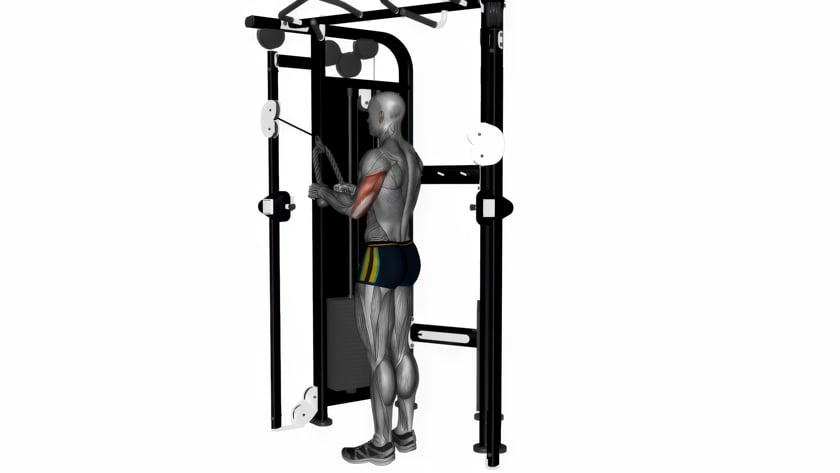
The Tricep Rope Extension is a cable exercise designed to strengthen the triceps through elbow extension. The exercise uses a rope attachment connected to a high cable pulley, providing continuous resistance throughout the movement.
Cable triceps extensions and pushdowns are commonly recommended by top coaches and athletes because they provide a simple and controlled way to isolate the elbow-extension function of the triceps.
As demonstrated in the uploaded video animation, the exerciser stands facing the cable machine with a rope attached to the high pulley. The elbows remain close to the sides while the rope is pressed downward by straightening the arms.
Near the bottom of the movement, the ends of the rope separate slightly as the elbows reach extension. The resistance is then controlled back toward the starting position.
This exercise is similar to the Cable Triceps Pushdown used earlier in the library, but the rope attachment provides a neutral hand position and allows the hands to move independently as the arms extend.
How to Perform
Stand facing a high cable pulley with a rope attachment secured to the cable. Grasp one end of the rope in each hand using a neutral grip with your palms facing inward.
Position your feet comfortably about hip- to shoulder-width apart. Keep your knees slightly relaxed, chest lifted and abdominal muscles engaged.
Bring your elbows close to the sides of your torso and begin with your elbows bent. Keep your shoulders down and maintain a stable upper-body position.
Keeping your upper arms relatively stationary, press the rope downward by straightening your elbows.
As your arms approach full extension, allow the ends of the rope to separate naturally while maintaining control of the resistance.
Pause briefly at the bottom without forcefully locking the elbows.
Slowly bend your elbows and allow the rope to return toward the starting position while resisting the upward pull of the cable.
Continue for the desired number of repetitions while maintaining a controlled pace and stable body position.
Tips
Keep your elbows close to your sides throughout the exercise. The movement should come primarily from bending and straightening the elbows rather than moving the entire upper arm.
Maintain a tall, stable posture and avoid leaning excessively over the cable. A small natural forward inclination is acceptable, but the torso should remain stable throughout each repetition.
Keep your wrists in a neutral position and maintain a secure grip on the rope.
Separate the ends of the rope naturally near the bottom of the movement rather than forcing the hands excessively outward.
Control the return phase. Do not allow the weight stack to pull your hands rapidly back toward the starting position.
Select enough resistance to challenge the triceps without requiring you to use your shoulders, torso or body momentum to move the weight.
Benefits
The Tricep Rope Extension directly strengthens the triceps brachii, the muscle group responsible for extending the elbow.
The rope attachment allows the hands to remain in a neutral position during much of the movement, which many exercisers find comfortable for the wrists and elbows.
Unlike a fixed straight-bar attachment, the rope allows the hands to move independently and separate naturally near the bottom of the exercise.
The cable provides continuous resistance through the movement, allowing the triceps to remain under tension during both the downward pressing phase and the controlled return.
Stronger triceps contribute to many other upper-body pushing movements, including push-ups, bench presses and overhead presses, as well as everyday activities that require pushing or straightening the arms.
Common Mistakes
Allowing the elbows to move forward and backward excessively reduces the isolation of the triceps. Keep the upper arms relatively stationary beside the torso.
Using too much resistance often causes the exerciser to lean heavily into the movement or use body momentum. Reduce the resistance if you cannot maintain a stable upper-body position.
Allowing the elbows to flare widely away from the body changes the movement mechanics. Keep them comfortably positioned near your sides.
Pressing the rope downward by moving the shoulders rather than extending the elbows reduces the emphasis on the triceps. Concentrate on straightening the arms at the elbows.
Snapping or forcefully locking the elbows at the bottom of the movement is unnecessary. Extend the arms under control without aggressively locking the joints.
Allowing the weight stack to pull the rope rapidly upward reduces muscular control. Resist the cable during the return phase and move smoothly in both directions.
FAQ
Safety Note
Use a manageable resistance that allows you to maintain control of the rope during both phases of the exercise. Keep your wrists neutral, maintain a stable torso and avoid forcefully locking the elbows at the bottom of the movement. Make sure the rope attachment and cable are securely connected before beginning the exercise.
Stop the exercise if you experience pain or unusual discomfort in your elbows, wrists or shoulders. If you have an existing injury or medical condition that may affect your ability to exercise safely, consult your physician or another qualified healthcare professional before performing this or any other exercise.