
Dumbbell Lying Triceps Extension
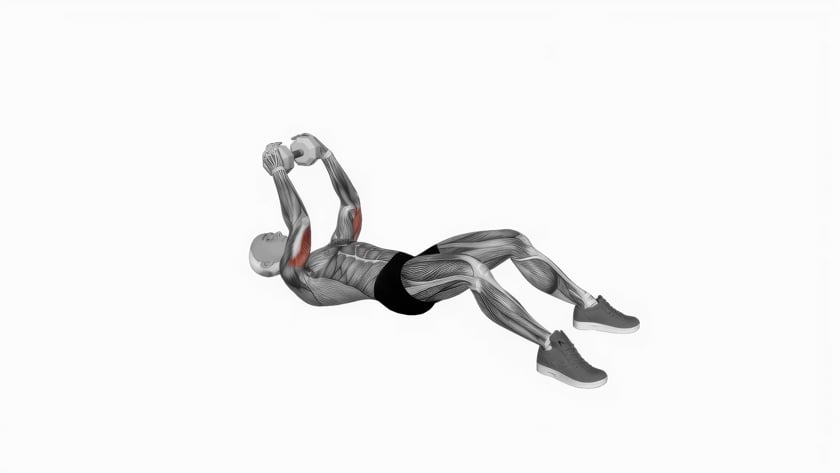
The Dumbbell Lying Triceps Extension is an isolation exercise designed to strengthen the triceps at the back of the upper arms.
The movement is performed by keeping the upper arms relatively stationary while bending and straightening the elbows, making elbow extension the primary action of the exercise.
We emphasize maintaining a neutral lower-back position while controlling the dumbbells through the movement.
The uploaded video animation demonstrates a floor-based version rather than the more traditional version performed on a bench. The exerciser lies on the back with the knees bent and feet on the floor while holding a dumbbell in each hand.
The dumbbells are lowered toward the sides of the head by bending the elbows and then returned to the starting position by extending the elbows.
How to Perform
Lie on your back with your knees bent and your feet comfortably positioned on the floor. Hold a dumbbell in each hand.
Extend your arms above your chest with your palms facing toward one another. Keep your wrists straight and position your arms so the dumbbells are controlled directly above you.
Brace your abdominal muscles and maintain a comfortable, neutral position through your lower back.
Keeping your upper arms relatively stationary, slowly bend your elbows and lower the dumbbells toward the sides of your head. Keep the elbows pointing generally upward rather than allowing them to flare widely outward.
Lower the dumbbells through a comfortable range of motion while maintaining control of the weights.
Contract your triceps and straighten your elbows to raise the dumbbells back to the starting position. Avoid using momentum or moving the shoulders to help lift the weights.
Continue for the desired number of repetitions while maintaining a slow, controlled movement.
Tips
Choose dumbbells that allow you to control the entire movement. Because the weights travel relatively close to the head, proper control is more important than using heavy resistance.
Keep your upper arms as stationary as possible while the elbows bend and straighten. Keep the upper arms vertical during lying triceps extensions so that the movement occurs primarily at the elbows.
Keep your wrists in a neutral position rather than allowing them to bend forward or backward.
Keep the elbows reasonably close together instead of allowing them to flare excessively outward. Shoulder-width hand positioning can help reduce unnecessary stress at the elbows during dumbbell triceps extensions.
Lower the dumbbells slowly. Do not allow gravity to pull the weights quickly toward your head.
Keep your abdominal muscles engaged and avoid excessively arching your lower back away from the floor. Maintaining a neutral lower-back position is an important technique point for this exercise.
Benefits
The Dumbbell Lying Triceps Extension directly strengthens the triceps brachii, the large muscle group located along the back of the upper arm.
Using separate dumbbells requires each arm to control its own resistance, which can help develop balanced strength and coordination between the two arms.
The floor-based position demonstrated in the video provides a stable exercise setup and eliminates the need for an exercise bench.
Strengthening the triceps can improve performance in other upper-body pushing exercises where elbow extension is important, including push-ups and pressing movements.
The exercise provides a straightforward way to train the triceps through a controlled elbow-extension movement and is easily adjusted by selecting lighter or heavier dumbbells.
Common Mistakes
Allowing the upper arms to move excessively forward and backward changes the exercise from primarily an elbow-extension movement into a combination of elbow and shoulder movement. Keep the upper arms relatively stationary.
Allowing the elbows to flare widely outward can make the movement less controlled. Keep them directed generally upward and comfortably aligned with the shoulders.
Using dumbbells that are too heavy often causes the exerciser to use momentum, move the shoulders or lose control of the lowering phase.
Lowering the dumbbells too quickly increases the risk of losing control as the weights approach the head. Use a slow and deliberate lowering motion.
Excessively arching the lower back can occur when the resistance is too heavy or when core stability is lost. Maintain a comfortable neutral spine throughout the exercise.
Bending the wrists while lowering or raising the dumbbells can create unnecessary stress. Keep the wrists straight and aligned with the forearms.
FAQ
Safety Note
Use a weight you can control throughout the entire exercise, particularly during the lowering phase when the dumbbells travel close to the head. Keep your wrists neutral, maintain control of the dumbbells and avoid excessive movement at the shoulders or elbows. Stop the exercise if you experience pain or unusual discomfort in your elbows, wrists or shoulders.
If you have an existing injury or medical condition that may affect your ability to exercise safely, consult your physician or another qualified healthcare professional before performing this or any other exercise.