
Diamond Push-Up
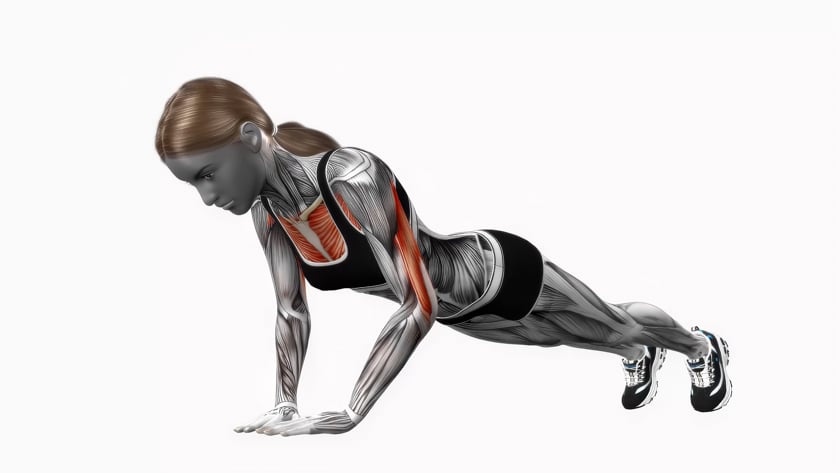
The Diamond Push-Up is a bodyweight pressing exercise that places greater emphasis on the triceps than a traditional push-up.
Instead of positioning the hands approximately shoulder-width apart, the hands are placed close together beneath the chest, with the thumbs and index fingers forming a diamond or triangle shape.
This narrower hand position increases the demand placed on the triceps while the chest and front of the shoulders continue to assist with the movement.
The uploaded video animation demonstrates the full bodyweight version of the exercise performed from the toes. The exerciser maintains a straight body position while lowering toward the floor and pressing back to the starting position.
Although the hands are positioned close together, the Diamond Push-Up remains a compound upper-body exercise rather than a triceps-only movement. The pectoral muscles, anterior deltoids and muscles of the core all contribute to performing and stabilizing the exercise.
How to Perform
Begin in a push-up position with your hands close together beneath the center of your chest. Position your thumbs and index fingers near one another to create a diamond or triangle shape between your hands.
Extend your legs behind you and support your lower body on your toes. Brace your abdominal muscles and maintain a straight line from your head through your hips and heels.
Slowly bend your elbows and lower your chest toward your hands. Keep your elbows relatively close to your torso rather than allowing them to flare widely outward.
Lower yourself as far as you can while maintaining good body alignment and control. Avoid allowing your hips to sag toward the floor or rise excessively.
Press firmly through your hands and straighten your elbows to return to the starting position.
Continue for the desired number of repetitions while maintaining a controlled pace and stable body position.
Tips
Keep your abdominal muscles engaged throughout the exercise. Think of your body as one straight unit moving toward and away from the floor rather than allowing the upper and lower body to move independently.
Keep your elbows relatively close to your sides as you lower yourself. This helps maintain the triceps emphasis created by the narrow hand position.
Place the hands close together but do not force them into an uncomfortable position. A slightly wider hand position can be used if the traditional diamond position causes wrist discomfort.
Lower yourself under control rather than dropping quickly toward the floor. Maintain the same controlled body position as you press upward.
If the full exercise is too difficult, perform the movement with your knees on the floor or use an elevated surface while developing sufficient upper-body strength. We recommend a knee-supported version as an appropriate modification for people who cannot yet perform the full triangle push-up.
Benefits
The Diamond Push-Up strengthens the triceps using bodyweight resistance and requires no exercise equipment.
The narrow hand position increases the contribution of the triceps compared with a conventional push-up. Bringing the hands closer together increases the focus on the triceps.
The exercise also strengthens the chest and anterior shoulders, providing an efficient compound upper-body pressing exercise.
Maintaining a rigid push-up position requires the abdominal and other core muscles to stabilize the torso throughout the movement. Core stability is an important component of proper push-up performance.
The exercise can also help develop general upper-body pressing strength that can carry over to other pushing movements.
Common Mistakes
Allowing the hips to sag is one of the most common push-up errors. Keep the abdominal muscles engaged and maintain a straight line through the torso and legs.
Allowing the hips to rise excessively reduces the effectiveness of the exercise and changes the movement pattern. We recommend maintaining a rigid torso throughout both the lowering and pressing phases.
Flaring the elbows widely outward can place unnecessary stress on the shoulders and reduce the intended triceps emphasis. Keep the elbows relatively close to the torso.
Performing only very short repetitions reduces the useful range of motion. Lower yourself as far as comfortably possible without losing proper alignment.
Moving too quickly can cause the body to lose its rigid position. Use a controlled lowering phase and press smoothly back to the starting position.
Forcing the hands into an extremely tight diamond position can be uncomfortable for some exercisers. Adjust the hand spacing slightly when necessary while maintaining the close-grip nature of the exercise.
FAQ
Safety Note
Keep your body properly aligned and perform each repetition under control. Avoid allowing the elbows to flare excessively outward or forcing the hands into a position that causes wrist, elbow or shoulder discomfort. Use a modified version of the exercise if you cannot maintain proper body alignment during the full Diamond Push-Up.
Stop the exercise if you experience pain or unusual discomfort in your wrists, elbows, shoulders, chest or back. If you have an existing injury or medical condition that may affect your ability to exercise safely, consult your physician or another qualified healthcare professional before performing this or any other exercise.