
Dumbbell Triceps Kickback
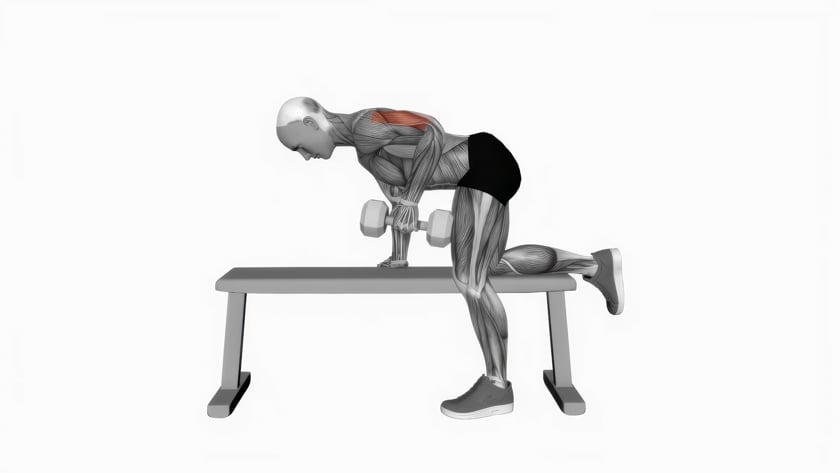
The Dumbbell Triceps Kickback is a fundamental isolation exercise that targets the triceps muscles along the back of the upper arm. The exercise uses a simple elbow-extension movement: the upper arm remains relatively stationary while the forearm moves from a bent position to a straightened position behind the body.
The uploaded video animation demonstrates a bench-supported, single-arm Dumbbell Triceps Kickback. One knee and the same-side hand are supported on a flat bench while the opposite foot remains on the floor. This creates a stable base and allows the exerciser to concentrate on moving the dumbbell with the triceps while maintaining a controlled torso position.
The working upper arm is held close to the body and approximately parallel with the torso while the elbow bends and straightens.
The triceps kickback is widely recognized as a basic triceps exercise.
How to Perform
Hold a dumbbell in one hand. Place the opposite knee and hand securely on a flat bench while keeping the other foot firmly on the floor.
Lean forward from the hips while maintaining a stable, neutral spine. Brace your abdominal muscles and keep your head comfortably aligned with your spine.
Bring the working upper arm close to your torso and bend the elbow to approximately 90 degrees. Keep the elbow elevated so the upper arm remains relatively parallel with the torso.
Keeping the upper arm stationary, straighten the elbow and extend the dumbbell backward until the arm is comfortably straight. Concentrate on contracting the triceps rather than swinging the dumbbell.
Slowly bend the elbow and return the dumbbell to the starting position under control. Complete the desired number of repetitions and then repeat with the opposite arm.
Tips
Keep your upper arm still. Once the upper arm is positioned alongside the torso, avoid swinging it forward and backward. The forearm should perform most of the movement as the elbow bends and straightens.
Maintain a neutral spine. Keep your back relatively flat and your head aligned naturally with your spine rather than rounding the shoulders or excessively arching the lower back.
Keep the elbow close to your body. Avoid allowing the working elbow to flare outward. Maintaining the upper arm close to the torso helps keep the emphasis on the triceps.
Control both directions. Extend the dumbbell smoothly and lower it just as deliberately. Do not allow the weight to simply drop toward the starting position.
Use a manageable weight. The kickback does not require a heavy dumbbell to be effective. If you need to swing your arm, rotate your torso or use momentum, reduce the resistance.
Benefits
Strengthens the triceps. The exercise directly trains elbow extension, the primary function of the triceps brachii.
Isolates the upper-arm muscles. Because the upper arm remains relatively stationary, the triceps perform most of the work required to straighten the elbow.
Trains each arm independently. Performing the exercise one arm at a time allows each triceps to work independently and can help develop balanced strength and control between the two arms.
Provides additional stability. The bench-supported position demonstrated in the video creates a stable base, allowing the exerciser to concentrate on controlling the working arm.
Requires minimal equipment. A dumbbell and bench are all that are needed, making the exercise easy to incorporate into many resistance-training programs.
Common Mistakes
Swinging the upper arm. Moving the entire arm forward and backward introduces momentum and reduces the isolation of the triceps. We emphasize keeping the upper arm stationary during the kickback.
Dropping the elbow. If the elbow falls significantly below the torso during the repetition, the exercise becomes less effective at maintaining the intended position. Keep the upper arm close to the torso throughout the movement.
Using too much weight. Excessive resistance often causes the exerciser to swing the dumbbell, rotate the torso or lose the desired upper-arm position.
Rotating the torso. Keep the shoulders and hips stable rather than twisting the body as the dumbbell moves. We advise avoiding torso rotation during the exercise.
Rounding or arching the back. Maintain a comfortable neutral spine throughout the movement rather than allowing the lower back to sag or the upper back to round excessively.
FAQ
Safety Note
Use a dumbbell that allows you to maintain a stable torso, neutral spine and controlled upper-arm position throughout the exercise. Make sure the supporting hand and knee are positioned securely on the bench and the foot on the floor provides a stable base. Avoid twisting the torso, swinging the dumbbell or forcefully locking the elbow.
Stop the exercise if you experience pain or unusual discomfort in the elbow, shoulder, wrist or back. If you have an existing injury or medical condition that may affect your ability to exercise safely, consult your physician or another qualified healthcare professional before performing this or any other exercise.