
Dumbbell Overhead Triceps Extension
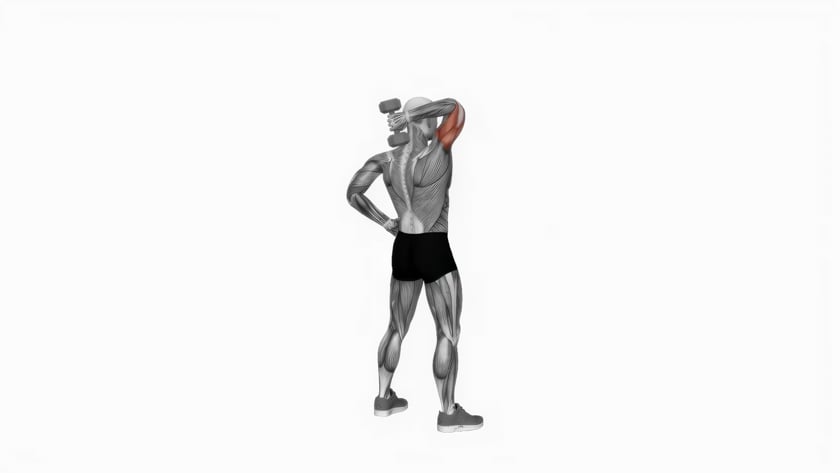
The Dumbbell Overhead Triceps Extension is a fundamental isolation exercise that strengthens the triceps muscles along the back of the upper arm. The exercise combines a stable overhead arm position with controlled bending and straightening of the elbow, allowing the triceps to perform most of the work.
The uploaded video animation demonstrates the standing, single-arm version of the exercise. One dumbbell is held overhead while the opposite hand is placed at the hip. The working elbow bends to lower the dumbbell behind the head and then straightens to return the dumbbell overhead.
Because the exercise is performed one arm at a time, each triceps works independently while the core and shoulder muscles help stabilize the body.
The overhead position is particularly useful for training the long head of the triceps. The long head crosses both the shoulder and elbow joints and is placed in a lengthened position when the arm is overhead.
How to Perform
Stand with your feet approximately hip- to shoulder-width apart. Hold a dumbbell in one hand and carefully extend the arm overhead.
Brace your abdominal muscles, maintain an upright torso and position the working upper arm alongside your head. Keep your head and neck in a comfortable, neutral position.
Slowly bend your elbow and lower the dumbbell behind your head. Keep the upper arm relatively stationary rather than allowing it to swing backward.
Contract your triceps and straighten your elbow to raise the dumbbell back overhead. Finish with the arm comfortably straight without aggressively locking the elbow.
Complete the desired number of repetitions with one arm and then repeat the exercise with the opposite arm.
Tips
Keep the upper arm steady. Once the arm is positioned overhead, try to minimize movement at the shoulder. Think of the elbow as the hinge that controls the exercise.
Keep the elbow reasonably close to your head. Avoid allowing the elbow to flare excessively outward, but do not force it into an uncomfortable position.
Brace your core. Tighten the abdominal muscles to help maintain a neutral torso and avoid arching the lower back as the dumbbell moves behind your head.
Lower the dumbbell under control. Do not allow gravity to rapidly pull the weight downward. A slow, controlled return keeps the triceps working throughout the movement.
Choose a manageable dumbbell. If you need to lean, twist, arch your back or swing the upper arm to complete the repetition, the weight may be too heavy.
Benefits
Strengthens the triceps. The primary movement is elbow extension, one of the principal functions of the triceps brachii.
Emphasizes the long head of the triceps. Positioning the arm overhead lengthens the long head of the triceps and makes the exercise a useful complement to movements performed with the arms alongside the torso, such as cable pushdowns.
Trains each arm independently. The single-arm version shown in the video prevents the stronger arm from assisting the weaker arm and can help develop balanced strength between sides.
Requires minimal equipment. The exercise requires only a dumbbell, making it practical for both gym and home resistance-training programs.
Supports upper-body pushing strength. Strong triceps assist with many exercises and everyday activities that require straightening the elbows or pushing objects away from the body.
Common Mistakes
Allowing the elbow to flare outward. Excessive movement of the elbow can make it more difficult to maintain a stable upper-arm position.
Moving the upper arm forward and backward. The exercise should occur primarily at the elbow. Swinging the entire arm introduces additional shoulder movement and reduces the isolation of the triceps.
Arching the lower back. This often occurs when the dumbbell is too heavy or the core is not adequately braced. Keep the torso upright and the spine in a comfortable neutral position.
Lowering the dumbbell too far. More range of motion is not necessarily better. Lower the dumbbell only as far as your shoulder and elbow mobility comfortably allow while maintaining control.
Using momentum. Avoid bouncing the dumbbell out of the bottom position or using the torso to help lift the weight.
FAQ
Safety Note
Choose a dumbbell that allows you to maintain a stable upper arm, controlled elbow movement and neutral torso throughout the exercise. Avoid excessive arching of the lower back, forcefully locking the elbow or lowering the dumbbell beyond a comfortable range of motion.
Stop the exercise if you experience pain or unusual discomfort in the shoulder, elbow or wrist. If you have an existing injury or medical condition that may affect your ability to exercise safely, consult your physician or another qualified healthcare professional before performing this or any other exercise.