
Cable Overhead Extension
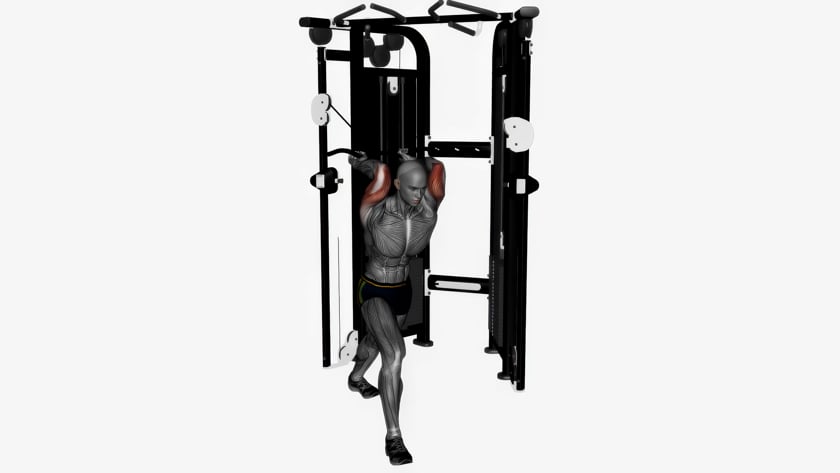
The Cable Overhead Extension is a triceps isolation exercise performed using a cable machine. With the arms positioned overhead, the exercise emphasizes elbow extension while requiring the shoulders, abdominal muscles and surrounding stabilizers to help maintain a controlled upper-body position.
The video animation demonstrates the exercise using an EZ-bar attachment connected to a low cable pulley. The exerciser faces away from the cable machine in a staggered stance, holds the bar behind the head and extends the elbows to move the bar forward and overhead.
This setup differs slightly from overhead extensions performed with a rope or dumbbell, but the fundamental movement remains the same: the upper arms stay relatively stationary while the triceps straighten the elbows.
The overhead arm position makes this exercise particularly useful for training the long head of the triceps, which crosses the shoulder joint. Overhead triceps extensions are widely incorporated into resistance-training program.
How to Perform
Attach an EZ bar to a low cable pulley. Face away from the machine, grasp the bar with both hands and carefully bring it behind your head. Step forward into a stable staggered stance.
Brace your abdominal muscles and maintain a stable torso. Position your upper arms alongside your head with your elbows bent and pointing generally forward.
Keeping your upper arms relatively stationary, straighten your elbows and extend the bar forward and overhead. Continue until your arms are comfortably straight without forcefully locking the elbows.
Slowly bend your elbows and allow the bar to return behind your head under control. Keep the upper arms as stable as possible as you return to the starting position.
Repeat the movement for the desired number of repetitions while maintaining a controlled tempo and stable body position.
Tips
Keep your upper arms steady. Try to keep your upper arms near your head instead of allowing them to swing forward and backward. The movement should occur primarily at the elbows.
Maintain a strong, stable stance. The staggered foot position shown in the video can help provide stability against the backward pull of the cable. Keep your weight balanced and avoid excessive movement through the torso.
Brace your core. Maintaining abdominal tension helps prevent excessive arching of the lower back as the arms move overhead.
Control the return. Do not allow the cable to pull the bar rapidly behind your head. Bend the elbows slowly and maintain control throughout the entire repetition.
Use a manageable resistance. If the weight causes your elbows to flare excessively, your back to arch or your torso to move, reduce the resistance.
Benefits
Strengthens the triceps. The exercise trains the triceps brachii through its primary function of extending the elbow.
Emphasizes the long head of the triceps. Because the long head crosses both the elbow and shoulder joints, placing the arms overhead changes its position compared with a standard cable pushdown.
Provides continuous cable resistance. The cable maintains resistance throughout the movement and allows the exerciser to control both the extension and return phases.
Supports upper-body pushing strength. The triceps contribute to many pushing and pressing movements that require the elbows to straighten.
Offers easily adjustable resistance. The cable machine makes it simple to increase or decrease the resistance to accommodate different strength and fitness levels.
Common Mistakes
Allowing the elbows to flare excessively. The elbows should remain reasonably close to the head and point generally forward rather than spreading widely to the sides.
Moving the upper arms too much. Swinging the arms forward and backward changes the movement from primarily elbow extension to a combination of elbow and shoulder movement.
Arching the lower back. Excessive resistance or poor core control may cause the exerciser to arch through the lower back. Maintain abdominal tension and a stable torso throughout the exercise.
Using momentum. Rocking forward or using the entire body to move the bar usually indicates that the resistance is too heavy.
Returning the bar too quickly. Allowing the cable to pull the hands rapidly behind the head reduces muscular control and can place unnecessary stress on the elbows and shoulders.
FAQ
Safety Note
Choose a resistance that allows you to maintain a stable torso and controlled movement throughout the exercise. Avoid excessive arching of the lower back, forcefully locking the elbows or lowering the bar farther behind the head than your comfortable shoulder and elbow mobility allows.
If you experience pain or unusual discomfort in your shoulders, elbows, wrists or lower back, stop the exercise. If you have an existing injury or medical condition that may affect your ability to exercise safely, consult your physician or another qualified healthcare professional before performing this or any other exercise.