
Cable Triceps Pushdown
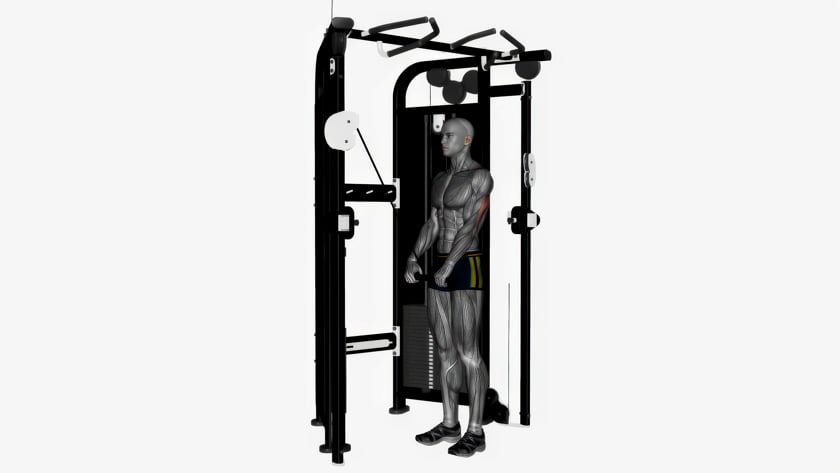
The Cable Triceps Pushdown is a fundamental upper-arm exercise that primarily targets the triceps, the muscles located along the back of the upper arm.
Using a cable machine provides resistance throughout the movement while allowing the exercise to be performed with a smooth, controlled motion.
This video animation demonstrates the standing Cable Triceps Pushdown using a straight-bar attachment.
During the exercise, the upper arms remain close to the body while the elbows straighten to push the bar downward. Because most of the movement occurs at the elbow joint, the exercise provides a simple and effective way to isolate and strengthen the triceps.
The Cable Triceps Pushdown is commonly used in general fitness and strength-training programs because the resistance can be easily adjusted to match the exerciser's ability and training goals.
How to Perform
Stand facing the cable machine with the pulley positioned high. Grasp the straight bar with an overhand grip and position your feet about hip-width apart with your knees slightly bent.
Keep your chest up, torso upright and abdominal muscles engaged. Bring your elbows close to your sides and keep your wrists in a comfortable, neutral position.
Keeping your upper arms relatively still, extend your elbows and press the bar downward until your arms are straight. Focus on using the triceps rather than leaning into the movement or using momentum.
Slowly bend your elbows and allow the bar to return to the starting position under control. Keep your elbows near your sides and repeat for the desired number of repetitions.
Tips
Keep your elbows close to your body. Avoid allowing them to move forward, backward or flare outward as you press the bar down. Keeping the upper arms stable helps maintain the emphasis on the triceps.
Keep your torso steady. Brace your abdominal muscles and avoid rocking forward and backward to move the resistance.
Control both directions. Press the bar down smoothly and resist the pull of the cable as you return to the starting position. Do not allow the weight stack to pull your arms upward quickly.
Use an appropriate resistance. Choose a weight that allows you to complete each repetition through a comfortable range of motion without swinging, leaning or losing control.
Benefits
Strengthens the triceps. The primary action of the triceps is elbow extension, which is the main movement performed during the pushdown.
Provides consistent resistance. The cable system keeps resistance on the muscles throughout much of the movement, making it useful for controlled strength training.
Supports upper-body pushing strength. Strong triceps contribute to movements that require straightening the arms, including pressing exercises and many everyday pushing activities.
Allows easy resistance adjustments. Cable machines make it simple to increase or decrease the weight, allowing the exercise to accommodate a wide range of fitness levels.
Helps isolate the upper arms. With proper technique, relatively little movement is required from the shoulders or torso, allowing the exerciser to concentrate primarily on the triceps.
Common Mistakes
Allowing the elbows to move away from the sides. When the elbows drift forward or flare outward, other muscles may contribute more to the movement and reduce the emphasis on the triceps.
Using too much weight. Excessive resistance can cause the exerciser to lean forward, swing the torso or use momentum instead of controlling the movement with the triceps.
Moving the shoulders instead of the elbows. The pushdown should primarily involve elbow extension. Keep the shoulders stable and avoid turning the movement into a whole-body push.
Letting the weight return too quickly. Allowing the cable to pull the bar rapidly upward reduces control. Return to the starting position slowly and deliberately.
Bending the wrists. Keep the wrists aligned comfortably with the forearms rather than allowing them to bend excessively as the bar is pressed downward.
FAQ
Safety Note
Use a resistance that allows you to maintain control throughout the entire exercise. Keep your torso stable, wrists comfortably aligned and elbows close to your sides. Avoid using momentum or forcing the elbows beyond a comfortable range of motion.
Stop the exercise if you experience pain in your elbows, shoulders or wrists. If you have an existing injury or medical condition that may affect your ability to exercise safely, consult your physician or another qualified healthcare professional before performing this or any other exercise.