
Hammer Curl
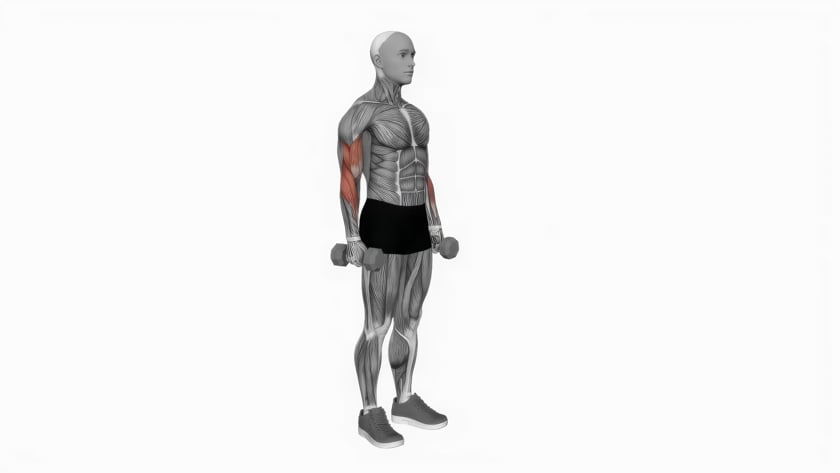
The Hammer Curl is a fundamental dumbbell exercise that strengthens the biceps and other muscles responsible for bending the elbow. Unlike a traditional biceps curl, the palms remain facing inward in a neutral or “hammer” grip throughout the movement.
This position increases involvement of the brachialis and brachioradialis while still effectively training the biceps brachii.
The movement demonstrated in the video is performed standing with the arms alternating one at a time while maintaining the neutral grip.
How to Perform
Stand upright with your feet approximately hip- to shoulder-width apart and hold a dumbbell in each hand.
Allow your arms to hang naturally at your sides with your palms facing inward toward your thighs.
Keep your chest lifted, shoulders relaxed and abdominal muscles gently engaged.
Keep your elbows close to your sides throughout the exercise.
Bend one elbow and curl the dumbbell upward toward your shoulder while maintaining the palms-in neutral grip.
Pause briefly at the top and contract the muscles of your upper arm.
Slowly lower the dumbbell under control until your arm returns to the starting position.
Repeat the movement with the opposite arm.
Continue alternating arms for the desired number of repetitions.
Tips
Keep your palms facing inward throughout the entire exercise.
Keep your elbows close to your sides and avoid allowing them to move excessively forward.
Maintain an upright posture rather than leaning backward as the dumbbell rises.
Keep your wrists straight and aligned with your forearms.
Complete each repetition slowly and under control before switching arms.
Benefits
Strengthens the biceps brachii, brachialis and brachioradialis.
Develops arm strength useful for lifting, carrying and pulling activities.
Strengthens the forearm muscles and helps develop grip strength.
Allows each arm to work independently during the alternating movement.
Provides a neutral wrist and forearm position that many exercisers find comfortable.
Offers a useful variation from traditional palms-up biceps curls while maintaining a simple, beginner-friendly movement pattern.
Common Mistakes
Rotating the palms upward instead of maintaining the neutral hammer grip.
Swinging the dumbbells or torso to generate momentum.
Leaning backward to help lift weights that are too heavy.
Allowing the elbows to move excessively forward.
Shrugging the shoulders as the dumbbell rises.
Bending the wrists rather than keeping them aligned with the forearms.
Lowering the weights too quickly instead of controlling the return.
FAQ
Safety Note
Choose dumbbells that allow you to maintain proper posture and controlled movement throughout the exercise.
Keep your wrists straight and comfortably aligned with your forearms.
Avoid jerking, swinging or leaning backward to lift the weights.
Keep your elbows close to your body and avoid forcing the dumbbells beyond a comfortable range of motion.
Control each dumbbell throughout the lowering phase rather than allowing it to drop quickly.
If you experience pain in your shoulders, elbows or wrists, discontinue the exercise and consult your physician or another qualified healthcare professional before continuing.