
Alternating Dumbbell Curl
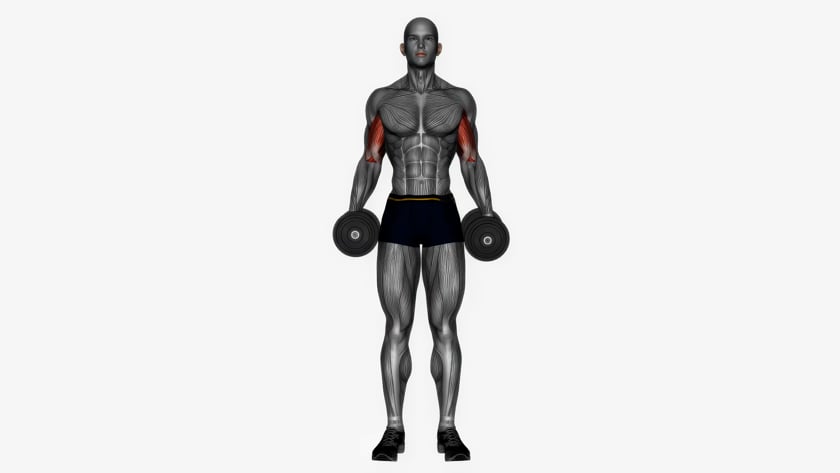
The Alternating Dumbbell Curl is a fundamental upper-body exercise that strengthens the biceps by training one arm at a time. The alternating pattern helps each arm work independently while the opposite arm remains controlled at your side.
The movement demonstrated in the video animation uses a standing position with the palms facing forward and the elbows kept close to the torso. This variation primarily targets the biceps brachii while also engaging the brachialis, brachioradialis and forearm muscles.
How to Perform
Stand upright with your feet about hip- to shoulder-width apart and hold a dumbbell in each hand.
Allow your arms to hang naturally at your sides with your palms facing forward.
Keep your chest lifted, shoulders relaxed and abdominal muscles gently engaged.
Keep both elbows close to your sides throughout the exercise.
Curl one dumbbell upward toward your shoulder by bending your elbow while keeping the opposite arm controlled at your side.
Pause briefly at the top and squeeze your biceps.
Slowly lower the dumbbell under control until your arm returns to the starting position.
Repeat the movement with the opposite arm.
Continue alternating arms for the desired number of repetitions.
Tips
Keep your elbows close to your sides and avoid allowing them to move excessively forward.
Maintain an upright posture and avoid leaning backward as the dumbbell rises.
Keep your wrists straight and aligned with your forearms.
Use a weight that allows you to complete each repetition without swinging your torso.
Lower each dumbbell slowly and under control before switching arms.
Benefits
Strengthens the biceps brachii and other muscles involved in bending the elbow.
Allows each arm to work independently, helping develop balanced strength between the left and right sides.
Strengthens the brachialis, brachioradialis and forearm muscles.
Develops arm strength useful for lifting, carrying and pulling activities.
Encourages controlled movement and good posture throughout the exercise.
Supports progressive resistance training as strength improves.
Common Mistakes
Swinging the dumbbells or torso to generate momentum.
Leaning backward to help lift a weight that is too heavy.
Allowing the elbows to move excessively forward during the curl.
Shrugging the shoulders as the dumbbell rises.
Bending the wrists instead of keeping them aligned with the forearms.
Dropping the dumbbell too quickly during the lowering phase.
Rushing the alternating pattern instead of completing each repetition under control.
FAQ
Safety Note
Choose dumbbells that allow you to maintain proper posture and controlled movement throughout the exercise.
Keep your wrists straight and comfortably aligned with your forearms.
Avoid jerking, swinging or leaning backward to lift the weights.
Control each dumbbell throughout the lowering phase rather than allowing it to drop quickly.
If you experience pain in your shoulders, elbows or wrists, discontinue the exercise and consult your physician or another qualified healthcare professional before continuing.