
Pull-Up
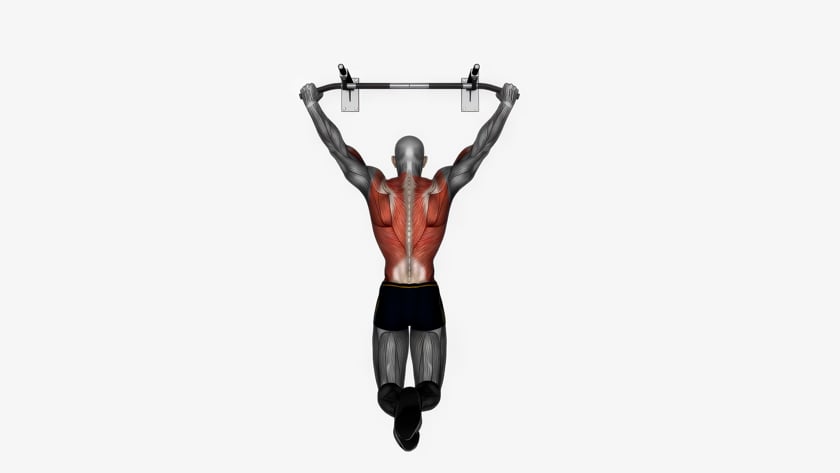
The Pull-Up is one of the most effective upper-body strength exercises, building functional pulling power while developing the muscles of the back, shoulders and arms.
Using your own body weight as resistance, the Pull-Up primarily targets the latissimus dorsi while also strengthening the rhomboids, trapezius, biceps and core muscles.
The wide overhand grip demonstrated in the video places additional emphasis on building upper-back width and is considered a benchmark exercise for overall upper-body strength.
How to Perform
Stand beneath a sturdy pull-up bar and grasp it with a wide overhand grip, slightly wider than shoulder width.
Allow your body to hang with your arms fully extended while keeping your shoulders active rather than completely relaxed.
Brace your abdominal muscles, keep your legs still and maintain a neutral spine.
Begin the movement by pulling your shoulder blades down and together.
Drive your elbows downward as you pull your chest toward the bar.
Continue pulling until your chin clears the bar or reaches bar height without straining your neck.
Pause briefly at the top while squeezing your back muscles.
Lower yourself slowly and under control until your arms are fully extended before beginning the next repetition.
Tips
Think about pulling your elbows toward your ribs instead of pulling with your hands.
Keep your chest lifted throughout the movement.
Avoid swinging or kicking your legs to generate momentum.
Maintain a slow, controlled lowering phase to maximize muscle engagement.
If full pull-ups are too difficult, build strength using assisted pull-ups or lat pull-downs before progressing.
Benefits
Develops exceptional upper-body pulling strength.
Builds the latissimus dorsi for a wider, stronger back.
Strengthens the biceps, forearms and grip.
Improves shoulder stability and scapular control.
Enhances functional strength for climbing, lifting and many athletic activities.
Requires no machines, making it an excellent bodyweight exercise.
Common Mistakes
Using excessive swinging or kipping instead of muscular control.
Pulling with the arms while failing to engage the back muscles.
Stopping short of a full range of motion.
Shrugging the shoulders toward the ears during the movement.
Dropping too quickly instead of lowering under control.
Using momentum rather than strength to complete repetitions.
FAQ
Safety Note
Use a sturdy pull-up bar that safely supports your body weight.
Maintain controlled movement throughout every repetition.
Avoid swinging or jerking your body to complete the exercise.
Keep your shoulders active throughout the hang instead of completely relaxing them at the bottom.
If you experience pain in your shoulders, elbows or wrists, discontinue the exercise and consult your physician or another qualified healthcare professional before continuing.