
Dumbbell Incline Row
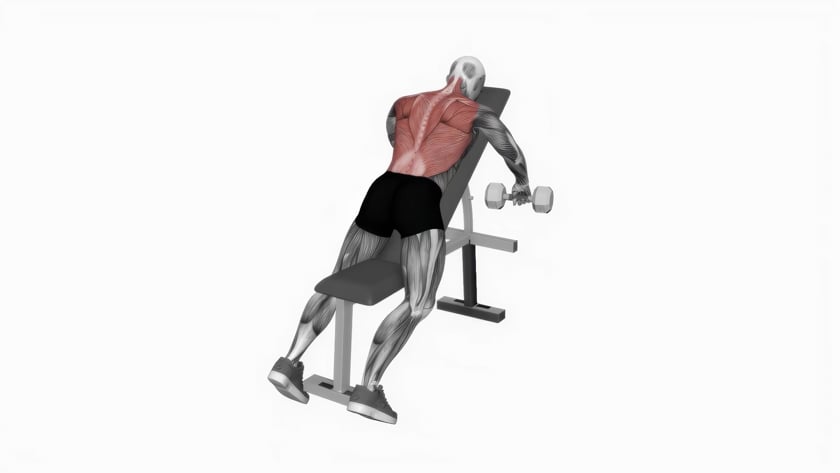
The Dumbbell Incline Row is a chest-supported rowing exercise that strengthens the muscles of the upper and middle back while minimizing stress on the lower back.
By performing the movement with your chest supported on an incline bench, you can focus on proper rowing mechanics and muscle activation without relying on momentum.
This exercise primarily targets the latissimus dorsi, rhomboids and trapezius while also strengthening the rear shoulders, biceps and forearms.
How to Perform
Adjust an incline bench to approximately 30 to 45 degrees.
Lie face down on the bench with your chest fully supported and your feet firmly planted on the floor.
Hold a dumbbell in each hand with your arms hanging straight toward the floor and your palms facing one another.
Brace your abdominal muscles and maintain a neutral head and neck position.
Begin the movement by drawing your shoulder blades back and down.
Pull the dumbbells upward by driving your elbows toward the ceiling until they reach the sides of your lower ribs.
Pause briefly while squeezing your back muscles.
Slowly lower the dumbbells to the starting position under control before repeating.
Tips
Keep your chest in contact with the bench throughout the exercise.
Lead each repetition with your elbows rather than your hands.
Avoid shrugging your shoulders toward your ears.
Use a full range of motion while maintaining complete control of the weights.
Choose a resistance that allows you to perform every repetition with excellent technique.
Benefits
Strengthens the muscles of the upper and middle back.
Reduces stress on the lower back by providing chest support.
Improves posture by strengthening the muscles that stabilize the shoulder blades.
Develops balanced upper-body pulling strength.
Helps isolate the back muscles by minimizing body movement.
Suitable for beginners and experienced exercisers alike.
Common Mistakes
Lifting the chest away from the bench.
Using excessive weight that shortens the range of motion.
Shrugging the shoulders instead of pulling with the back muscles.
Swinging the dumbbells rather than using controlled movement.
Failing to squeeze the shoulder blades together at the top of each repetition.
Lowering the weights too quickly.
FAQ
Safety Note
Keep your chest supported on the bench throughout the exercise.
Maintain a neutral spine and avoid lifting your head excessively.
Use slow, controlled movements during both the lifting and lowering phases.
Avoid selecting a weight that causes you to sacrifice proper technique.
If you experience pain in your shoulders, elbows or back, discontinue the exercise and consult your physician or another qualified healthcare professional before continuing.