
Dumbbell Bent Over Row
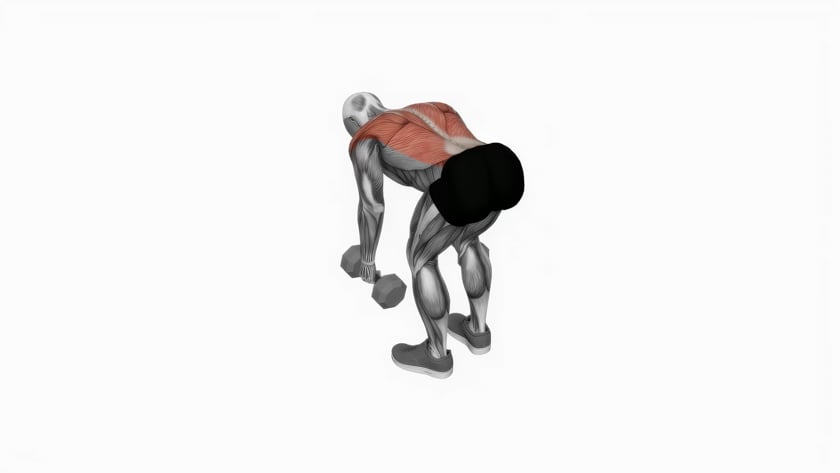
The Dumbbell Bent Over Row is a fundamental strength exercise that develops the muscles of the upper and middle back while improving posture, pulling strength and shoulder stability.
Using two dumbbells allows each arm to work independently, helping develop balanced strength and muscular coordination.
When performed with a stable hip hinge and a neutral spine, this exercise effectively targets the lats, rhomboids and trapezius while also engaging the biceps, rear shoulders and core muscles.
How to Perform
Stand with your feet approximately shoulder-width apart while holding a dumbbell in each hand.
Hinge forward at your hips until your torso is about 45 to 60 degrees from the floor, keeping your knees slightly bent.
Brace your abdominal muscles and maintain a neutral spine with your chest lifted and shoulders pulled back.
Allow the dumbbells to hang directly beneath your shoulders with your palms facing one another.
Begin the movement by pulling your shoulder blades back and down.
Drive your elbows upward and back while pulling the dumbbells toward the sides of your lower ribs.
Pause briefly while squeezing your back muscles.
Slowly lower the dumbbells to the starting position under control before repeating.
Tips
Keep your back flat throughout the exercise.
Think about pulling your elbows behind your body rather than lifting the dumbbells with your hands.
Keep your neck aligned with your spine by looking slightly ahead of your feet.
Avoid using momentum to lift the weights.
Choose a resistance that allows you to maintain proper posture throughout every repetition.
Benefits
Strengthens the latissimus dorsi, rhomboids and trapezius.
Improves upper-body pulling strength.
Enhances posture by strengthening the muscles that support the shoulder blades.
Develops better shoulder stability and muscular balance.
Strengthens the biceps, rear shoulders and forearms.
Builds functional strength for lifting and pulling activities.
Common Mistakes
Rounding the lower back during the exercise.
Standing too upright instead of maintaining a proper hip hinge.
Using momentum or swinging the dumbbells.
Shrugging the shoulders toward the ears.
Allowing the elbows to flare excessively away from the body.
Using more weight than can be controlled with proper technique.
FAQ
Safety Note
Maintain a neutral spine throughout the exercise and avoid rounding your lower back.
Keep your abdominal muscles engaged to support your torso.
Lift and lower the dumbbells under control without using momentum.
Choose a resistance that allows proper technique throughout the entire set.
If you experience pain in your back, shoulders or elbows, discontinue the exercise and consult your physician or another qualified healthcare professional before continuing.