
Cable Seated Row
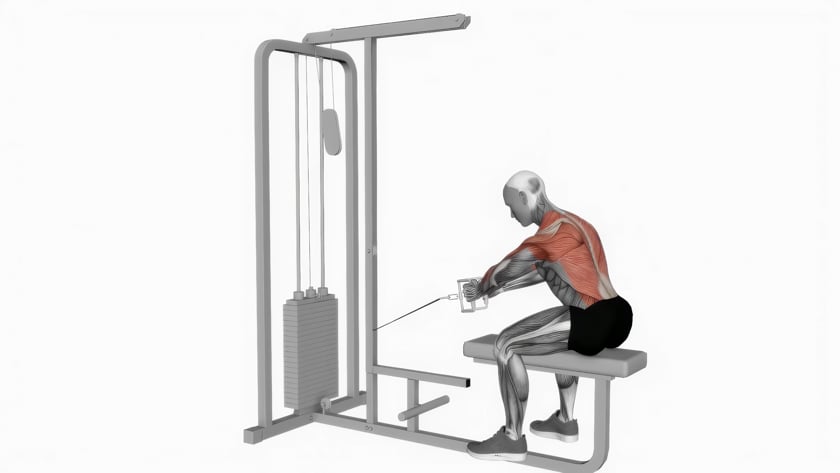
The Cable Seated Row is a fundamental upper-body pulling exercise that develops strength throughout the middle back while improving posture and shoulder stability.
Using a cable machine provides constant resistance throughout the movement, allowing you to focus on controlled muscle contraction and proper rowing mechanics.
This exercise primarily targets the latissimus dorsi, rhomboids and middle trapezius while also strengthening the rear shoulders, biceps and forearms.
How to Perform
Sit on the cable row machine and place your feet securely on the foot platform with your knees slightly bent.
Grasp the handle using the grip demonstrated in the video and sit upright with your chest lifted and your arms fully extended.
Brace your abdominal muscles and maintain a neutral spine throughout the exercise.
Begin the movement by pulling your shoulder blades back and down before bending your elbows.
Pull the handle toward your lower ribs or upper abdomen while keeping your elbows close to your sides.
Pause briefly while squeezing your shoulder blades together.
Slowly extend your arms until you reach the starting position while maintaining control of the weight.
Repeat for the desired number of repetitions.
Tips
Keep your chest lifted throughout every repetition.
Initiate the movement by pulling your shoulder blades together before using your arms.
Keep your wrists straight and avoid excessive gripping.
Use a full range of motion without allowing the weight stack to slam between repetitions.
Select a resistance that allows smooth, controlled movement while maintaining proper posture.
Benefits
Strengthens the muscles of the middle and upper back.
Improves posture by strengthening the muscles responsible for retracting the shoulder blades.
Develops pulling strength that carries over to many functional and athletic activities.
Enhances shoulder stability and muscular balance.
Provides constant resistance throughout the entire range of motion.
Suitable for beginners through advanced exercisers because resistance can be easily adjusted.
Common Mistakes
Leaning excessively backward to move heavier weight.
Rounding the shoulders and upper back.
Using momentum instead of controlled movement.
Shrugging the shoulders toward the ears during the pull.
Failing to fully extend the arms between repetitions.
Allowing the weight stack to drop abruptly instead of controlling the return.
FAQ
Safety Note
Maintain a neutral spine throughout the exercise and avoid excessive leaning or swinging.
Use controlled movement during both the pulling and lowering phases.
Avoid using more weight than you can control with proper technique.
Keep your shoulders down and away from your ears throughout each repetition.
If you experience pain in your shoulders, elbows or lower back, discontinue the exercise and consult your physician or another qualified healthcare professional before continuing.