
Back Extension
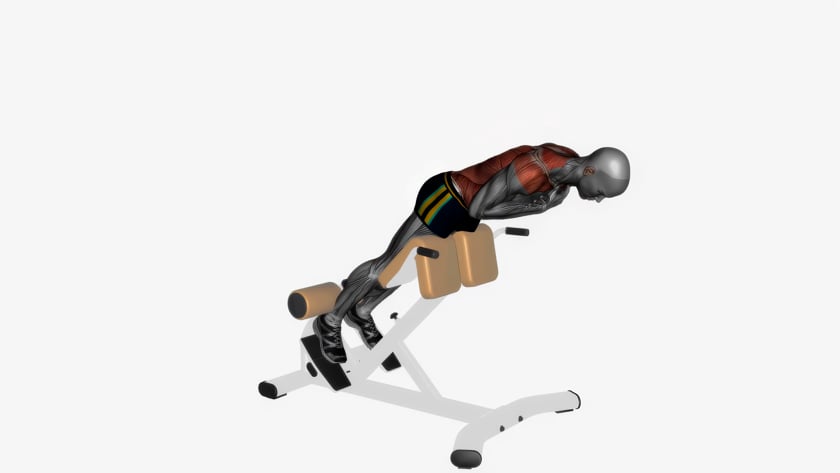
The Back Extension is a fundamental exercise that strengthens the muscles of the lower back while improving core stability and postural endurance.
Performed on a 45-degree or horizontal back extension bench, this exercise targets the spinal erectors while also engaging the glutes and hamstrings to support proper hip extension.
When performed with controlled movement and a neutral spine, the Back Extension helps build the strength needed for lifting, bending and maintaining healthy posture during everyday activities and athletic performance.
How to Perform
Adjust the back extension bench so the top of the pad rests just below your hip bones, allowing your hips to move freely throughout the exercise.
Secure your feet beneath the foot pads and cross your arms over your chest or place your hands lightly beside your head.
Begin with your body in a straight line from your shoulders through your hips to your ankles. Brace your abdominal muscles and keep your spine in a neutral position.
Slowly hinge forward from the hips until your upper body reaches a comfortable range of motion while maintaining a flat back. Avoid rounding your spine.
Engage your glutes, hamstrings and lower back muscles to raise your torso until your body returns to a straight line.
Pause briefly at the top, then slowly lower yourself under control before repeating.
Tips
Move slowly and under control throughout each repetition.
Think about hinging at the hips rather than bending through your lower back.
Keep your neck in line with your spine by looking slightly downward throughout the movement.
Exhale as you raise your torso and inhale as you lower yourself.
Stop when your body forms a straight line. Avoid leaning backward at the top of the exercise.
Benefits
Strengthens the muscles of the lower back.
Improves posterior chain strength by engaging the glutes and hamstrings.
Enhances spinal stability and postural endurance.
Supports safer lifting mechanics during everyday activities.
Helps improve overall core strength and functional movement.
May reduce muscular fatigue associated with prolonged sitting by strengthening the muscles that support proper posture.
Common Mistakes
Rounding the back during the lowering phase.
Hyperextending the spine by leaning too far backward at the top.
Using momentum instead of controlled muscle contraction.
Positioning the hip pad too high, which limits proper hip movement.
Moving too quickly and sacrificing technique.
Holding your breath throughout the exercise.
FAQ
Safety Note
Maintain a neutral spine throughout the exercise and avoid rounding or excessively arching your back.
Lift only until your body forms a straight line. Hyperextending beyond this point increases stress on the lower back.
Perform each repetition with slow, controlled movement rather than using momentum.
If you experience pain in your lower back, hips or spine, stop the exercise immediately and consult your physician or another qualified healthcare professional before continuing.
Individuals with existing spinal conditions should obtain medical clearance before performing this exercise.